






 Portuguese
  Spanish
  3 min of reading
  0 comments


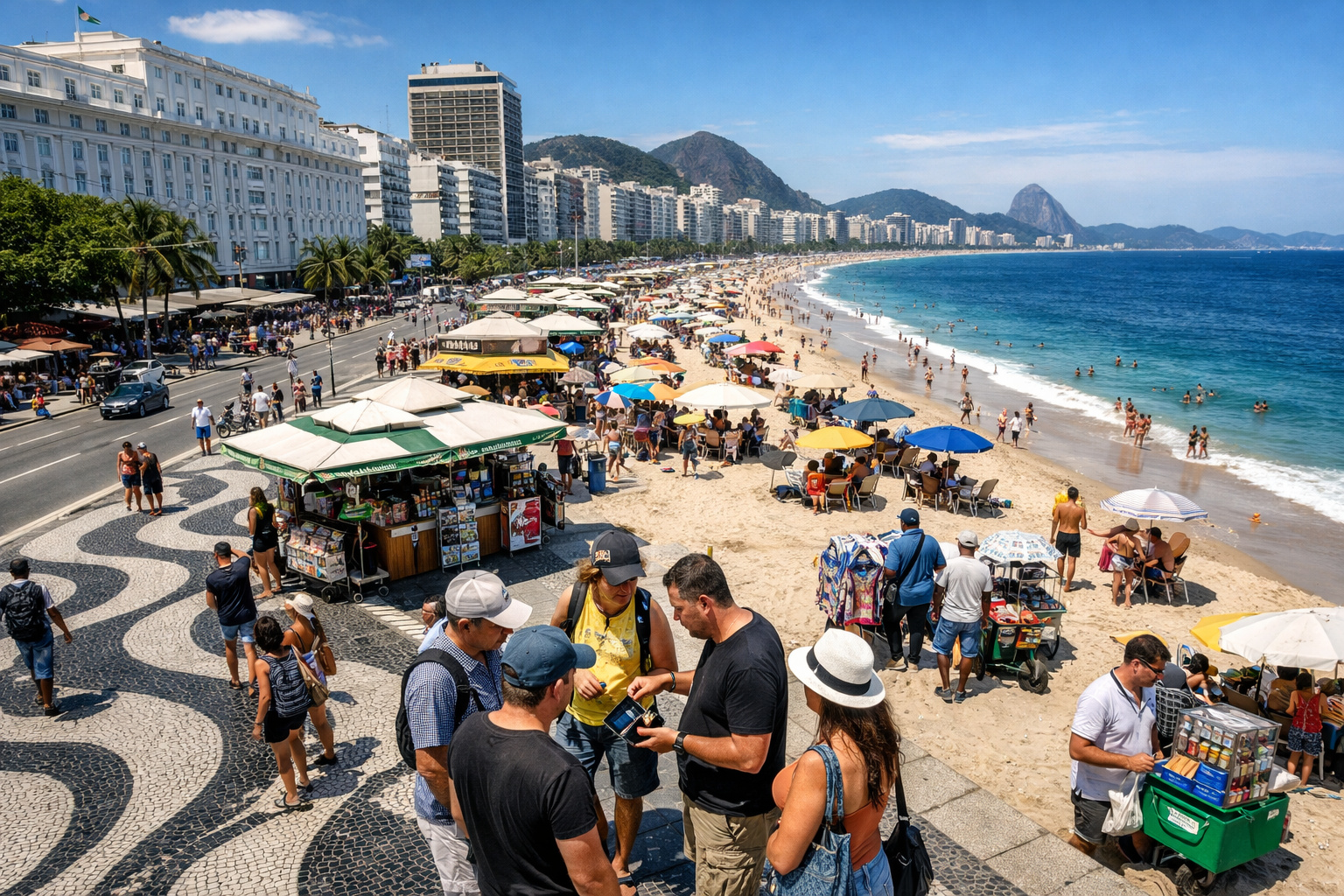
Absurd charge on card machine exposes sophisticated fraud at famous tourist spot and raises global alert about visitor safety in Brazil
An impressive case involving a British tourist gained international attention after he paid 10,000 reais (about £1,480) for a simple kebab — equivalent to a skewer — sold on Copacabana beach in Rio de Janeiro. The actual price of the product, however, should have been only 10 reais (approximately £1.50), revealing a scam with a charge a thousand times higher.
The information was disclosed by the newspaper “The Guardian”, which detailed how the criminal was arrested last Tuesday right on the waterfront, just a few meters from luxury hotels and extremely busy areas. According to investigations, the street vendor, with the help of an accomplice, manipulated the card machine to induce the tourist to pay an exorbitant amount without realizing it.
Moreover, the use of the term kebab gains international relevance, as many foreign tourists identify the food this way, which may have further contributed to the confusion during the transaction.
-
Bali transformed volcanoes into a sacred system with 5 rice terraces, water temples, and 19,500 hectares, but the ancient engineering that supports farmers now faces tourism, construction, and the risk of losing its living landscape on the volcanic island.

-
Two young inventors create a terracotta brick that uses water, air, and solar energy to cool cities, and the idea points to buildings that stop worsening urban heat.

-
Without power for millions, Madagascar receives a proposal for a floating hydroelectric plant inspired by the baobab that promises clean energy, greenhouses, and tourism, but still needs to be realized.
-
China has a giant rice terrace carved over 1,300 years in the mountains, with up to 3,000 terraces, 82 villages, and 445 km of canals, but the ancestral work that overcame droughts now faces growing tourism, landslides, and rural abandonment.


Series of scams involving kebabs, açaí, and drinks reveals worrying pattern on Rio’s beaches

However, the kebab case is not isolated. In recent months, a series of scams involving foreign tourists has been recorded on Rio de Janeiro’s most famous beaches, especially in Copacabana and Ipanema.
For example, criminals tried to charge 7,000 reais (about £1,000) from two Argentine tourists for just two bowls of açaí. In another episode, a Colombian visitor ended up paying 2,500 reais (approximately £400) for a single caipirinha.
Additionally, one of the most shocking cases involved an Argentine tourist who shelled out 20,000 reais (almost £3,000) for a simple corn on the cob with butter, which would normally cost only 20 reais (about £3).
Thus, experts point out that there is a clear pattern: criminals use tampered payment machines and take advantage of foreigners’ difficulties with the Portuguese language.
In fact, one of the victims reported: “I don’t understand numbers in Portuguese. I don’t speak Portuguese,” highlighting how the language barrier has become one of the main factors exploited in these scams.
Lack of oversight and record increase in tourists amplify risks and demand heightened attention

On the other hand, authorities have already intensified actions to combat this type of crime. Patricia Alemany, head of the tourist police in Rio, stated that teams are actively working to locate and arrest those responsible for scams on the beaches.
According to her, the lack of adequate oversight has contributed to an environment considered “disordered,” which facilitates the actions of scammers in areas of high traffic.
Still, it is important to highlight that most visits to Rio de Janeiro occur without problems. Tourism, in fact, is on the rise. Brazil received 9 million tourists last year, surpassing the 6.7 million recorded in 2024.
Moreover, large-scale events have driven this growth. One example was Lady Gaga’s concert, which gathered more than 2 million people on the beach. Following that, singer Shakira is also expected to hold a mega event on the waterfront.
In this context, experts point out that the increase in tourism is linked to the global desire for leisure after the Covid-19 pandemic, as well as economic factors such as the appreciation of the Argentine peso, which has made Brazil a more accessible destination.


Be the first to react!