Portuguese
  Spanish


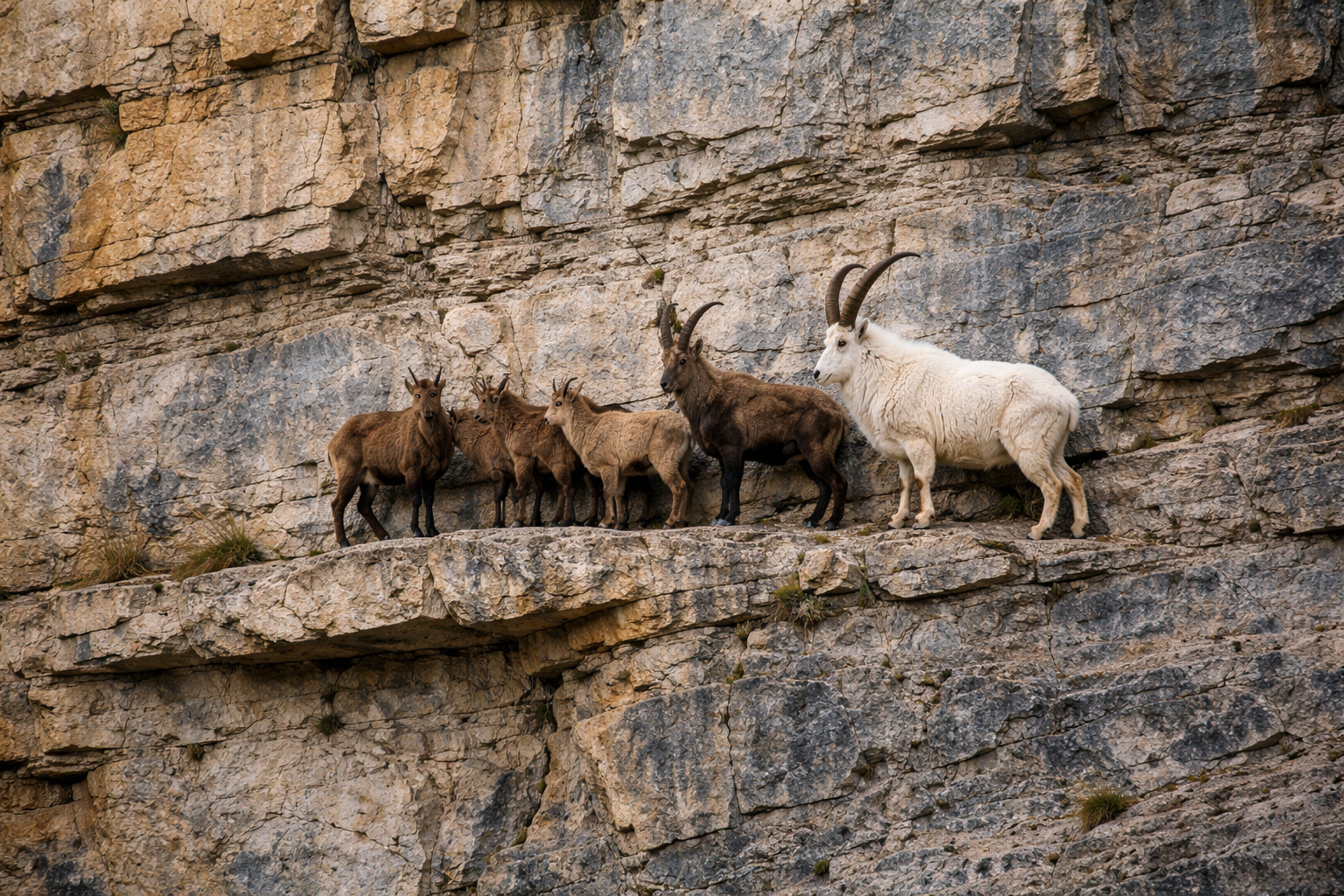


Herd Moved to the Abrolhos Archipelago During the Colonial Period Intrigues Scientists by Surviving for Centuries in an Environment Without Rivers, Lakes, or Groundwater
On Santa Bárbara Island, in the Abrolhos Archipelago, about 65 kilometers from Caravelas, in southern Bahia, a group of goats has become the focus of one of the most impressive survival stories ever recorded in Brazil. Isolated for over 200 years on an island that is just 1.5 kilometers long and with no source of fresh water, these animals managed to stay alive in conditions deemed extreme by science.
The information was released by the website Cães&Gatos, based on official data from the Government of Bahia and studies conducted by environmental and scientific institutions. According to historical records, the goats are not native to the region and would have been brought to the archipelago by European navigators during the colonial period, a common practice at the time to ensure food for future maritime expeditions.
As the decades went by, however, the herd remained completely isolated from the mainland. The lack of human intervention forced the animals to adapt to a hostile environment, marked by the absolute scarcity of drinking water and a fragile ecosystem.
-
After 18 years of development, Bridgestone launches the AirFree airless tire, which requires no inflation and is puncture-proof, into daily service in Japan, starting with autonomous vehicles up to 20 km/h, used for transporting elderly people.

-
Couple buys 1905 colonial house, plans to tear down walls to unite three rooms, but finds hidden service staircase and rethinks the entire renovation to preserve details that have survived for over a century.
-
Couple receives a quote of $50,000 to install a built-in refrigerator, decides to do the work themselves, spends $6,000, and claims to have saved over $100,000 by renovating the house.
-
At 77 years old, an elderly woman lives alone in an almost ghost village in the French Alps, at an altitude of 1,000 meters, where there is a town hall, a mayor, and an entrance sign, but only she lives there every day in a place destroyed by a landslide and almost erased from the map.


Life in an Extreme Environment Without Access to Fresh Water

Santa Bárbara Island is classified as an “insular cerrado”, with vegetation composed mainly of s succulents, grasses, and cacti, species typical of semi-arid regions. There are no rivers, lakes, springs, or groundwater, which makes the goats’ survival at the site for over two centuries even more surprising.
In this context, researchers raise the hypothesis that the animals developed physiological and metabolic adaptations capable of extracting almost all the necessary water from the food they consume. Moreover, resistance to prolonged water stress may have been enhanced by a process of extreme natural selection that occurred over generations.
Thus, each surviving individual would have carried more efficient traits for coping with aridity, allowing the herd to remain functional, reproductive, and adapted to an environment considered inhospitable for most medium-sized mammals.
Genetic Research Aims to Explain the Goats’ Survival
In 2025, an operation coordinated by the Chico Mendes Institute for Biodiversity Conservation (ICMBio), with support from the Brazilian Navy, Embrapa, and state agencies, captured 21 goats for scientific analysis. The animals were taken to the State University of Southwest Bahia (Uesb), where they began to be studied in a controlled environment.
According to Ronaldo Vasconcelos, a researcher involved in the project, initial data point to the existence of specific genetic components associated with survival under extreme conditions. “There must be genetic markers that allowed this adaptation, especially in the efficient use of water and resistance to water stress,” he explained.

According to the Government of Bahia, these markers may relate not only to metabolic efficiency but also to better utilization of natural resources, thermal regulation, and even reproductive capacity in arid environments, something rare in mammals subjected to such severe conditions.
Potential Impact for the Brazilian Semi-Arid Region and Environmental Preservation
If the genetic potential of these goats is confirmed, the biological material collected could be used in genetic improvement programs for goat herds on the continent. Researchers hope to especially benefit regions like the northeastern sertão, where goat farming is essential for nutrition, income generation, and food security for small rural properties.
At the same time, scientists intend to increase the number of animals studied and preserve the collected genetic material for future research. Alongside the analyses, Santa Bárbara Island remains under a Management Plan established in 2023, which provides for the gradual removal of the animals to allow the natural recovery of insular habitats.
The goal is to maintain the ecological balance of an area considered environmentally sensitive, reconciling the preservation of local biodiversity with the advancement of scientific knowledge on adaptation, resilience, and survival in extreme environments.
Source: Cães&Gatos