Portuguese
  Spanish




New Tire Calibration Technology with Nitrogen Ensures Savings and Fewer Stops for Recalibration. See the Advantages of Using This Totally Inert, Stable Gas, Free from Moisture and Oil
Those who drive know the importance of keeping vehicles in good condition to avoid accidents. For those who work in transportation, this care must be doubled, especially when it comes to tires. In celebration of Truck Driver Day, Air Products explained the advantages of using this technology, especially for heavy vehicle tires that travel long distances.
Read Also
- Energy Recovery Plants Substantially Reduce Greenhouse Gas Emissions and Will Help Brazil Stop Emitting 48 Million Tons of CO2 Per Year
- The Price of Gasoline, Diesel, and Cooking Gas is Sky High and Does Not Stop Petrobras from Increasing Fuels Even More This Tuesday (06/07), Which Starts with a Punch to Consumers’ Pockets
- Brazil’s Largest Oil Company Opens Bidding to Expand Diesel Production at the Country’s Largest Oil Refinery
- Tesla Sedan Electric Car Worth R$ 650,000 Explodes in Flames After 3 Days of Use, Trapping Owner After Electronic Doors Fail
- After Halting Vehicle Production and Leaving the Country, Ford Closes Another Operation in Brazil and Assumes Billion-Dollar Expenses
“Compressed air, used to inflate vehicle tires, is a mixture of gases, with the main ones being oxygen and nitrogen. In this case, pressure loss can reach five pounds per week. When we offer calibration only with nitrogen for truck fleets, we reduce the time between calibrations for a simple reason: the molecules of this gas are larger and take longer to escape through the tire rubber, which is permeable,” explains Omar Abreu, Technical Salesperson at Air Products. In practice, transport vehicles that use compressed air need their tires calibrated weekly or at most every 15 days. With nitrogen, this time can extend up to 45 days.
Another gain provided by nitrogen is in savings. “The second highest cost of road transportation today is undoubtedly the tire, second only to fuel. Nitrogen represents an average of 5 to 10% gain in the tire’s first useful life and savings of about four tires per month for fleet owners,” adds Abreu.
-
In Flood-Stricken South Sudan, Displaced Families Use Sand-Filled Plastic Bottles to Build Cooler, More Durable Homes

-
Mother Who Called Herself a ‘Pinterest Failure’ Learned Wood Furniture Restoration from Videos, Now Earns Around $15,900 Monthly

-
Denmark Constructs World’s Largest Immersed Tunnel to Connect with Germany, Sinking 217-Meter Concrete Sections in the Baltic Sea
-
Low-Cost Concrete Panel House Goes Viral: Investor Reveals Prefabricated Kit Structure for Around $1,500, Assembled in 30 Days, with Plans for Rental and Resale Income





The Ideal Temperature and Tire Calibration is Maintained for Longer with the Use of Nitrogen, Which is a Totally Inert, Stable Gas, Free from Moisture and Oil
The casings can also be reused more times with the use of the gas. According to Abreu: “working with compressed air, the temperature and pressure of the tires vary greatly due to contaminants like water and oil.
With the use of nitrogen, which is a totally inert, stable gas, free from moisture and oil, the ideal temperature and calibration of the tire is maintained for a longer time, preserving the internal structure. On average, it is possible to have one more retread per casing, which also generates an environmental gain, as it means better tire utilization and less scrap generation.”
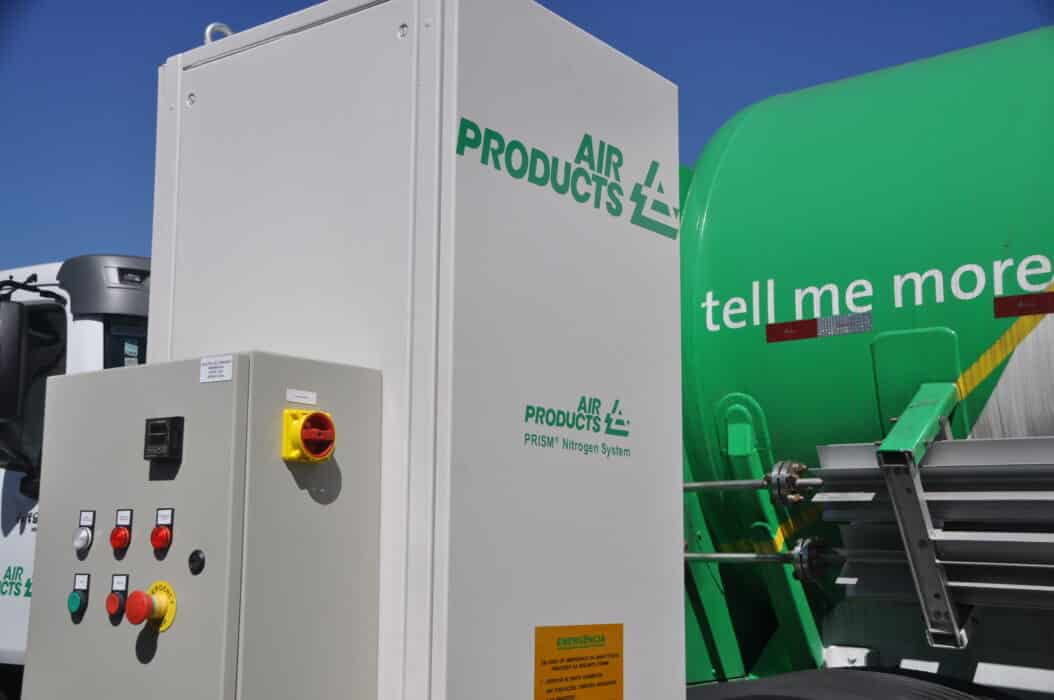
Calibration with nitrogen occurs through the filtration of compressed air from a regular compressor done by local generation equipment, the “PRISM® Membranes,” in the case of truck fleets, installed in workshops. “Nitrogen is in the atmosphere, so these devices separate nitrogen from other components for refueling. In general, fleet owners install the equipment in more than one workshop, allowing truck drivers to travel with peace of mind until they reach another location and carry out new calibration with nitrogen,” concludes Abreu.