






 Portuguese
  Spanish


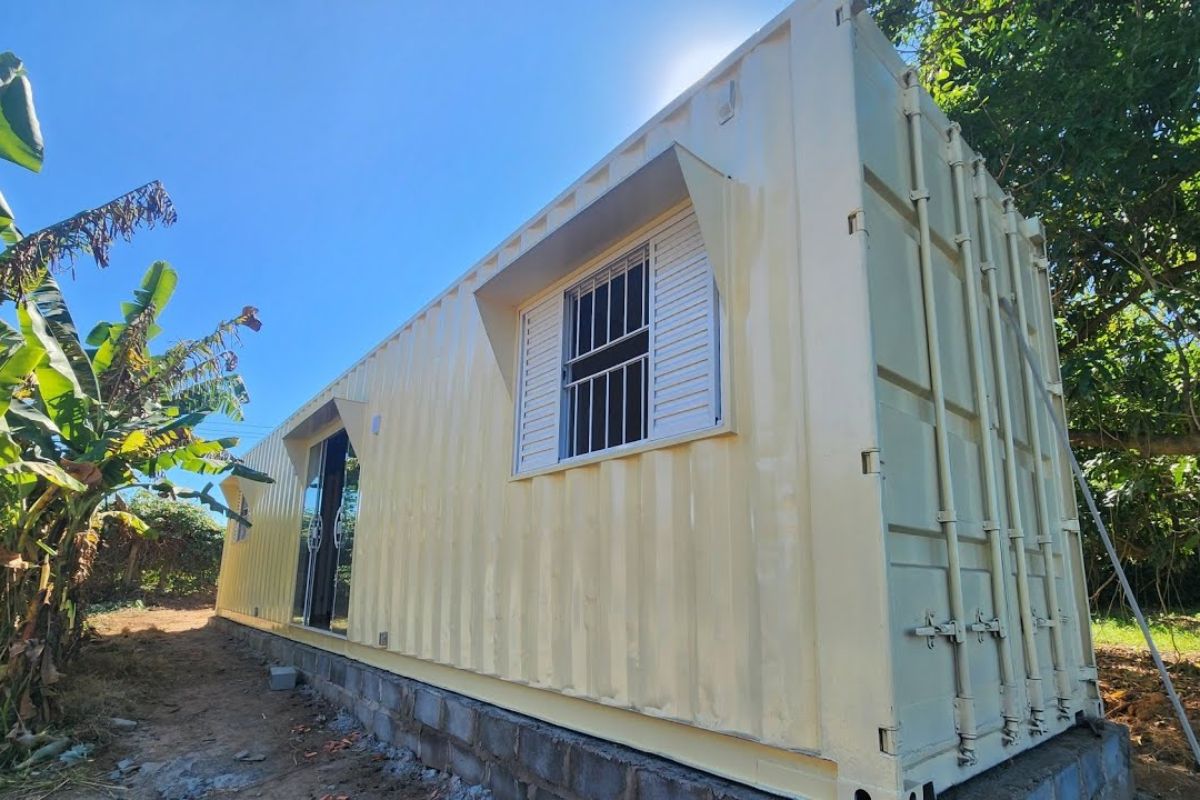


30 m² Container House in Limeira: Sold in 24 Hours and Ready to Move into the Farm.
The container house of 30 m² set up in Limeira (SP) was sold in less than 24 hours after being disclosed on social media and delivered fully finished. The compact project, designed for immediate use in rural areas, demonstrates the consolidation of modular constructions as a practical and low-impact solution for housing and property expansion in the interior of São Paulo.
The container house was installed on a farm dedicated to egg production and will be used as accommodation for employees. The delivery took place a few days after the base was concreted and involved a technical operation with two truck-mounted cranes, which were used to position the module accurately. The property arrived ready to receive electricity, water, and sewage connections, requiring no structural adjustments, just connecting to the local infrastructure and starting to use it.
Ready Structure and Fast Installation
The delivered model measures 30 m² and was manufactured in a turnkey system, a concept that delivers the property with finishes, coverings, and installations completed.
-
Couple Converts 1925 Detroit Bank into Home, Earns $40,000 Annually on Airbnb

-
Tired of Seeing People Sleep in the Cold, London, Canada Opens First Modular Shelter for Homeless with 60 Cabins, Heating, Meals, and Dog Area
-
Brazil’s $1.3 Billion, 870-Meter Immersed Tunnel to Be Latin America’s First of Its Kind, Featuring Special Public Facilities and Information Center
-
Brazilian Innovator Develops Concrete Blocks from Recycled Plastic, Eliminating Mortar and Reducing Construction Costs


The base was leveled with blocks and concrete, ensuring stability even on slightly sloped terrain.
The unloading operation took about an hour, and the assembly was completed without damage or additional adjustments.
The construction, aimed for use in rural areas, is an example of the versatility of modular housing. In regions where there is a shortage of labor, the format allows for quickly assembling functional homes for workers, without compromising the agricultural production schedule.
The metal structure with rock wool insulation ensures thermal and acoustic comfort, preventing overheating common in lower-quality models.
Internal Layout and Space Optimization
The container house has two bedrooms, a full bathroom, and a social area integrated with the kitchen. The compact layout was designed to optimize every square meter, with electrical and plumbing points already installed, as well as laminate flooring and drywall ceiling.
The kitchen includes a stove, sink, and space for a refrigerator, while the corridor connects the bedrooms to the tiled bathroom, featuring a corner shower and wall-mounted sink.
The master bedroom is slightly larger and accommodates a double bed with side space. The second bedroom can fit a bunk bed or a single bed, making it ideal for individual use.
The project prioritizes functionality and cross ventilation, with aluminum Venetian windows that keep the interior bright and airy even on hot days.
Materials, Comfort, and Thermal Efficiency
The thermal insulation is made of rock wool, a high-performance material that replaces inferior solutions, such as recycled PET, ensuring comfort in any season. The internal walls in drywall allow for refined finishes and easy maintenance.
The vinyl flooring in the bathroom and the laminate in other areas create visual continuity and reduce humidity.
Externally, the module features boxes prepared for air conditioning installation, TV inputs, and strategically distributed power points.
The metal structure is treated against corrosion, ensuring durability even in environments exposed to humidity or rural dust.
Rural Use and Functional Adaptation


Installed on a poultry farm, the container house was purchased to expand the housing structure for employees. The project is expected to gain a laundry area and a covered porch, integrated into the land.
This application demonstrates the advancement of modular architecture as a response to specific demands in the field, where short deadlines and uneven terrain require practical solutions.
The format also reduces operational costs: it does not require a deep foundation, can be transported between properties, and adapted for different uses, such as accommodation, office, or vacation home.
The modularity and proper insulation make the investment sustainable, both for the speed of execution and for durability.
The growing interest in compact housing led to the model being sold in less than 24 hours after its disclosure.
The prefabricated format, with quick delivery and simplified documentation, attracts buyers seeking autonomy and predictable costs.
The sales success reinforces the role of social media as a showcase for the modular construction market.
The performance also reflects the changing profile of buyers from the interior: rural residents and producers who value practicality, comfort, and low maintenance costs.
The container house in Limeira is a clear example of how technology, logistics, and design combine to meet a new housing demand.
Would you live in a compact container house like this or do you still prefer the traditional masonry model?






Qual o preço da casa contêiner?
Qual o preço
Gostaria de saber o preços da casa, sem transporte ou instalação, só o valor da casa container mesmo.