Portuguese
  Spanish


In Aparecida de Goiânia, Couple From Goiás Bets on Trash Into Luxury, Reuses Recyclable Materials, Builds Cabin From Glass Bottles, and Makes the Farm a Sustainable Construction.
On the farm in the Jardim dos Ipês, among giant trees and the shade of jatobá, what many people would see as trash became architecture, comfort, and poetry. By betting on trash into luxury, Lídio and Sandra built entire cabins with tires and glass, created furniture with toilets, reused asphalt sheets to make a pool, and even set up feeding troughs for monkeys with fruits that would go to waste. The result is a mini paradise where every corner tells a story of reuse and imagination.
Trash Into Luxury in Practice: The Farm That Became a Showcase of Sustainability
The farm looked like an ordinary piece of land six years ago. Today, anyone who enters encounters a scene where trash into luxury is not a slogan, it’s a way of life.
Tires are everywhere: serving as bricks in the cabin walls, as coverings on doors, as steps on the stairs, as planters, and even as a roof.
-
Unable to secure a mortgage as a self-employed single mother, she designed her own floating home from a 20-meter boat and now lives “off-grid” with her two children and solar panels on an English canal.

-
Man Transforms Rusty Shipping Container into Luxury Home with Insulated Walls, Large Windows, and Drywall Finish, Surprising Onlookers

-
“Super Grass” Miscanthus Grows Rapidly Without Pesticides, Replacing Heating Oil in Europe and Now Used in Carbon-Capturing Concrete and Walls in World’s First “Bale House”
-
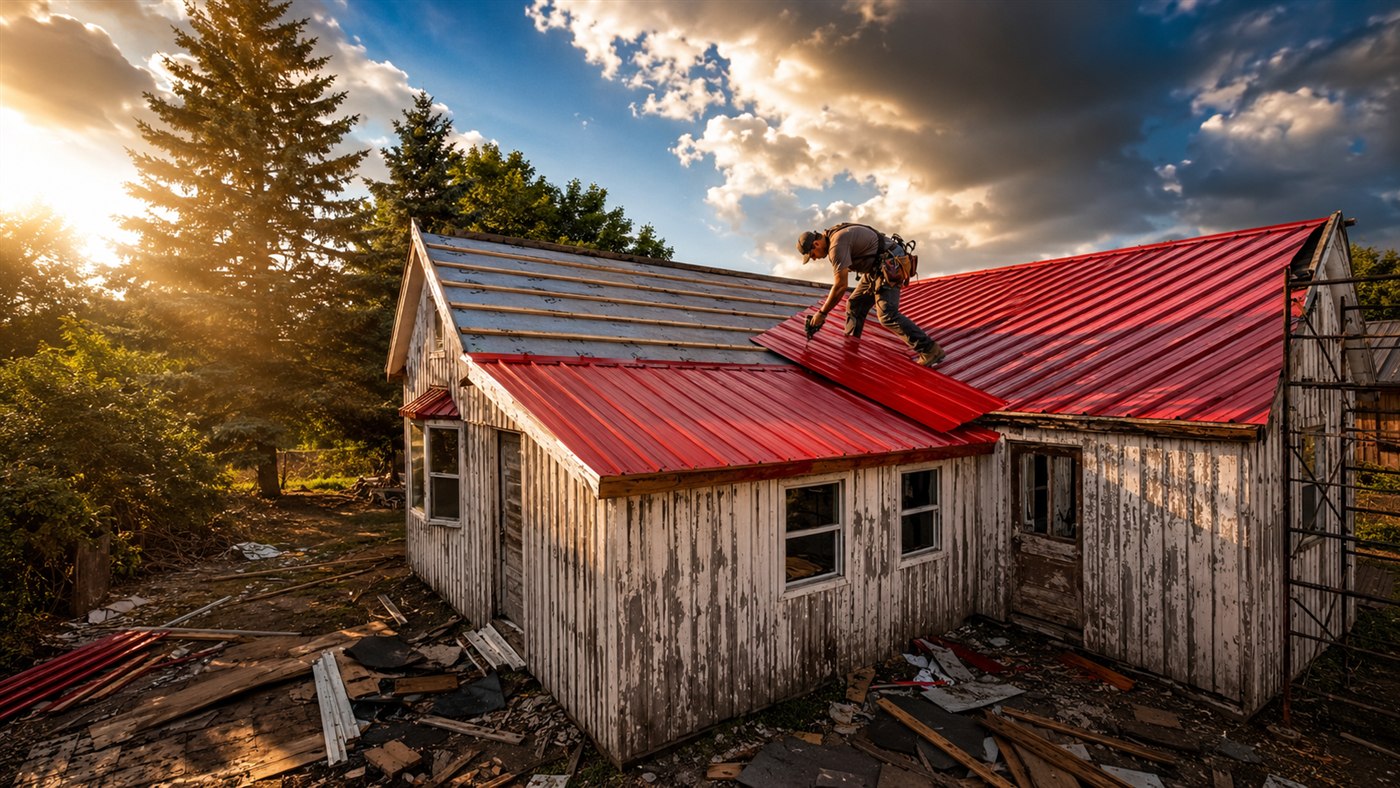
Abandoned House Renovation Fixes Decades-Long Leak in Two Days with Red Steel Roof Installation


A large portion of these tires came from industrial and tire shop discards. Many are left waiting for collection, accumulating water and becoming a health problem.
Instead of letting this happen, the couple began driving around with a trailer, picking up one tire at a time. Where others saw difficult-to-dispose-of junk, Lídio and Sandra saw structure, comfort, and design.
Inside, the tire cabin surprises. The walls received mortar, gained texture and finish, but still display the design of the tires, like a signature of the material.
The wardrobe was made from reused pallets, the window came from a spool of wire, and even old jewelry became decorative covering. It’s the logic of trash into luxury applied in detail.
Tires, Pets, Planters, and Glass: Everything Finds a New Place

In every direction you look, something repurposed appears. Comfortable armchairs made of tires. Doors coated with rubber, giving a rustic yet modern look. Stairs formed by aligned tires. Tire planters scattered throughout the yard.
The PET bottles became entire walls of small houses, such as the dog house made with PETs filled with water to prevent deformation, protecting the animals from sun and rain.
In another corner, two tractor tires serve as benches for children to sit, jump, and play.
Perhaps one of the most emblematic examples of trash into luxury is found in the toilets. Thirty-six toilets were collected from landfills, all unused, with no destination and no apparent value.
On the farm, they transformed into benches, table legs, structural bases, and even plant pots, painted and decorated. In the glass bottle cabin, two toilets become benches right at the entrance, proving that, with creativity, even the most unlikely object gains a new function.
The Cabin of 25 Thousand Bottles: When Trash Into Luxury Also Becomes Comfort
The star of the place is a cabin built with around 25 thousand long neck glass bottles. Outside, the walls are a mosaic of greens, browns, and transparent.
Inside, the environment is cozy, with a double bed, visible electrical installation, functional bathroom, and surprisingly pleasant temperature even on a hot sunny afternoon.
The walls were not erected carelessly. Each section is made with two bottles tied together, ensuring firmness and alignment.
The finish was done with plaster, chosen for being cheaper than white cement. The visual effect is of a translucent, organic wall that filters light and helps keep the interior cool.
The wooden structure of the cabin also follows the logic of reuse. Pallets serve as a base, support, and finishing details.
On the ceiling, tires reappear as part of the structure, along with reclaimed windows that were once frames in another house and now receive new life adorning the “glass house.”
From the Savanna to the Pool: Everything Transforms

It’s not just construction. The trash into luxury also appears in the way the couple deals with what falls, breaks, or would be discarded.
A large jatobá that died on the farm became a table, counter, and other furniture. No part was wasted. The logs transformed into benches, the large top became a central table, and smaller pieces turned into details in the cupboard.
The backyard pool is also a product of reuse. A friend of Lídio, who owns a transportation company, had unused asphalt sheets, damaged by heat during transport. Instead of going to waste, the material became the internal covering of the pool.
After the masonry, came the sheet, followed by the painting. Once again, a difficult-to-dispose-of waste was converted into leisure and comfort.
Even the tractor tires filled with water harbor life. Inside them, minnows swim, fed by the family, creating a small ecosystem in the yard.
In another area, a trellis made with inner tubes forms a kind of decorative net, attached to the tractor tire structure, closing the visual cycle of reuse.
Trash Into Luxury Also for the Animals of the Savanna


The concern for the surroundings does not stop at the farm. In the trees around, howler monkeys live, frequently appearing to feed.
They were thin and sometimes got too close to the house and the dogs, risking an attack.
To help, the couple created specific feeding troughs for them, using reused materials and fruits that would otherwise be discarded at a partner supermarket.
Every day, in the morning and late afternoon, the howler monkeys come to eat what would have been thrown away. It’s trash into luxury in another dimension: nothing is lost, not even the unsold fruit. It becomes food for local wildlife.
This routine of seeking fruits, setting up feeding troughs, and respecting the animals’ schedules shows that, for Lídio and Sandra, sustainability is not just about different projects. It’s a relationship with the environment, with the neighborhood, and with what the city discards.
Idea, Hands-On, and Construction Experience
None of this would be possible if it were just an idea. The trash into luxury observed on the farm was born from the combination of Sandra’s creativity and Lídio’s construction experience.
He has worked as a mason, foreman, and construction manager. She imagines, researches, receives ideas via messages, observes references, and throws the concepts on the table.
In practice, she proposes, he calculates, adapts, adjusts, and executes. Together, they learn from each project. The tire cabin, the rubber-coated roof, the bottle wall, the pool with sheet, the toilet benches, the inner tube net, and the jatobá table are the fruits of this constant dialogue between imagination and technique.
The result is a space that feels like a exhibition park, but is home, yard, workshop, and refuge at the same time.
With each new finished corner, the feeling is that trash into luxury has another chapter, and not a final point.
A Future With More Cabins and More Repurposed Ideas
The couple does not plan to stop. They are already talking about new cabins made with PET bottles, entire structures of pallets, tree houses made only with repurposed wood, and other experiences with materials that are currently thrown in landfills.
People send videos, photos, references, and each message can turn into a new project in the Jardim dos Ipês.
Meanwhile, those who visit leave with the same impression: what many people call trash became luxury in the form of architecture, art, rest, and togetherness.
It is a living proof that the fate of tires, bottles, and toilets can be much more creative than simply rotting in a landfill or on an empty lot.
And you, after learning this story of those who transformed trash into luxury in their backyard, have you thought about what material thrown away in your house could become furniture, a garden, or even part of a different construction?