Portuguese
  Spanish


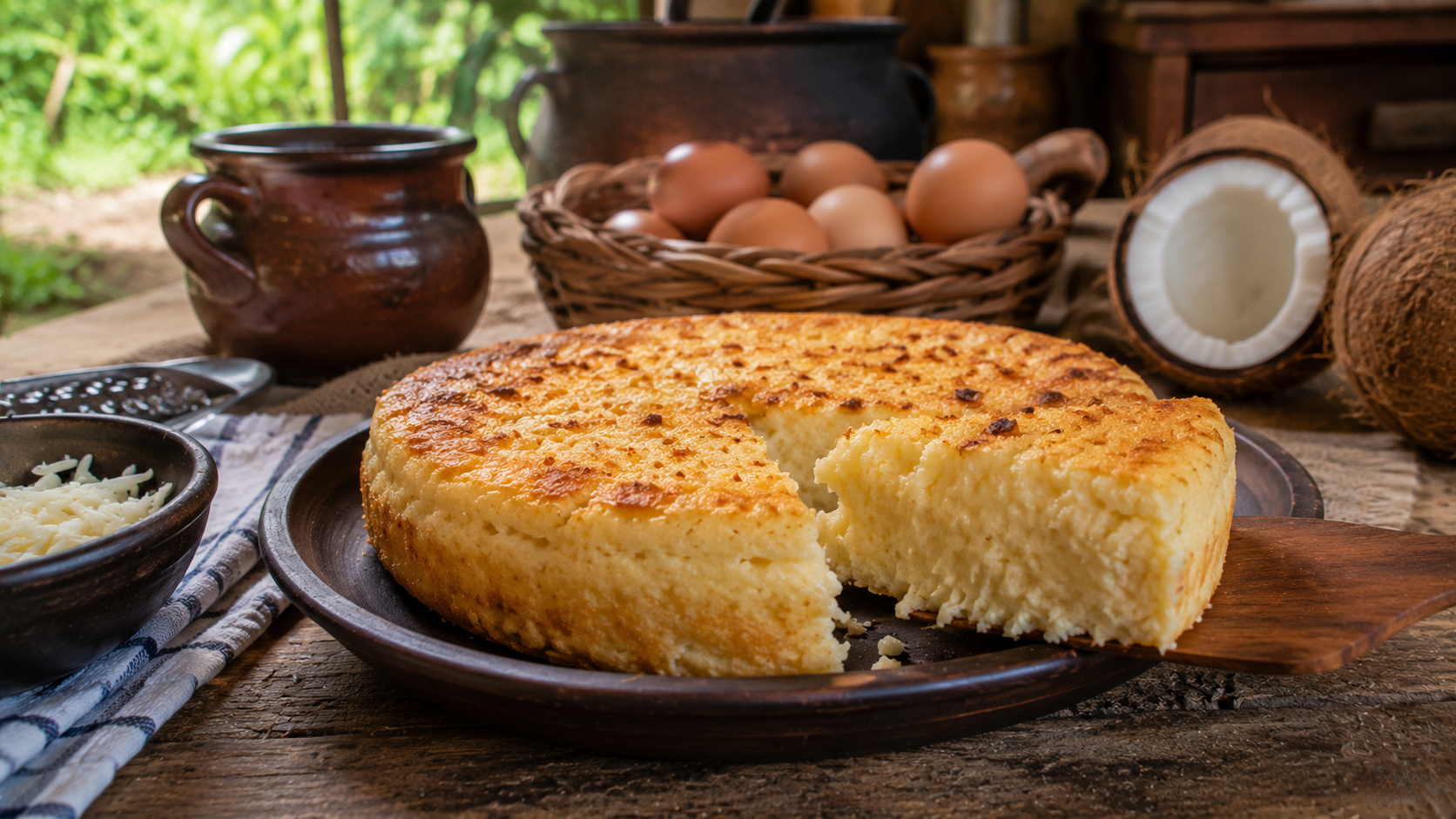

Prepared with grated cassava, cheese, and free-range eggs, traditional cake from the Brazilian countryside spans generations and keeps alive one of the most authentic legacies of rural cuisine
Brazilian cuisine holds recipes that withstand the test of time and continue to move entire families. Among them is the traditional mané pelado, a creamy cake made with grated cassava that carries stories, memories, and traditions passed down from generation to generation.
The information was released by Agro Record, from R7, during a report that presented the recipe prepared by rural entrepreneur Telma Lopes Machado, owner of Fazenda Babilônia. In addition to teaching the preparation method, she shared the cultural importance of the dish and highlighted its connection with the emotional memory of rural families.
More than just a simple recipe, mané pelado represents an important part of traditional Brazilian gastronomy. Therefore, it remains present in family gatherings, regional festivals, and celebrations that value the flavors of the countryside.
-
Brazilian Couple Turns Property into Culinary Hub, Investing $400,000 to Build a Business Earning $800,000 Annually

-
Couple Quits Jobs, Converts 1981 VW Van into Home, Travels 80,000 Kilometers Across the Americas, and Wins Surprise Tickets to See Messi Make History at the World Cup

-
Rio de Janeiro School’s Listening Program Reduces Dropout Rates and Boosts Literacy, Set to Expand to 350 Municipal Schools
-
Five-Year-Old Turns Crayon Drawings of Colorful Socks into a Brand, Raising $200,000 to Aid Vulnerable Children



Fazenda Babilônia preserves traditional recipes of rural cuisine


Located in a region marked by gastronomic tradition, Fazenda Babilônia has become a reference in the preservation of historical recipes of Brazilian cuisine.
During the presentation aired by Agro Record, Telma Lopes Machado showed the preparation of mané pelado, a cake known for its creamy texture and the distinctive flavor of cassava combined with cheese and free-range eggs.
Furthermore, the rural entrepreneur highlighted that many traditional recipes carry family stories and childhood memories. In this way, each dish preserves not only ingredients but also experiences lived around the table.
According to Telma, rural cuisine has a strong connection with the cultural identity of rural families. Therefore, keeping these recipes alive means preserving an important part of Brazilian history.
While many modern preparations emerge each year, recipes like mané pelado continue to gain space precisely because they evoke special feelings and memories.
How to prepare the traditional mané pelado from Fazenda Babilônia
The preparation of the recipe is simple, but it uses ingredients that ensure characteristic flavor and texture.
To make the mané pelado presented by Telma Lopes Machado, you will need:
- 1.5 kg of grated cassava dough
- 600 g of grated cheese
- 600 g of sugar
- 5 free-range eggs
- Other complementary ingredients used in the traditional recipe
First, all ingredients should be placed in an appropriate container.
Next, the mixture needs to be homogeneous to ensure a uniform texture after baking.
After that, the dough should be transferred to a previously prepared baking pan.
Finally, the cake goes into the hot oven for approximately 30 minutes.
During baking, the combination of cassava, cheese, and eggs creates a creamy consistency that sets mané pelado apart from other traditional Brazilian cakes.
Moreover, the aroma that spreads through the kitchen often immediately recalls recipes prepared by parents, grandparents, and great-grandparents over the decades.
Award-winning book gathers recipes and family stories
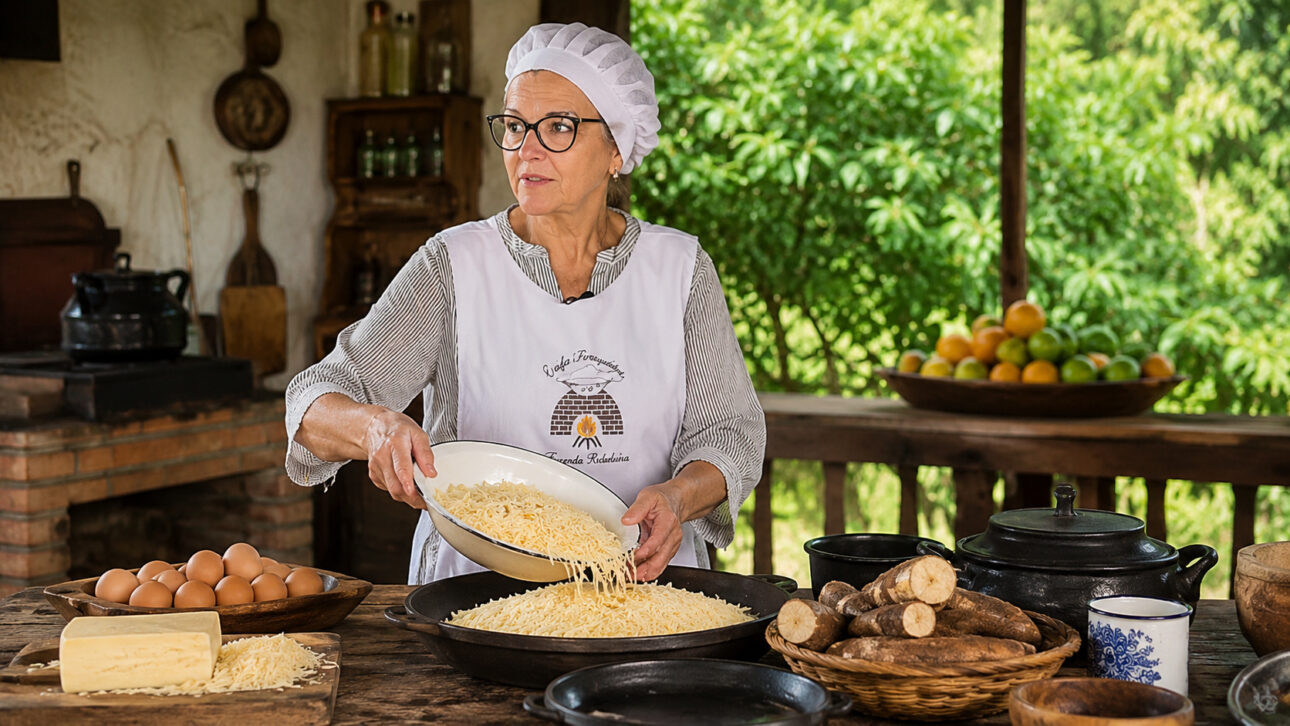
In addition to sharing traditional recipes, Telma Lopes Machado also released an award-winning book that gathers historical dishes and family stories.
The work presents recipes preserved over generations and records stories that help understand the formation of Brazilian regional cuisine.
In this sense, the book serves as an important cultural preservation tool. After all, many of these preparations were born on farms and rural properties that contributed to the construction of the country’s gastronomic identity.
At the same time, the publication allows new generations to access recipes that could be lost over the years.
Therefore, initiatives like this gain increasing relevance among researchers, cooks, and admirers of traditional gastronomy.
The Flavor of Emotional Memory Remains Alive
Few foods can evoke memories as intense as recipes passed down within the family.
In the case of mané pelado, the combination of simple ingredients produces a result that goes far beyond taste.
While the cake bakes, many people recall moments from childhood, family gatherings, and celebrations held in the Brazilian countryside.
Moreover, the recipe emphasizes the importance of valuing regional cuisine in an era marked by the industrialization of food.
For this reason, traditional dishes continue to hold a special place on the tables of thousands of Brazilians.
The recipe presented by Telma Lopes Machado demonstrates that preserving rural gastronomy also means preserving stories, customs, and family ties that span generations.
And precisely because it unites tradition, simplicity, and affection, mané pelado continues to win new admirers and keeps alive one of the most authentic expressions of Brazilian cuisine.
Which recipe from your childhood evokes special memories and makes you relive unforgettable family moments?