Portuguese
  Spanish


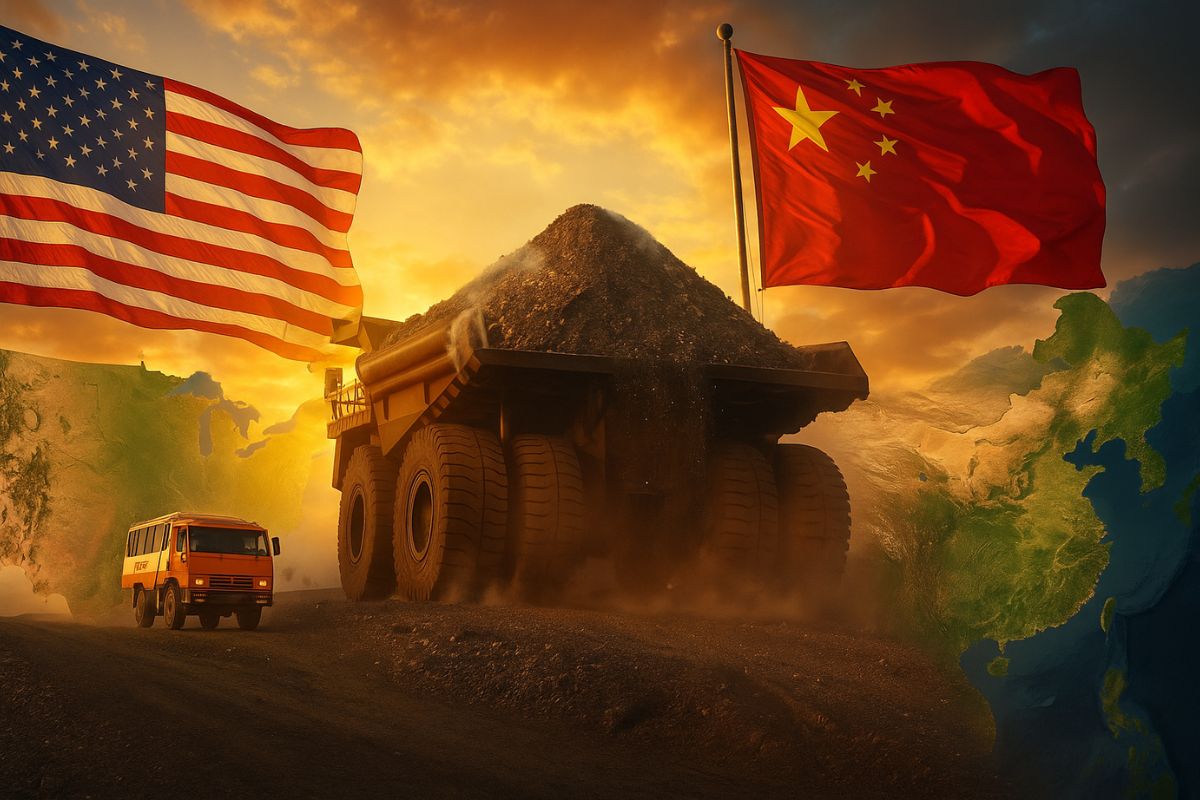

In A Truce That Exposes Western Dependence, The USA Makes Deal On Rare Earths With China After Beijing Restricts Export Of Essential Minerals For Defense And Technology Industry.
At the end of June 2025, the world watched the outcome of a crisis that threatened to paralyze the global industry. In a demonstration of geopolitical power, the USA Makes Deal On Rare Earths With China, yielding to a pressure that exposed one of its greatest strategic vulnerabilities. The pact ended weeks of tension, but left a clear lesson: China will not hesitate to use its dominance over critical minerals as a weapon.
The story of this “trade” war is a case study on how controlling a supply chain has become one of the main tools of power in the 21st century. The truce, although welcome, does not address the underlying issue and serves as a warning to the West about its dangerous dependency.
What Are Rare Earths And Why Does China Dominate This Market?
Rare earths are a group of 17 metals essential for modern technology. They are used in everything from smartphones and electric cars to missile systems and fighter jets, such as the F-35, which needs over 400 kg of these materials.
-
China could reduce iron ore imports from 80% to 50% of consumption by 2030, while its share in global steel production falls from 52% to 46%, in a shift that could reshape the global market, says CMRG.

-
Brazil is sitting on one of the largest lithium reserves in the world, in the Jequitinhonha Valley, but national mining has almost become an appendage of China: 97% of the metal’s export goes to a single country, which also dominates refining.
-
Iron ore falls to 762 yuan in China as real estate sales decline and steel production hits lowest level since 2018
-
Brazil has minerals, clean energy, and a waiting market, but it could miss a billion-dollar opportunity if it doesn’t speed up the race for green minerals, while the steel industry seeks to reduce emissions.


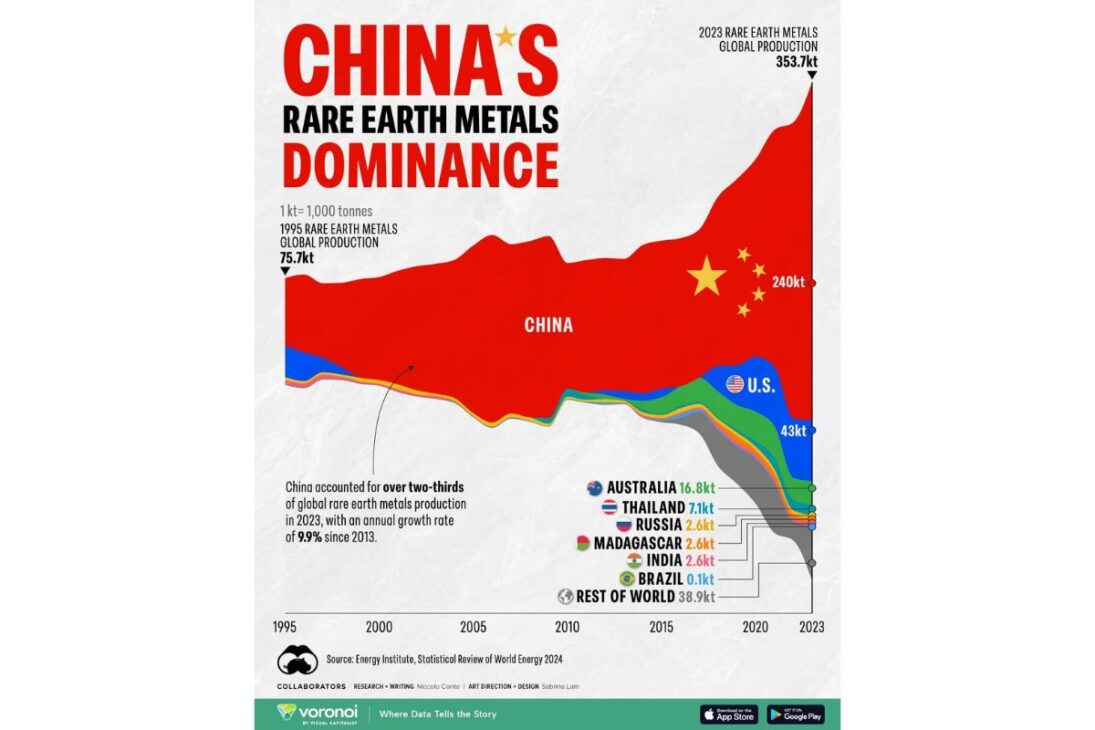
China’s dominance in this sector is nearly absolute. The country not only extracts about 70% of the world’s rare earths but, more importantly, controls almost 90% of all processing and refining. This means that even ore extracted in the USA or Australia often needs to be sent to China to be turned into high-value products, such as neodymium magnets.
The Timeline Of The Crisis: The Escalation Of Tensions In 2025
The crisis began to take shape in early 2025, with the imposition of new American tariffs on Chinese products. China responded, but its strongest move came on April 4, 2025. On that day, Beijing imposed a new and stringent licensing regime for the export of seven types of heavy rare earths and magnets.
In practice, the measure froze supply to the West. The lack of these essential components began to cause shutdowns in production lines in Europe, Japan, and the United States, particularly in the automotive and defense sectors.
Emergency Negotiations: The Geneva Truce And The London Agreement
Industry pressure forced diplomats to act. On May 10 and 11, a meeting in Geneva, Switzerland, resulted in a 90-day truce. However, China did not fully comply with the promises made, and export licenses continued to be blocked.
As the crisis worsened, a new round of emergency negotiations was held in London on June 9 and 10. The talks, led by the U.S. Secretary of the Treasury, Scott Bessent, and Chinese Vice Premier He Lifeng, laid the groundwork for the final agreement.
What Was Agreed Upon? A Commodity For Technology Exchange
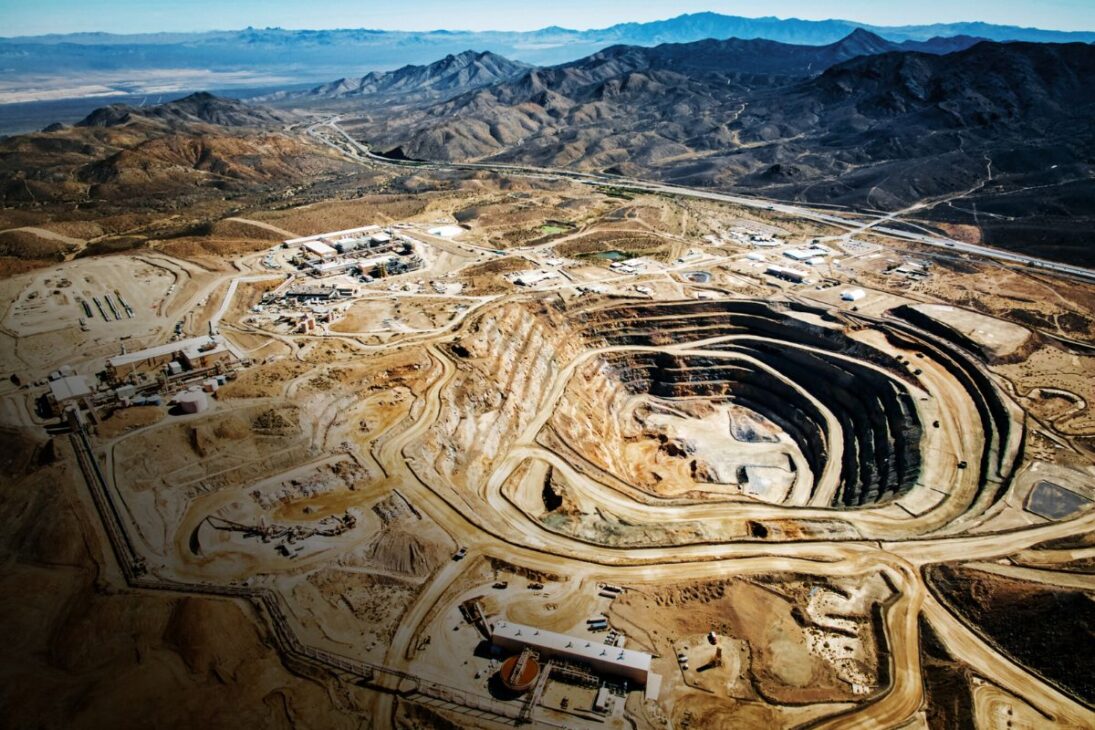
The agreement was formally announced between June 26 and 27, 2025. The negotiation was, in essence, a direct exchange:
China committed to “review and approve” export license requests, normalizing the flow of rare earths to the global market.
The USA, in return, agreed to remove a series of “restrictive measures”, which, according to sources, include controls on the export of sensitive technologies, such as software for semiconductor design and components for aviation engines.
A Tactical Victory For China And A Warning To The West
The fact that the USA Makes Deal On Rare Earths With China was seen by analysts as a tactical victory for Beijing. China did not yield on its main weapon: the export control regime remains in place, and the country can use it again as a pressure tool in the future.
For the United States and its allies, such as the European Union and Japan, the crisis served as a final warning. The episode accelerated investment plans in mining and, primarily, in rare earth refining capacity in their own territories or allied countries. The quest for “strategic autonomy” and for a supply chain free from Chinese influence became the top priority for the economic and military security of the West.