






 Portuguese
  Spanish


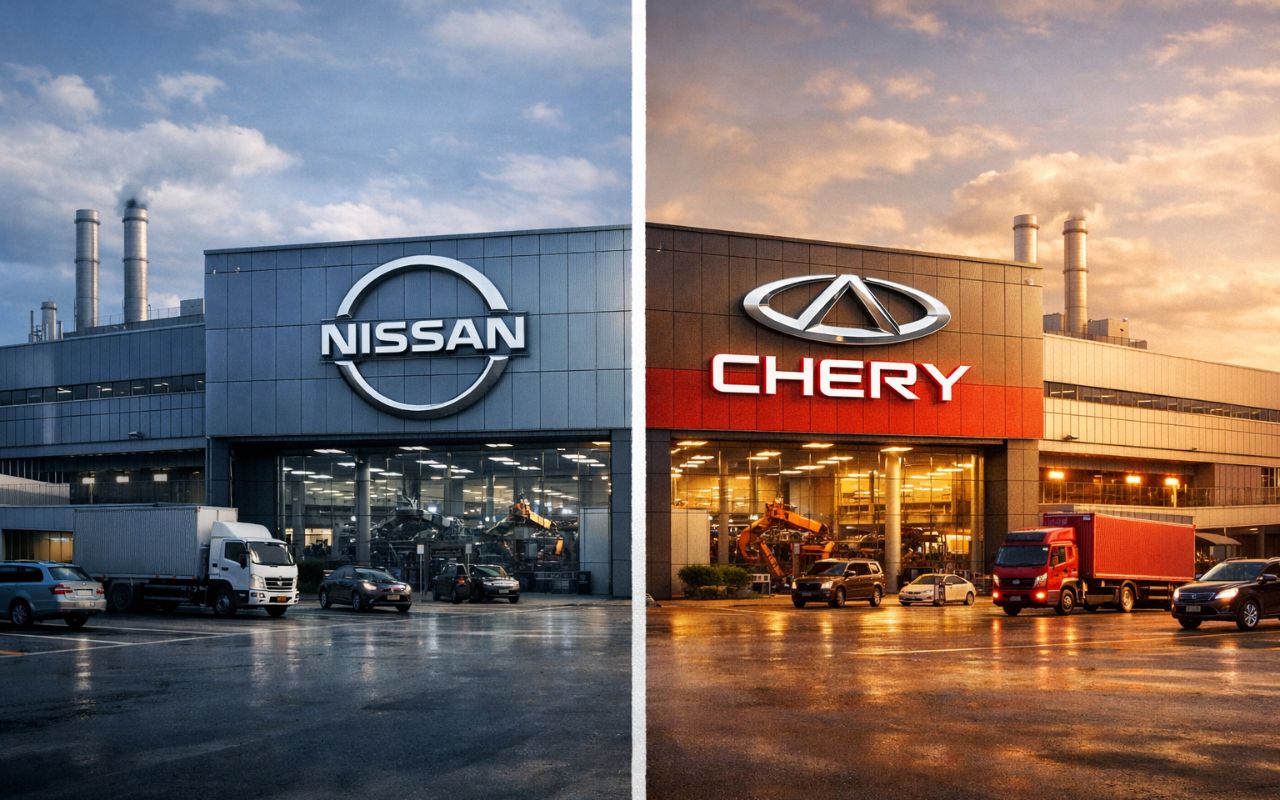

Chery Acquires Nissan Plant in Rosslyn, South Africa, Ensuring Expanded SUV Production, Job Preservation, and Industrial Expansion on the African Continent.
Chery took a strategic step in 2026 by acquiring the Nissan plant in Rosslyn, South Africa, consolidating its industrial presence on the continent.
The facility will be dedicated to the production of SUVs from the Tiggo line and its sub-brands, allowing the Chinese brand to efficiently supply African markets.
The deal also ensures job preservation and maintains the local supply chain, as highlighted by involved executives.
-
Renault Sandero: Affordable Used Models Feature 1.6 Engine, 106 HP, 14.7 km/l Fuel Efficiency, and Cruise Control Options.

-
Volkswagen Jetta Highline Remains Popular Years After Discontinuation: Features 2.0 TSI Engine, DSG Transmission, and Spacious Trunk, All for Less Than a New Fiat Argo

-
Brazilian Company from Caxias do Sul Among World’s Leading Brake Friction Material Manufacturers, Present in Over 125 Countries

-
Kia K4 Launches in Portugal with 7-Year Warranty, Targets Volkswagen Golf with 1.0 Turbo Engine, Unavailable in Brazil


Chery Purchases Nissan Plant in South Africa
The Nissan plant in Rosslyn officially stops producing the Frontier pickup in South Africa, focusing its production solely in Mexico and China.
According to Jordi Vila, president of Nissan Africa, the negotiation sought to ensure stability for employees and suppliers:
“Nissan has a long and proud history in South Africa and has worked to find the best solution for our employees, our customers, and our partners. External factors have significantly impacted the utilization of the Rosslyn plant and its future viability within Nissan. Through this agreement, we were able to secure the employment of the majority of our workforce, while also preserving opportunities for our supplier network. This measure also ensures that the Rosslyn facility will continue to contribute to the South African automotive sector.”
Strategic Expansion and Production Lines
Under Chery’s leadership, the plant will be adapted to produce SUVs and possibly in the future other models from the group, including Omoda, Jaecoo, Jetour, and Soueast.
Currently, the Tiggo line includes models such as Tiggo 4, Tiggo 7, Tiggo 8, and Tiggo 9.
The presence of these sub-brands strengthens the dealership network and diversifies the brand’s product portfolio on the continent.
The acquisition transforms the Rosslyn facility into a strategic supply point, allowing for increased production and greater flexibility to launch new models.
In addition to enhancing industrial capacity, centralizing operations is expected to reduce logistical costs and increase Chery’s competitiveness against other global manufacturers.
Diversification and Sub-brands of Chery
The group plans to expand production of its sub-brands at the new facility. Jetour offers models such as Dashing, X70, T1, and T2, while Soueast sells S09, S08, S07, S06, and S05.
This diversification allows the brand to serve different segments, from compact SUVs to larger utility vehicles, strengthening its presence in the African market.
Chery’s arrival at the former Nissan plant represents a significant change for the sector.
In addition to creating jobs, this measure is expected to stimulate investments and strengthen the local supply chain.
Experts emphasize that this initiative is an important step to revitalize the region’s automotive industry and position Chery as a leader in affordable SUVs.
Brand Consolidation and Future Prospects
With Rosslyn adapted for SUV production and the Tiggo line strengthened, Chery reinforces its long-term strategy in South Africa.
The acquisition not only increases industrial capacity but also consolidates the brand as a reference for high-quality utility vehicles on the continent.
According to executives, the plant will be a central point for the company’s ongoing expansion in the African market.
Source: AutoMais


