Portuguese
  Spanish


According to a report published by Revista Fórum on 07/03/2026, the Chinese electrical grid surpassed 10,000 TWh annually, exceeding the United States, European Union, and India combined, encompassing nearly 800 million accounts and equivalent to about 15 times the Brazilian electrical consumption, among industry, residences, and commerce on an unprecedented planetary scale.
The Chinese electrical grid has consolidated as the largest electricity supply system on the planet, with an annual capacity above 10,000 terawatt-hours, according to data cited in the report. The scale places the country ahead of the combined total of the United States, European Union, and India and is equivalent to about 15 times the annual electrical consumption of Brazil.
The information was published by Revista Fórum on 07/03/2026, based on data from the National Energy Administration of China, bulletins from the Ministry of Mines and Energy of Brazil, and monitoring by the International Energy Agency. The case reveals how energy, industry, and state planning intersect in the Chinese expansion.
Chinese electrical grid reached an unparalleled scale in the world
The China encompasses nearly 800 million electricity accounts according to a report released by the National Energy Administration, the NEA. This number helps to measure the complexity of a system that needs to serve residences, commerce, services, urban infrastructure, and a gigantic industrial base.
-
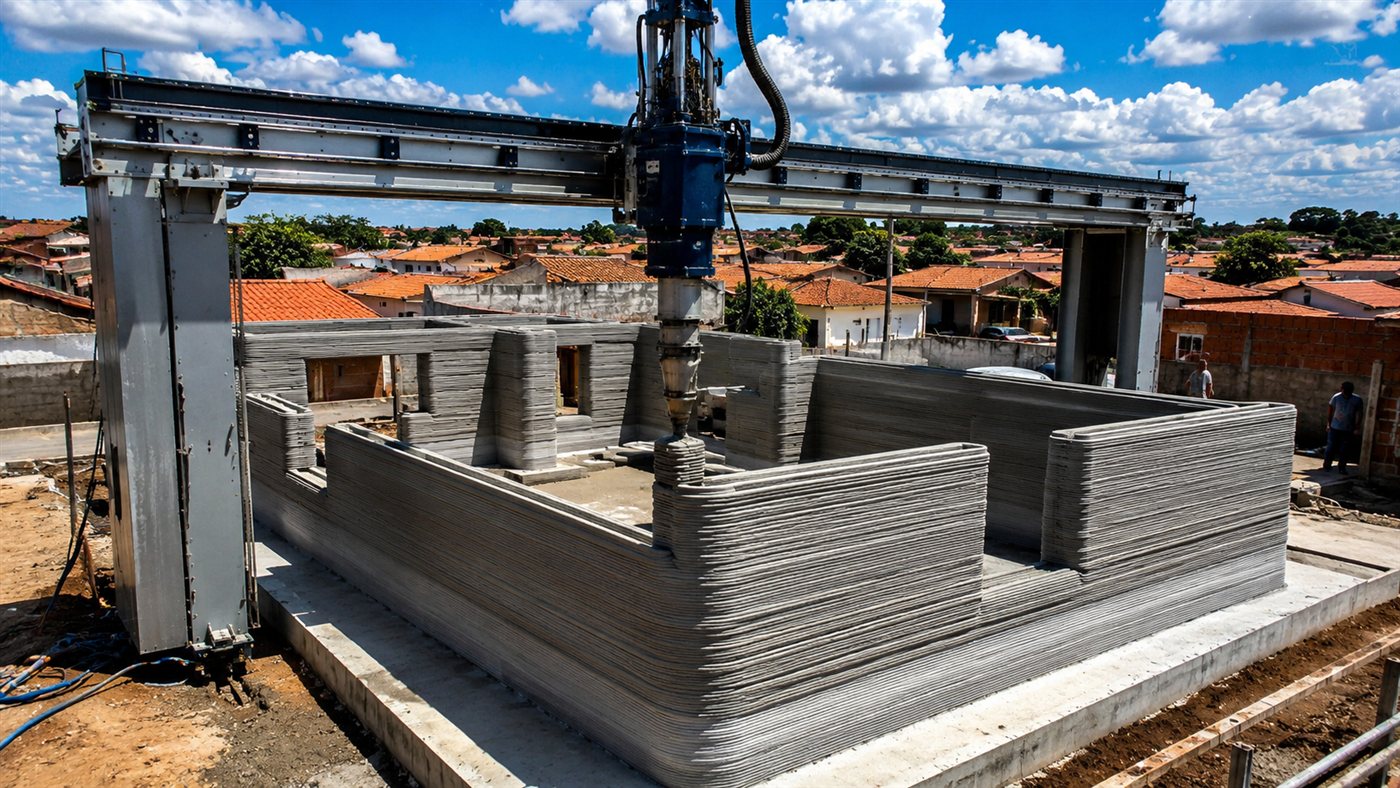
Brazil’s First 3D-Printed House Built in 30 Hours with Two Operators and 20% Lower Costs

-
Parker Solar Probe Discovers High-Speed Dust Grains Near the Sun, Offering New Insights into Solar Corona’s Mysteries

-
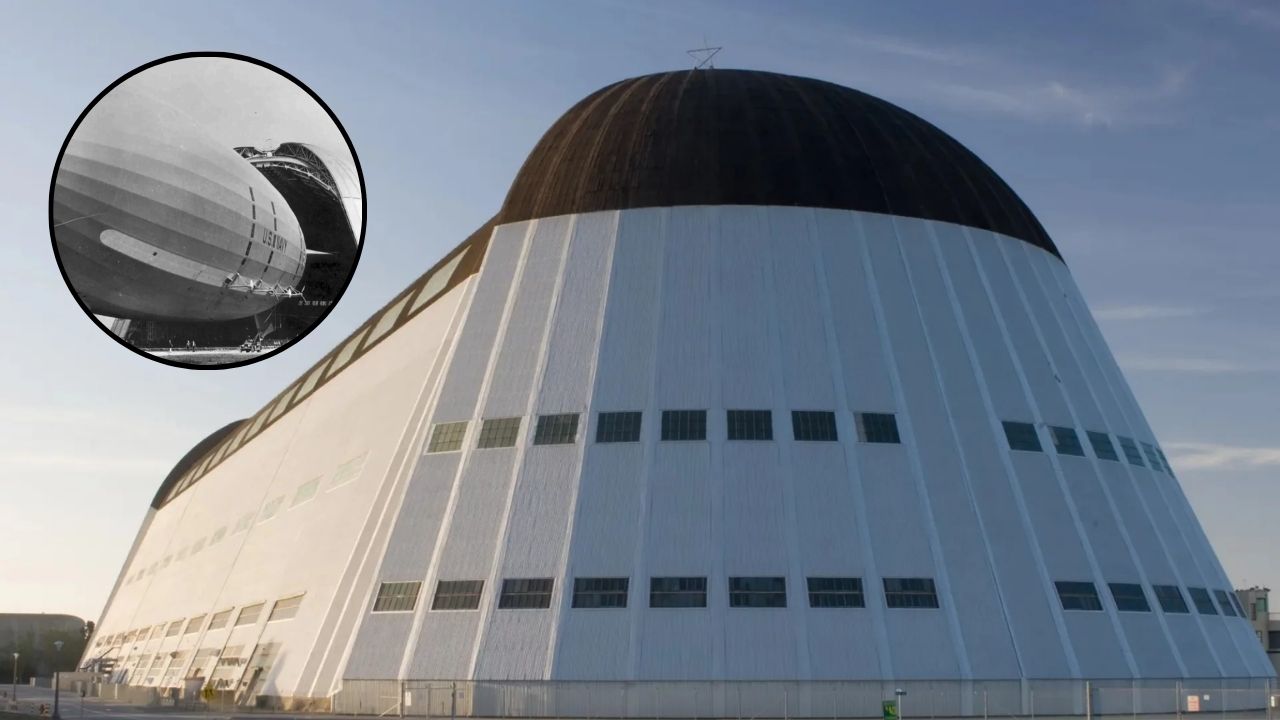
Google Revives Historic Hangar for Cutting-Edge Tech in Silicon Valley: Once Built for a “Flying Aircraft Carrier,” Now a Hub for Drones and Robotics
-
Son of Brazilian Farmers Develops AI Robots in Arizona, Wins $175,000, and Tests Machines for Farming Tasks Amid U.S. Labor Shortage


National electrical consumption reached 10.4 trillion kWh in the last closed year, surpassing for the first time the mark of 10 trillion kWh. In practice, the Chinese electrical grid is not only large in territory or population: it operates on a scale that reorganizes global energy comparisons.
Production exceeds the United States, European Union, and India combined
The report points out that the annual Chinese production already surpasses the combined generation of the United States, European Union, and India. These three blocs are among the largest economic centers on the planet, making the comparison even more significant.
This advancement not only means more electricity available. It indicates China’s ability to sustain heavy industry, manufacturing, dense cities, and new technologies with a rare energy volume. In this context, the power grid becomes one of the material bases of Chinese industrial power.
Comparison with Brazil shows a brutal difference in scale
Brazil’s total electricity consumption ranges from 650 to 680 TWh per year, according to bulletins from the Ministry of Mines and Energy cited in the source. When this level is compared to China’s capacity of over 10,000 TWh, the result is nearly 15 times the volume consumed by the country in a year.
The difference does not stem from a single factor. China has about 1.4 billion inhabitants and an economy strongly marked by heavy industry and manufacturing, sectors that require a large amount of electricity. Therefore, the comparison with Brazil helps the reader visualize the real size of the Chinese power grid.
Heavy industry helps explain Chinese demand
The Chinese productive structure depends on intense electricity consumption. The manufacturing of goods, the operation of industrial complexes, and the presence of large-scale production chains make electricity a strategic input for the country.
This industrial weight differentiates China from economies where the service sector has a proportionally larger share in energy demand. In China’s case, the power grid supports factories, cities, and infrastructure, but also sustains the country’s position as a global production center.
State planning appears at the center of energy expansion
The expansion of the Chinese power system is associated with official energy efficiency goals. The 14th Five-Year Comprehensive Work Plan on Energy Conservation and Emission Reduction set the goal of reducing energy consumption per unit of GDP by 13.5% by 2025, using 2020 as the base year.
According to the International Energy Agency, the plan is already seen as concluded. Besides the relative reduction in energy consumption, the document aimed to keep total consumption at levels considered reasonable and control pollutant emissions in strategic industrial sectors. The power grid, therefore, grows within a policy that tries to combine expansion and efficiency.
Green technology entered the competition for the power matrix
The source associates Chinese energy development with the advancement of green technology and state planning. This places the electrical grid in a central position to understand the country’s energy transition, even though the report does not detail the complete composition of the matrix.
The most relevant point is that an electrical grid of this size needs to handle generation, transmission, industrial consumption, and efficiency goals simultaneously. On a Chinese scale, any energy change produces global effects because the system already operates on a dimension greater than that of large economies combined.
Almost 800 million accounts show the size of the operational challenge
Serving almost 800 million electricity accounts requires a gigantic administrative, technical, and logistical structure. The electrical grid needs to connect very different consumers, from large urban centers to productive areas and industrial regions.
This number also shows that the Chinese scale cannot be measured only by annual production. The challenge is to distribute energy continuously to a customer base larger than the entire population of many continents, maintaining the operation of an industrialized and highly urbanized country.
The electrical system has become a strategic piece of Chinese industrial power
The Chinese electrical grid has become a strategic infrastructure because it directly connects energy, production, and competitiveness. Without this volume of electricity, it would be difficult to sustain the combination of manufacturing, exports, urbanization, and technological advancement that marked the country’s economic rise.
At the same time, the growth of this system increases demands for efficiency, emission control, and energy transition. The magnitude of the Chinese electrical grid is impressive, but it also shows the size of the environmental and economic responsibility involved in operating the largest electrical structure on the planet.
What the Chinese scale says about the future of energy
China shows that the energy dispute is no longer just a matter of electricity generation. It involves long-term planning, industrial capacity, transmission networks, environmental goals, and massive electricity use by companies, cities, and consumers.
The direct question is: should countries like Brazil aim for a more planned and integrated electrical expansion, or is the Chinese scale an incomparable model due to the size of the population and industry? Leave your opinion in the comments.