Portuguese
  Spanish


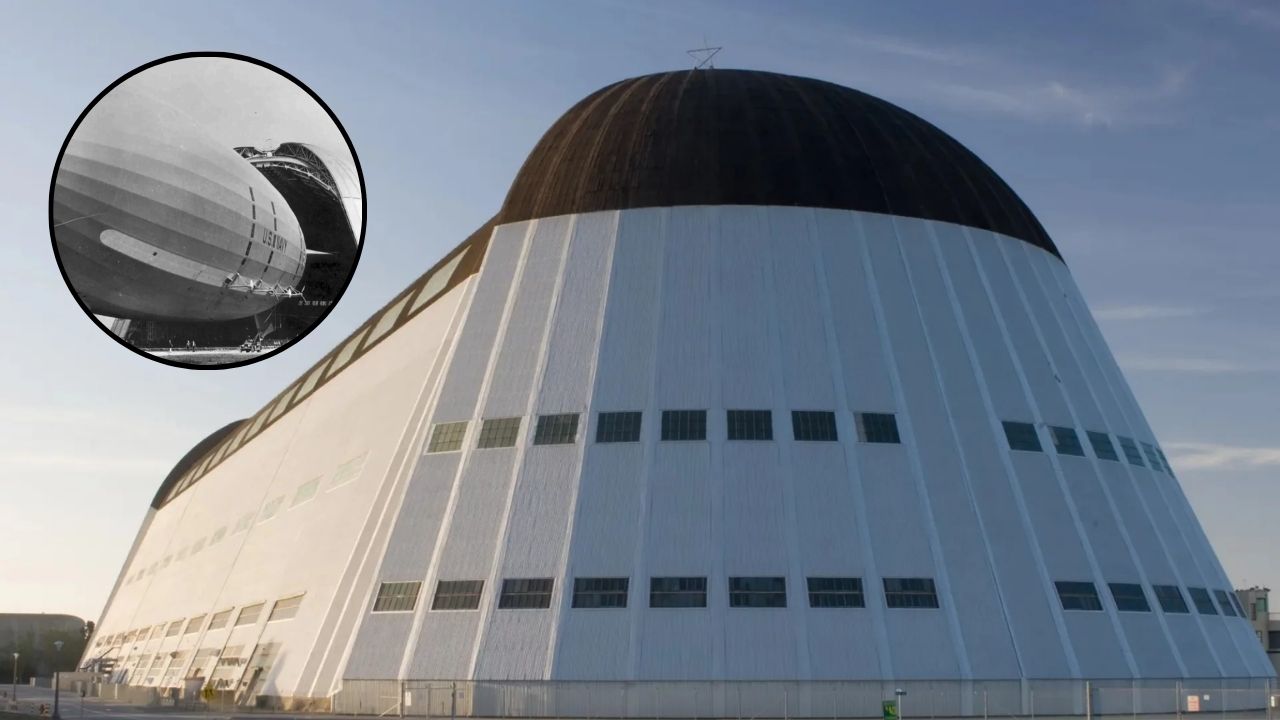

Restored at Moffett Field, near Mountain View, Hangar One underwent decontamination, new coating, and a 60-year agreement with Planetary Ventures, Google’s real estate subsidiary, while NASA, community, and preservationists debate the educational, technological, and historical future of the structure built for the military airship USS Macon.
The giant hangar known as Hangar One has returned to the spotlight in Silicon Valley following the completion of its restoration at Moffett Field, near Mountain View, California. On March 20, 2026, officials and community members gathered inside the restored structure to mark a milestone that had been awaited for years.
The information was released on April 3, 2026, by New Atlas, in a report by Michael Franco. The hangar, now under the control of Planetary Ventures, Google’s real estate subsidiary, carries an unusual history: it was born in 1933 to house the airship USS Macon, faced contamination by toxic materials, and can now enter a new phase linked to drones, robots, balloons, and aerial technologies.
Hangar One was born to receive a “flying aircraft carrier”

The Hangar One was built by the United States Navy in 1933 to serve as the West Coast base for the USS Macon, a 239-meter-long airship. The aircraft was known for its ability to launch smaller planes in mid-air, earning it the comparison to a “flying aircraft carrier.”
-
Son of Brazilian Farmers Develops AI Robots in Arizona, Wins $175,000, and Tests Machines for Farming Tasks Amid U.S. Labor Shortage

-
Canadian Student Wins $50,000 at World’s Largest Youth Science Fair with AI-Powered Sea Turtle Robot Hunting Microplastics and 3D Holographic Camera Exposing Ocean Threats
-
South Korea to Sink 20 Massive Concrete Coffers Off Busan Coast to Build 1.4 km Breakwater at Jinhae New Port, Part of $9.4 Billion Expansion to Rank Among World’s Top 3 Ports

-
Venice Deploys 78 Massive Steel Gates to Shield City from Extreme Adriatic Tides




The Macon crashed in 1935 during a storm near Point Sur, California, but the hangar remained standing and became one of the most recognizable landmarks in the San Francisco Bay Area. The structure ceased to be just an aircraft shelter and began to symbolize an era of extreme ambition in aerial engineering.
Structure could fit eight football fields inside
The size of Hangar One helps explain why it has become so iconic at Moffett Field. The structure occupies about eight acres, measuring approximately 345 meters in length and 94 meters in width, with a roof reaching 60 meters in height.
According to the source, eight football fields could fit inside the internal space. This gigantic volume is part of what makes the hangar so rare, especially in an area close to the heart of Silicon Valley, where strategic land and industrial structures of this size are increasingly contested.
Toxic legacy almost led the icon to demolition
The most critical phase of Hangar One began after NASA discovered, in 1997, polychlorinated biphenyls, known as PCBs, in the center’s storm drainage basin. In 2002, analyses indicated that the hangar’s original exterior coating was one of the sources of contamination, along with asbestos and lead-based paint.
The hangar was deactivated in 2003. When the Navy proposed demolishing the structure, environmentalists, preservationists, and veterans mobilized to prevent the loss of the historic building. The dispute turned Hangar One into a rare case of preservation involving military memory, environmental risk, and architectural heritage.
Google stepped in when NASA lacked resources to recover the space
With budget constraints, NASA was unable to conduct a comprehensive recovery of the site on its own. The agency placed Moffett Field, an area of about 1,000 acres, in a competitive leasing process, with the restoration of Hangar One as one of the requirements.
Planetary Ventures, a real estate subsidiary of Google, took on a 60-year agreement that includes the airfield, three hangars, two runways, and a golf course. The contract involves $1.16 billion in rent and annual savings of $6.3 million for NASA, in addition to the commitment to invest over $200 million in the property and create an educational facility open to the public.
Restoration preserved historical appearance and removed hazardous materials
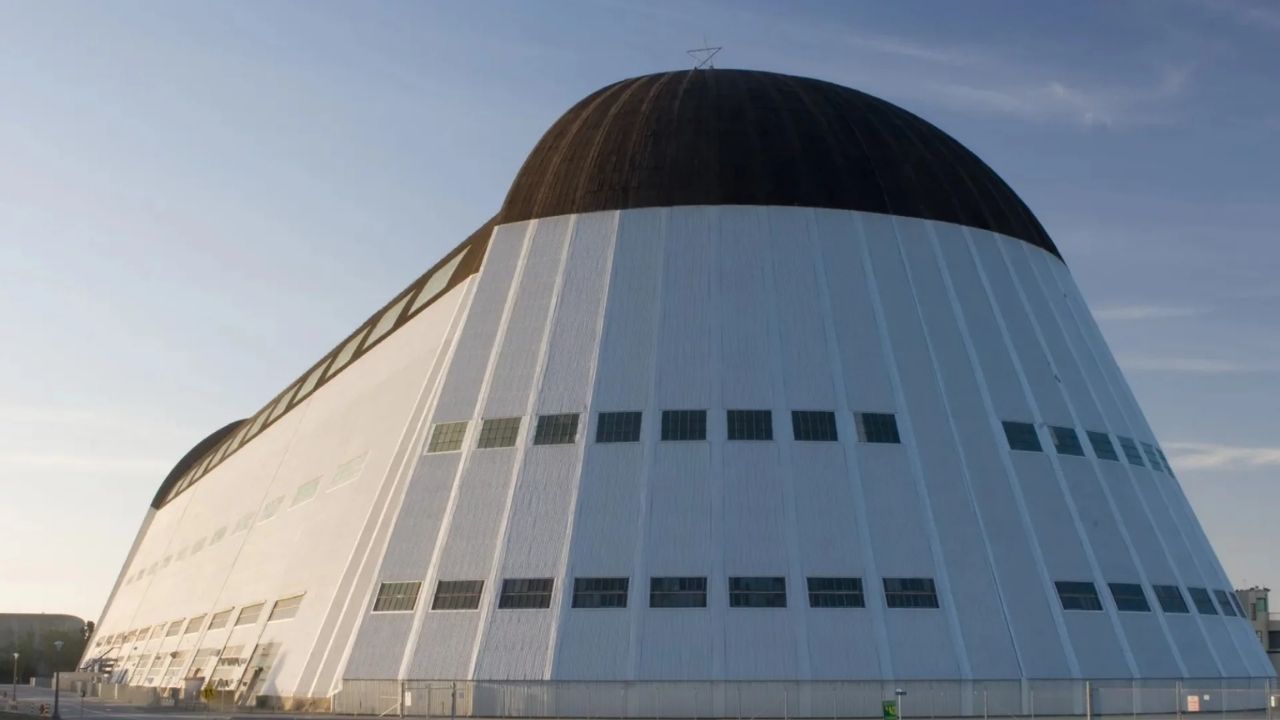
The physical restoration work began in 2022 and was completed on December 1, 2025. The project tackled decades of contamination and structural deterioration, removing toxic materials, treating the steel framework, and installing new cladding, windows, and doors.
The new finish used metal panels in a silver aluminum tone, aiming to recover the historical appearance associated with the original 1930s look. The source states that the EPA certified the complete remediation in 2026, but does not specify the exact date of this certification. The result returned to Silicon Valley a structure that once seemed condemned.
Future may involve drones, robots, balloons, and aerial research


The exact use of the interior of Hangar One is not yet fully defined. Planetary Ventures has only stated its commitment to innovation, while the source points out that the space is particularly suitable for testing drones, balloons, and large-scale aerial systems.
Google also plans to use Moffett Field for research and development in space exploration, aviation, robotics, and other technologies. The combination of gigantic internal volume, active airfield, and proximity to Google’s headquarters creates a condition difficult for competitors to replicate in Silicon Valley.
Community still demands museum and public access to Hangar One’s history
Despite the technological potential, part of the community argues that Hangar One should also preserve its public memory. The proposal for a museum about the USS Macon and the history of lighter-than-air flights has gained strength among supporters of the site’s preservation.
Former congresswoman Anna Eshoo, presented by the source as one of the main political advocates for the hangar, treated the creation of a museum as a priority. Google’s contract requires an educational facility, but the formulation leaves room for interpretation regarding format, content, and access.
Hangar One becomes a symbol between memory, contamination, and technology
Hangar One enters a new phase carrying very different layers of meaning. It was born as the base of a gigantic military aircraft, became a visual icon of Moffett Field, faced a contamination crisis, and now appears associated with the future of aerial technologies in Silicon Valley.
The question that remains is what destiny would make the most sense for a structure of this magnitude: to become Google’s closed innovation laboratory, a museum open to the public, an educational center, or a combination of technology and historical memory? Leave your opinion in the comments.