Portuguese
  Spanish


The farmer’s son gained prominence in ASU News by transforming a request into agricultural robots in Arizona, combining agricultural automation, AI in agriculture, and tests of weeding, cilantro, spraying, and scarecrows to tackle labor shortages in American farms pressured by costs, heat, and repetitive tasks.
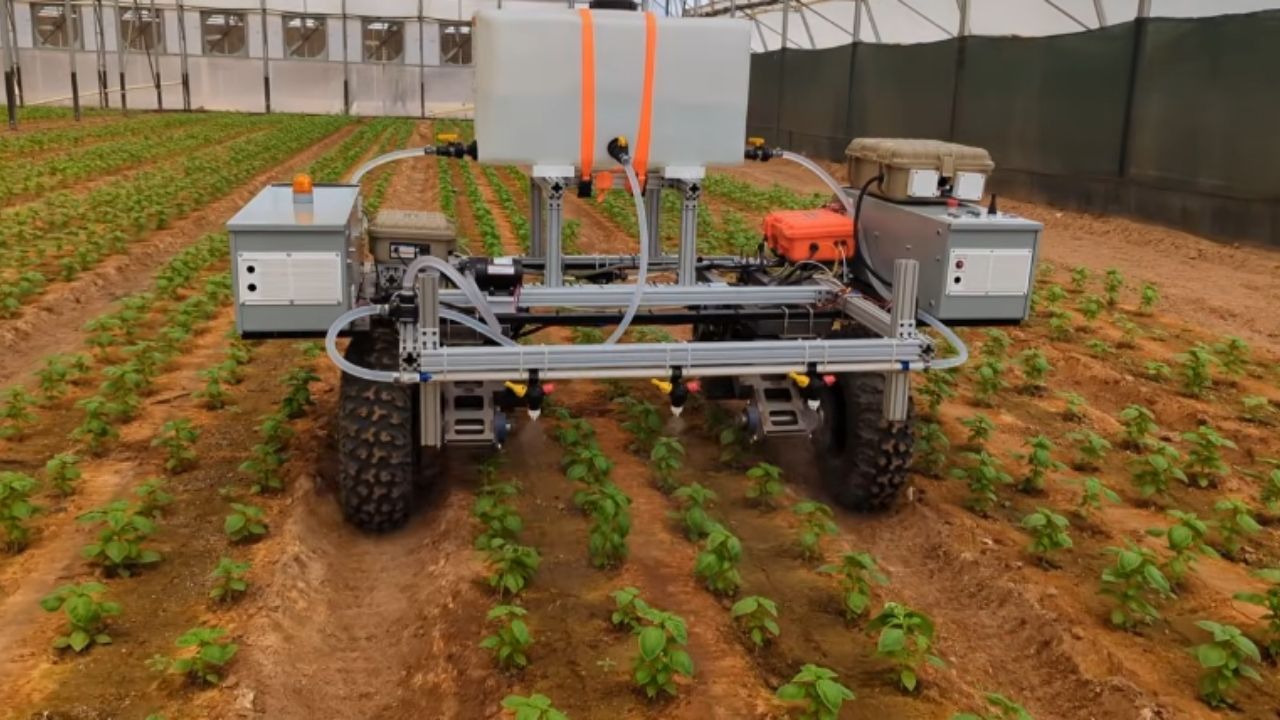
The farmer’s son Raghu Nandivada, a former student of Arizona State University, made headlines by developing agricultural robots with artificial intelligence in Arizona, United States. The initiative was born from a challenge made by his mother in 2018, during a visit to the rural south of India, and today involves machines capable of weeding, spraying, harvesting cilantro, and even warding off birds on farms pressured by a lack of workers.
The story was published by ASU News, from Arizona State University, on January 7, 2026. According to the report, the company Padma AgRobotics, founded by Nandivada, is already testing its solutions on farms like Blue Sky Organic Farms, Duncan Family Farms, and Desert Premium, while trying to transform repetitive and heavy field tasks into automated operations.
A family challenge became the starting point for robots in the field
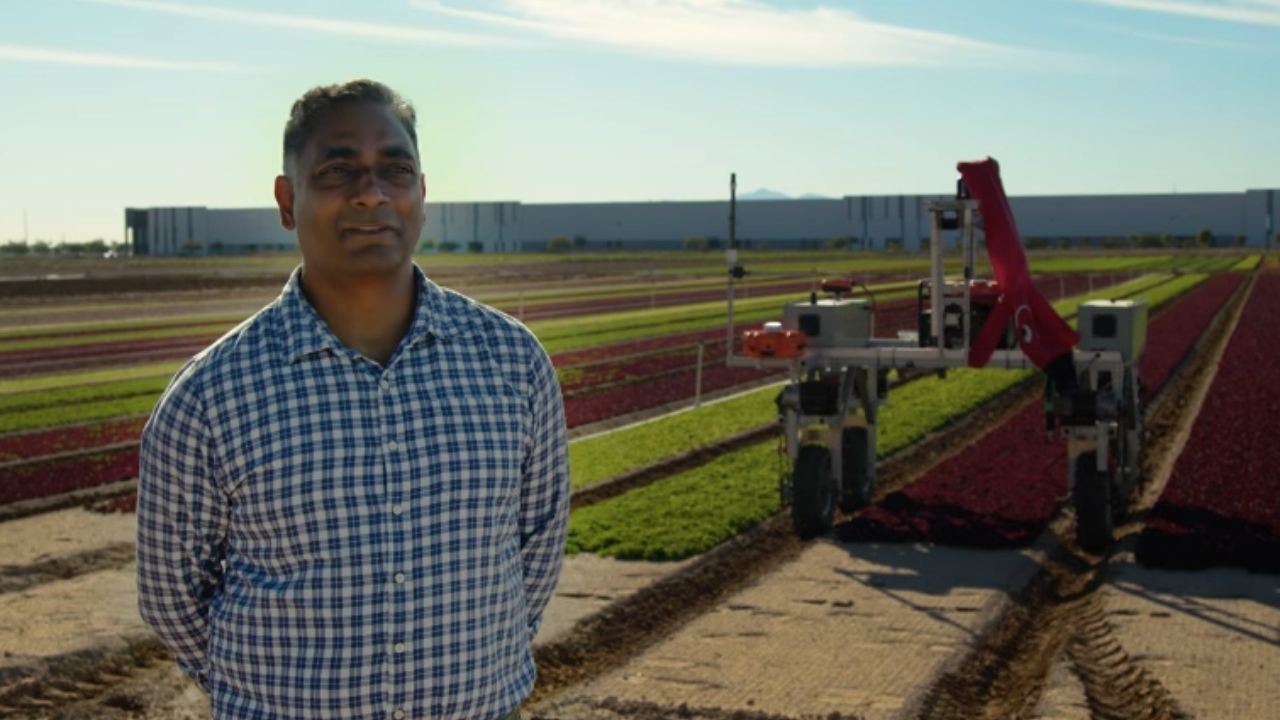
Raghu Nandivada grew up in a farming family connected to the cultivation of foods like rice, legumes, red peppers, and other vegetables used in Indian cuisine. In 2018, during a visit to the family in the rural south of India, his mother made a direct request after a day of work: that he try to create a robot capable of removing weeds.
-
Canadian Student Wins $50,000 at World’s Largest Youth Science Fair with AI-Powered Sea Turtle Robot Hunting Microplastics and 3D Holographic Camera Exposing Ocean Threats

-
South Korea to Sink 20 Massive Concrete Coffers Off Busan Coast to Build 1.4 km Breakwater at Jinhae New Port, Part of $9.4 Billion Expansion to Rank Among World’s Top 3 Ports

-
Venice Deploys 78 Massive Steel Gates to Shield City from Extreme Adriatic Tides

-
China Uses 432 Robots to Move a 7,500-Ton Historic Building in Shanghai, Preserving Architecture While Creating Space for Underground Center




At that moment, the request seemed distant from reality. Nandivada was not yet a robotics engineer, but the idea remained as a practical challenge. What started as a challenge within his own family ended up connecting to a real pain point for many producers: the difficulty of maintaining labor for repetitive, tiring, and essential tasks in the fields.
From street observation to the problem within farms
Years later, around 2020, Nandivada began to notice the growing presence of Waymo’s autonomous vehicles on the streets and started to wonder why something similar was not yet widely resolved in agriculture. From there, he realized that automation was advancing in various areas but still faced practical obstacles within farms.
Before building the solution, the farmer’s son conducted market research by speaking directly with producers. He was still working in the semiconductor industry and used nights and weekends to understand which tasks put the most pressure on farmers. This contact helped show that the problem was not just technological but also economic and operational.
The garage turned into a laboratory for an agricultural startup in Arizona
Nandivada has a long connection with Arizona State University. He arrived at ASU in 2001 to pursue a master’s degree in electrical engineering, completed his studies in 2003, worked in the semiconductor industry, and returned to the university in 2008 to do an MBA. This journey ended up bringing his technical experience closer to the institution’s entrepreneurial environment.
In 2020, he met Cole Brauer, co-founder of Padma AgRobotics, and the two presented the concept of a weed-removing robot to the Venture Devils program, linked to the J. Orin Edson Entrepreneurship and Innovation Institute. The team won the competition and received $15,000, an amount increased from the original prize because the evaluators considered the project important for farmers.
Robots that weed, spray, and harvest cilantro came on the radar
Between 2020 and 2023, the duo worked in a garage to develop robotic technology aimed at weed removal. The process did not occur in isolation: the team maintained contact with clients, listened to suggestions, and adjusted the projects based on real problems observed in the fields.
Over time, Padma AgRobotics expanded its portfolio of solutions. One of the demands received was for more efficient cilantro harvesting. The company then began developing a robot capable of harvesting, grouping, and packaging cilantro, showing that agricultural automation can advance to different stages of production, not just weeding.
Funding helped the company leave the garage
Padma AgRobotics received support from the Small Business Innovation Research program, known as SBIR, and also obtained funding from the United States Department of Agriculture. Additionally, it won a $175,000 grant in the Arizona Innovation Challenge and later received other funding from the same organization.
With this progress, the company left the garage and began operating in an office in Mesa, Arizona. The location was also chosen for its proximity to ASU and access to the light rail, used by part of the engineering team. The journey shows how a family idea gained business structure by combining university, funding, practical tests, and direct contact with producers.
A scarecrow with artificial intelligence was born from a common scene
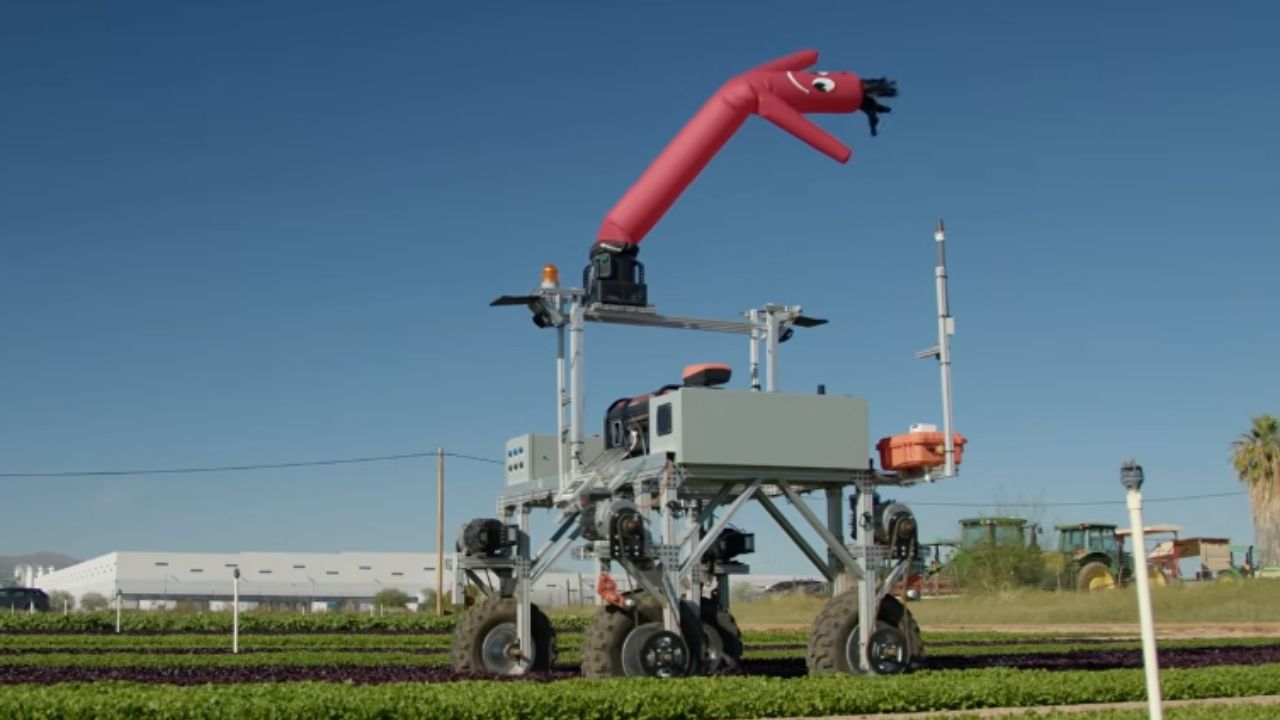
One of the most curious projects of Padma AgRobotics is a scarecrow with artificial intelligence. The idea arose when Nandivada visited a farm and saw a man walking among the crops to scare away birds, like a human scarecrow in motion. The scene caught attention because it showed a simple but expensive and tiring task.
The owner of Blue Sky Organic Farms, David Vose, challenged the team to create an automated version of this work. The result was a mobile system with an inflatable figure, designed to move through the rows and scare birds unpredictably. According to the ASU News report, the team made dozens of visits to the farm and made successive improvements to the equipment.
Unpredictability became a central piece against the birds
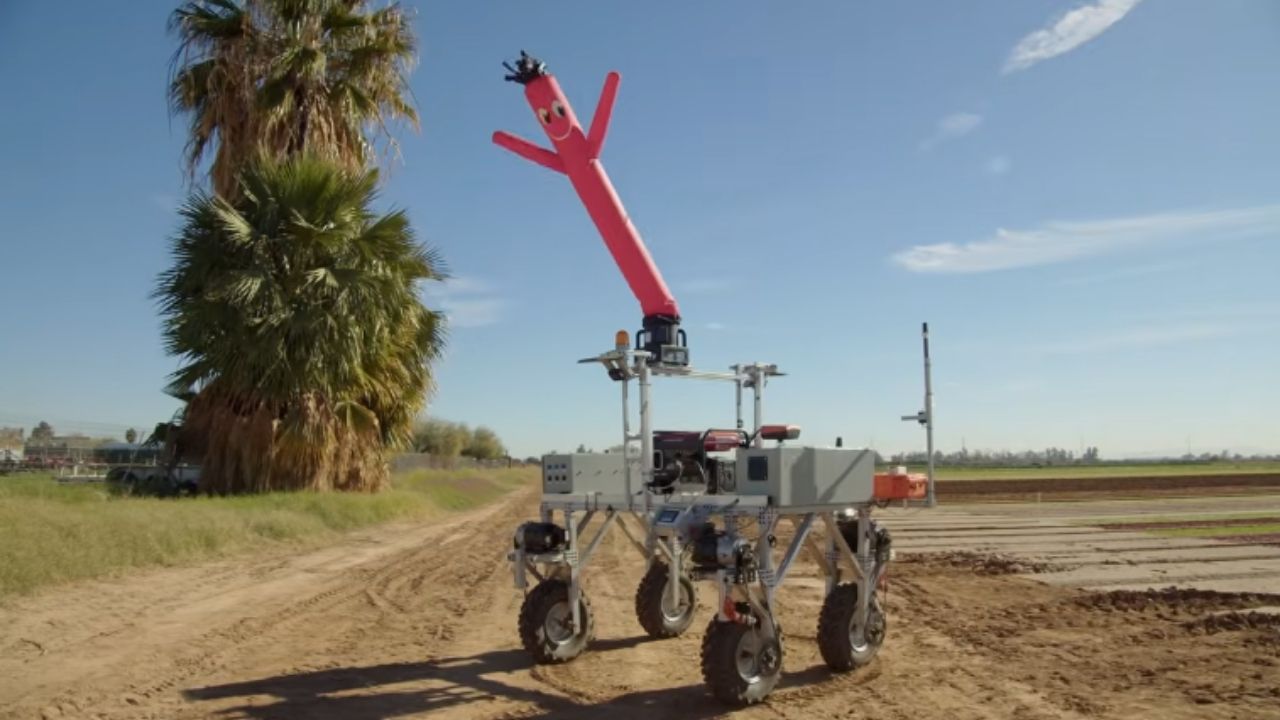
The problem with traditional scarecrows is that they remain stationary. Over time, birds may become accustomed to the threat and stop reacting. Therefore, Padma AgRobotics’ proposal relies on movement and unpredictability, attempting to simulate an active presence within the plantation.
According to the source, Vose was looking for a solution capable of operating for eight to ten hours a day, and Padma’s technology was designed to work for up to 12 hours daily. The logic is to replace a person repeatedly walking between the rows with a machine that can perform the same function for long periods, without relying on constant human effort.
Labor shortage accelerates interest in agricultural automation
Agricultural automation emerges as a response to increasing pressure on farms in the United States. According to the ASU News report, the sector faces significant labor shortages, rising costs, and difficulty retaining workers in physically demanding activities.
In Arizona, this scenario is exacerbated by the heat. Vose reported the difficulty of working in open fields, on a tractor without a cabin, under temperatures above 37 °C. In this context, tasks such as weeding, spraying, harvesting, and scaring birds are no longer just routine rural steps but become bottlenecks for producers who need to keep production running.
The goal now includes a lettuce harvester


Despite advances with weeding, cilantro, spraying, and AI scarecrow, Nandivada states that one of Padma AgRobotics’ main goals is to develop a lettuce harvester. The machine would have the function of identifying the plant, harvesting it, and placing it in a box, reducing the dependence on manual labor in a delicate stage of production.
This type of technology still requires testing, adjustments, and field validation. The story of the farmer’s son shows that agricultural robotics is not born ready: it depends on trial, safety, feedback from producers, and adaptation to specific crops. It is precisely this gradual process that can determine whether the machines will have widespread use or remain restricted to very specific niches.
The mother’s challenge turned into a question about the future of crops
The journey of Raghu Nandivada shows how a family challenge, made in 2018, ended up transforming into an agricultural startup with AI robots in Arizona. The case draws attention because it does not only stem from a technological promise but from concrete problems: weeds, manual harvesting, spraying, birds in the plantations, high costs, and lack of workers.
At the same time, the story raises a larger discussion about the future of farming. For you, are agricultural robots a necessary solution to alleviate heavy work and maintain food production, or do they still raise concerns about cost, employment, and technological dependence? Share your opinion and tell us which of these machines caught your attention the most.