Portuguese
  Spanish


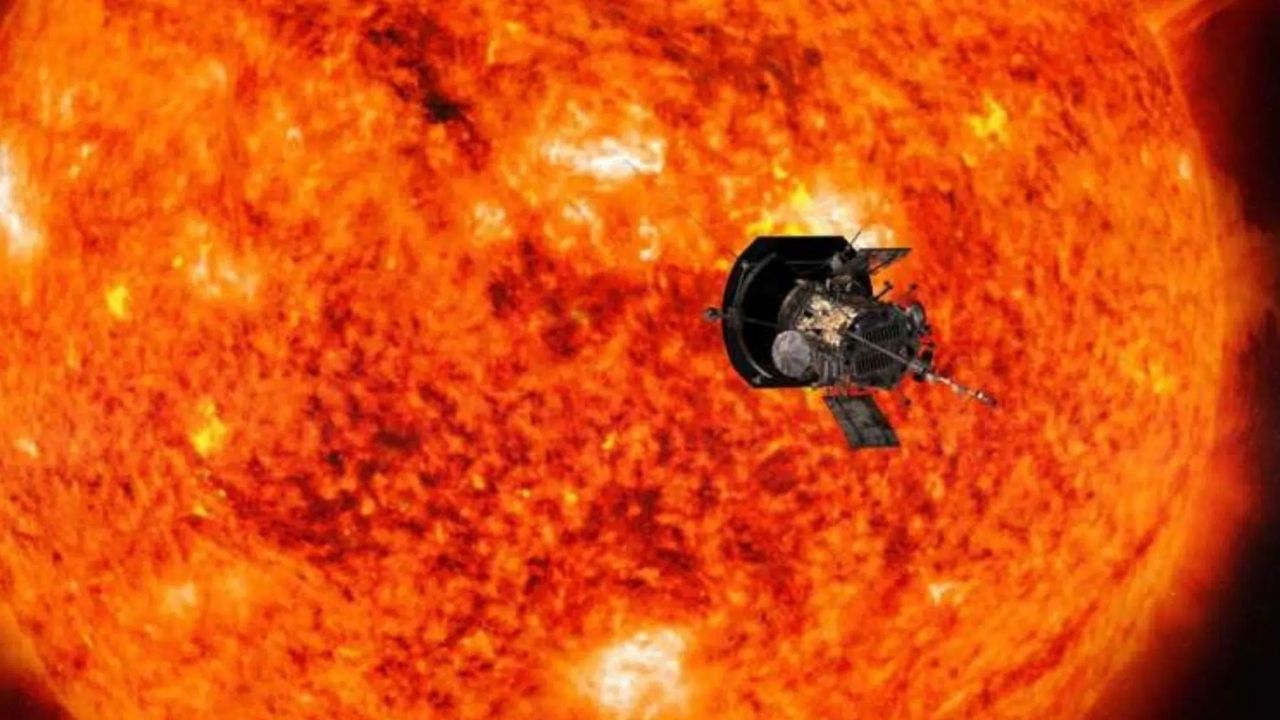
The Parker Solar Probe recorded charged dust near the Sun and placed the solar corona, plasma waves, and solar physics at the center of a hypothesis about extreme heating, suggesting that fast grains can alter energy, heat particles, and revise scientific models about the most mysterious solar atmosphere currently under study.
The Parker Solar Probe, NASA’s probe designed to study the Sun up close, may have recorded an unexpected clue about the heating of the solar corona. Researchers analyzed signals of high-speed charged dust and hypothesized that these grains may influence plasma waves, heat particles, and expand the solar physics debate about the Sun’s outer atmosphere.
The report was published by the Daily Galaxy on July 2, 2026, at 11:45 AM, based on a study released in The Astrophysical Journal. The work involves observations from NASA’s probe and analyses led by Syed Ayaz, a researcher associated with the Center for Space Plasma and Aeronomy Research at the University of Alabama in Huntsville, USA.
Dust near the Sun seemed too unlikely to enter the models
For a long time, the presence of dust near the Sun was considered something of little relevance to explain the solar corona. The logic was straightforward: in such a hot and aggressive environment, small grains should be quickly destroyed, without enough time or density to interfere with the dynamics of the solar atmosphere.
-
Google Revives Historic Hangar for Cutting-Edge Tech in Silicon Valley: Once Built for a “Flying Aircraft Carrier,” Now a Hub for Drones and Robotics

-
Son of Brazilian Farmers Develops AI Robots in Arizona, Wins $175,000, and Tests Machines for Farming Tasks Amid U.S. Labor Shortage
-
Canadian Student Wins $50,000 at World’s Largest Youth Science Fair with AI-Powered Sea Turtle Robot Hunting Microplastics and 3D Holographic Camera Exposing Ocean Threats
-
South Korea to Sink 20 Massive Concrete Coffers Off Busan Coast to Build 1.4 km Breakwater at Jinhae New Port, Part of $9.4 Billion Expansion to Rank Among World’s Top 3 Ports




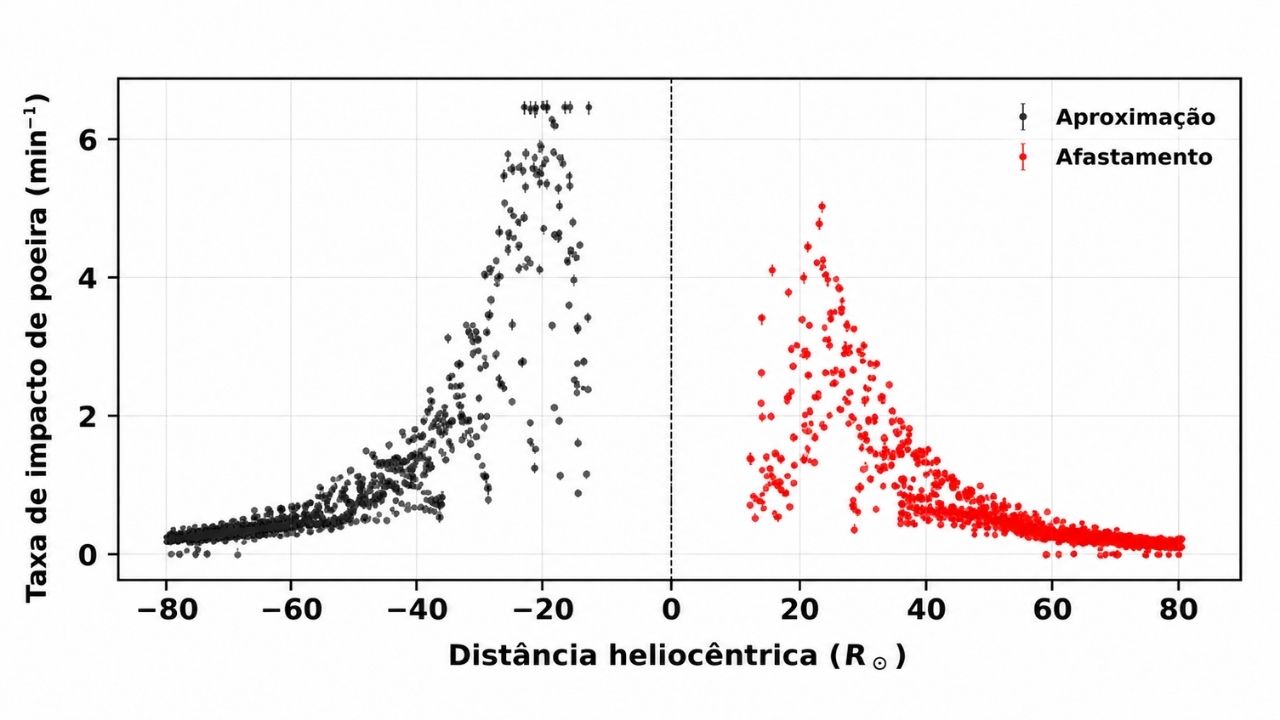
The Parker Solar Probe changed part of this perception by revealing signs of particle impacts in regions close to the Sun. What seemed like mere debris surviving in an extreme environment began to be observed as a possible physical agent, capable of participating in energy transfer in a region that still challenges scientific models.
The mystery of the solar corona remains one of the great problems of physics
The solar corona can reach temperatures between one and three million degrees Celsius, while the Sun’s visible surface remains around 5,500 degrees Celsius. This extreme difference has intrigued researchers for decades because it contradicts the intuitive expectation that regions farther from the apparent heat source should be cooler.
Traditional explanations focus on electrons, ions, magnetic fields, and plasma waves. Among these waves, the so-called Alfvén kinetic waves are considered important because they can transport electromagnetic energy through the corona and transfer it to charged particles, aiding in the heating and acceleration of the plasma.
Charged grains can interfere with energy waves
The hypothesis raised in the study is that dust grains, upon acquiring an electric charge through interaction with sunlight and the surrounding plasma, cease to be passive particles. They begin to interact with electric and magnetic fields, altering how energy moves in the environment near the Sun.
In this scenario, the Parker Solar Probe brought a new clue because its data indicates that dust may be present and active closer to the Sun than previously thought. If these grains really interfere with plasma waves, they may help explain where and how part of the energy is released in the solar corona.
The probe itself acted as an improvised dust detector
One detail stands out: the Parker Solar Probe was not equipped with a specific dust detector. Even so, researchers were able to identify signals associated with the impacts of grains on the spacecraft because these high-speed collisions vaporize the particles and generate small charged clouds.
These events appear as voltage spikes in the probe’s FIELDS antennas. In practice, the spacecraft ended up functioning as an indirect detector, recording evidence of dust where solar physics normally expected an environment too clean, too hot, and too violent for the survival of these grains.
Mass and charge of dust can generate opposite effects
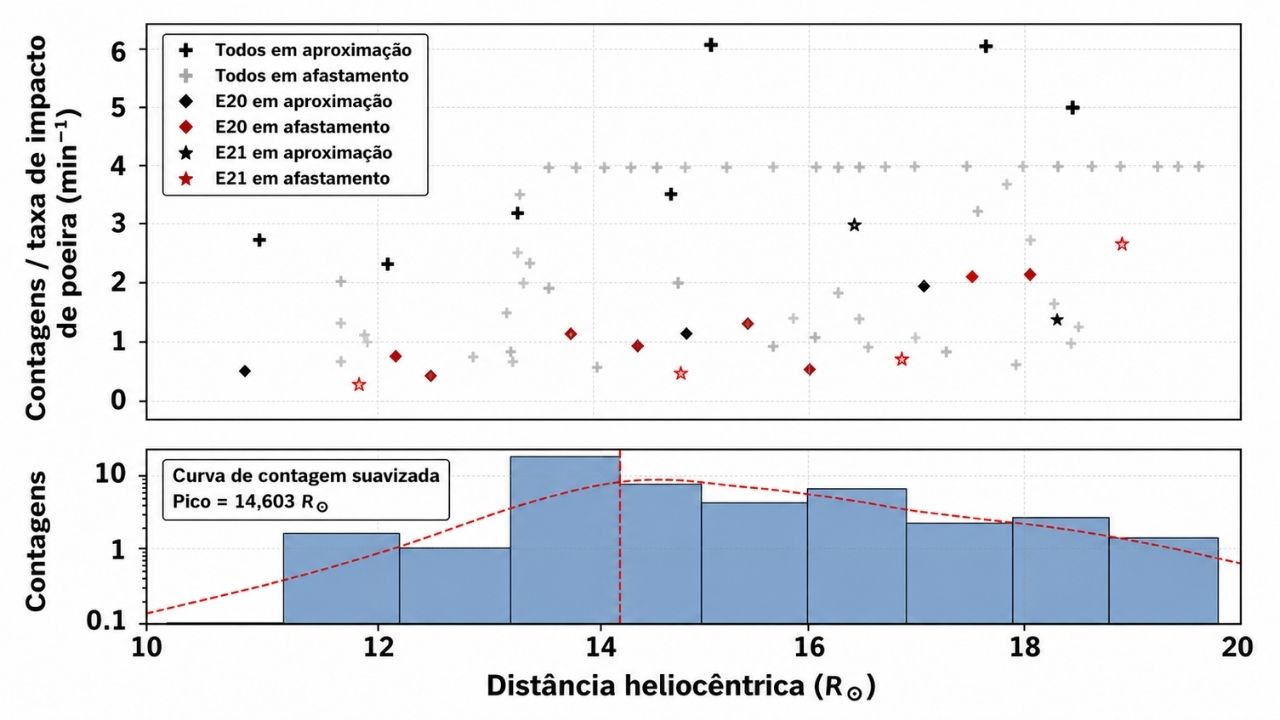
The study suggests that charged dust can influence Alfvén kinetic waves in two different ways. The mass of the grains adds inertia to the plasma, which tends to slow down the waves and allow their energy to travel greater distances before being dissipated.
On the other hand, the electric charge of the grains can strengthen the interaction between the wave, the electric field, and the charged particles. If the mass dominates, the energy can travel further; if the charge prevails, heating may occur more locally. This competition between effects helps make the hypothesis so relevant to solar corona models.
The discovery may force scientists to review old models
A large part of solar heating models considers the region near the Sun as a plasma mainly composed of electrons, ions, and magnetic fields. These elements remain essential, but the new study proposes that charged dust may also play a role in the physics of the corona.
The change is important because it adds a component that used to be left out of the equation. If future observations confirm the hypothesis, the Parker Solar Probe may have revealed a missing piece in the attempt to explain how the solar corona heats so much and how the young solar wind gains energy as it moves away from the Sun.
Future missions may confirm if the dust is just a survivor or a protagonist
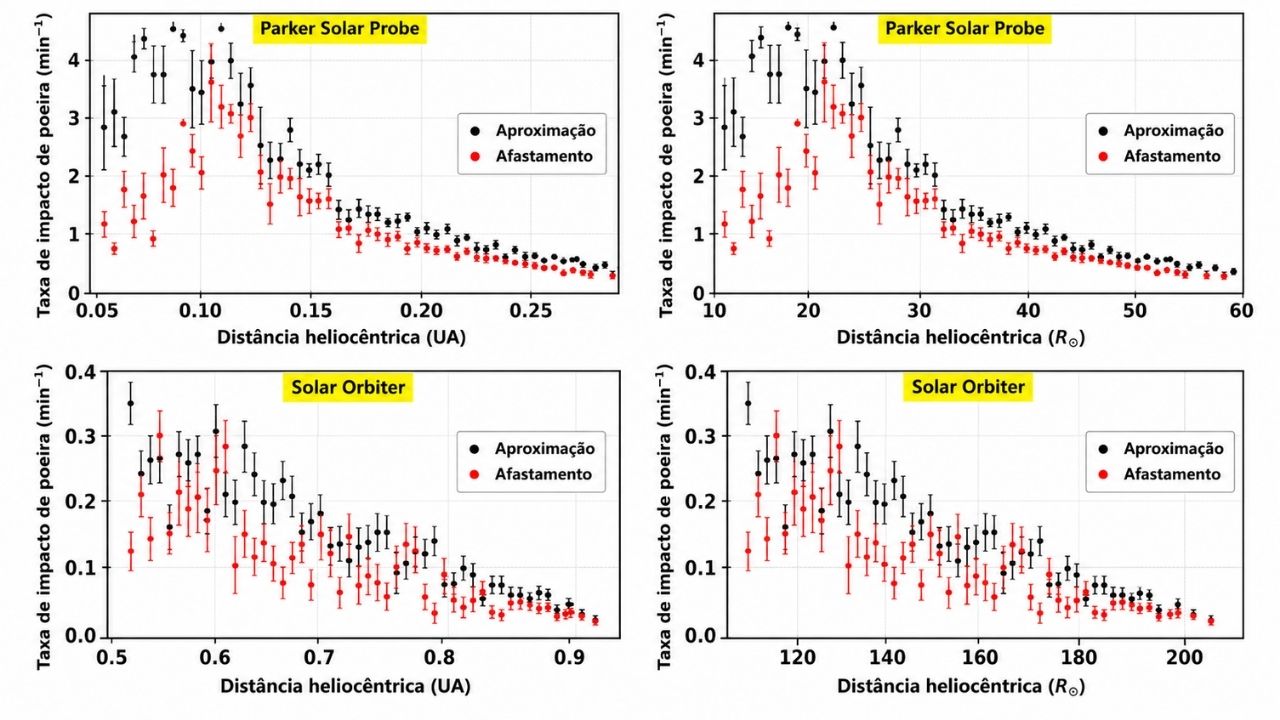
The new hypothesis still needs confirmation. One of the possibilities pointed out by researchers is that future missions, equipped with dedicated dust detectors and advanced instruments to measure plasma waves, can better separate the role of charged grains in the solar environment.
This stage will be decisive to understand if the dust is merely resisting near the Sun or if it truly participates in the heating of the corona. The difference between surviving and influencing changes everything, because it would transform tiny grains into active pieces of one of the most energetic phenomena in the Solar System.
A small clue for a gigantic problem
The case shows how an apparently discreet discovery can open a new direction of research. The Parker Solar Probe has not provided a definitive answer for the heating of the solar corona, but its data suggest that charged dust may be more important than previously thought.
For you, does this hypothesis change the way we see the Sun or does it still seem too early to consider dust a central piece of the solar corona mystery? Share your opinion and say if this discovery seems too small or surprising enough to change decades of research.