






 Portuguese
  Spanish


Project by Penta-Ocean Construction with Bygging-Uddemann technology produced reinforced concrete caissons in floating docks in the city of Kagoshima between July 2023 and September 2025, using slipforming that reduced manufacturing from several months to 8 to 9 days per unit and opened a new port stage.
The concrete caissons manufactured at sea in Kagoshima, southern Japan, marked the first offshore application in the country of slipforming technology for this type of port structure. The project was carried out by Penta-Ocean Construction with equipment from Bygging-Uddemann in floating docks.
Bygging-Uddemann reported on March 24, 2026, that production took place from July 2023 to September 2025. In a technical article released on June 15, 2026, the company highlighted that the solution reduced a stage that previously took two to three months to about 8 to 9 days per unit.
Concrete caissons were manufactured on floating docks
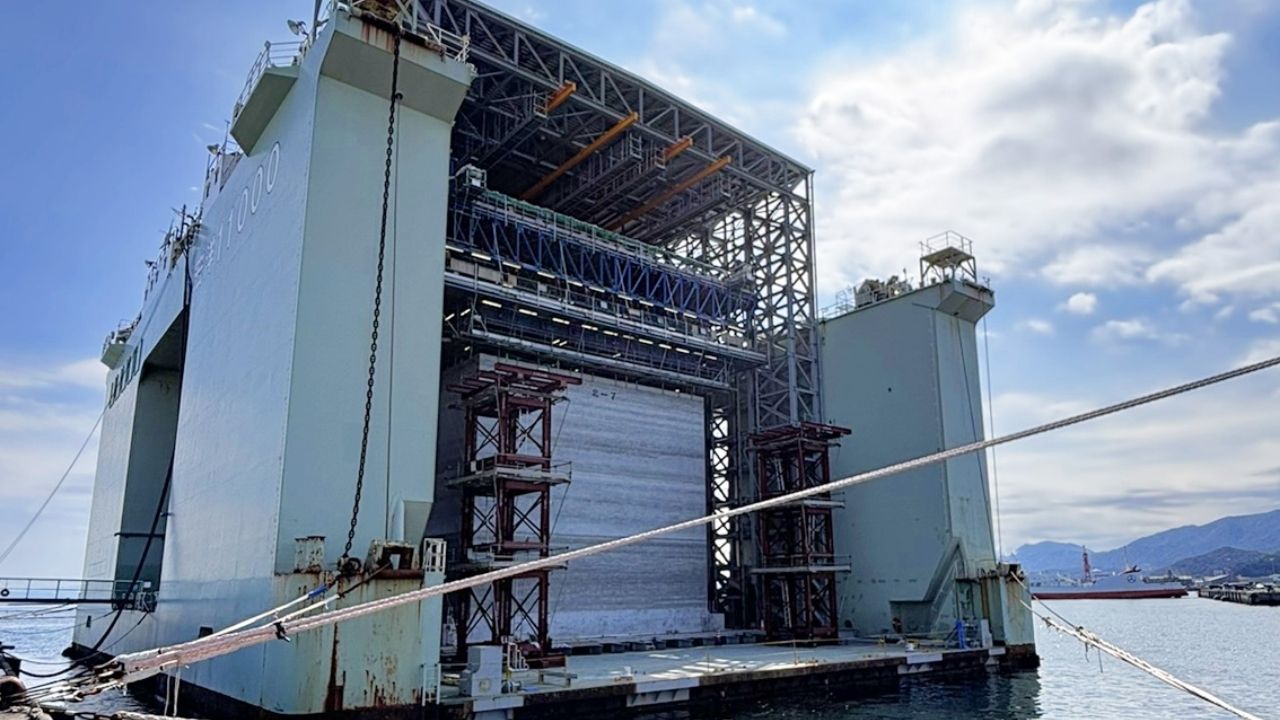
The project was executed in Kagoshima, Japan, using two of the largest floating docks in the country: one of 11,000-ton class and another of 7,500-ton class. The solution was adopted because there was no available land work area to conduct conventional manufacturing.
-
China Builds World’s Largest Power Grid, Generating Enough Energy to Supply 15 Times Brazil’s Needs, Surpassing the US, EU, and India Combined

-
Brazil’s First 3D-Printed House Built in 30 Hours with Two Operators and 20% Lower Costs

-
Parker Solar Probe Discovers High-Speed Dust Grains Near the Sun, Offering New Insights into Solar Corona’s Mysteries
-
Google Revives Historic Hangar for Cutting-Edge Tech in Silicon Valley: Once Built for a “Flying Aircraft Carrier,” Now a Hub for Drones and Robotics


The reinforced concrete caissons had reported dimensions of 30 meters by 18.7 meters, with a height of 17 meters. In practice, the construction site was taken to the sea, transforming the floating dock into a kind of mobile factory for large-scale port structures.
Method reduced timeframe that previously could reach three months
According to the technical article by Penta-Ocean, conventional methods of manufacturing RC cofferdams required two to three months to build the wall part of a 4,000-ton class structure on a floating dock. With slip forming, the timeframe dropped to about 8 to 9 days per unit.
This gain does not mean that the entire port work is completed in a few days, but it shows a significant change in a critical stage of production. The central point is the speed of wall construction, which now rises continuously instead of relying on slower cycles of traditional forms.
Giant gantry transformed the dock into a production line
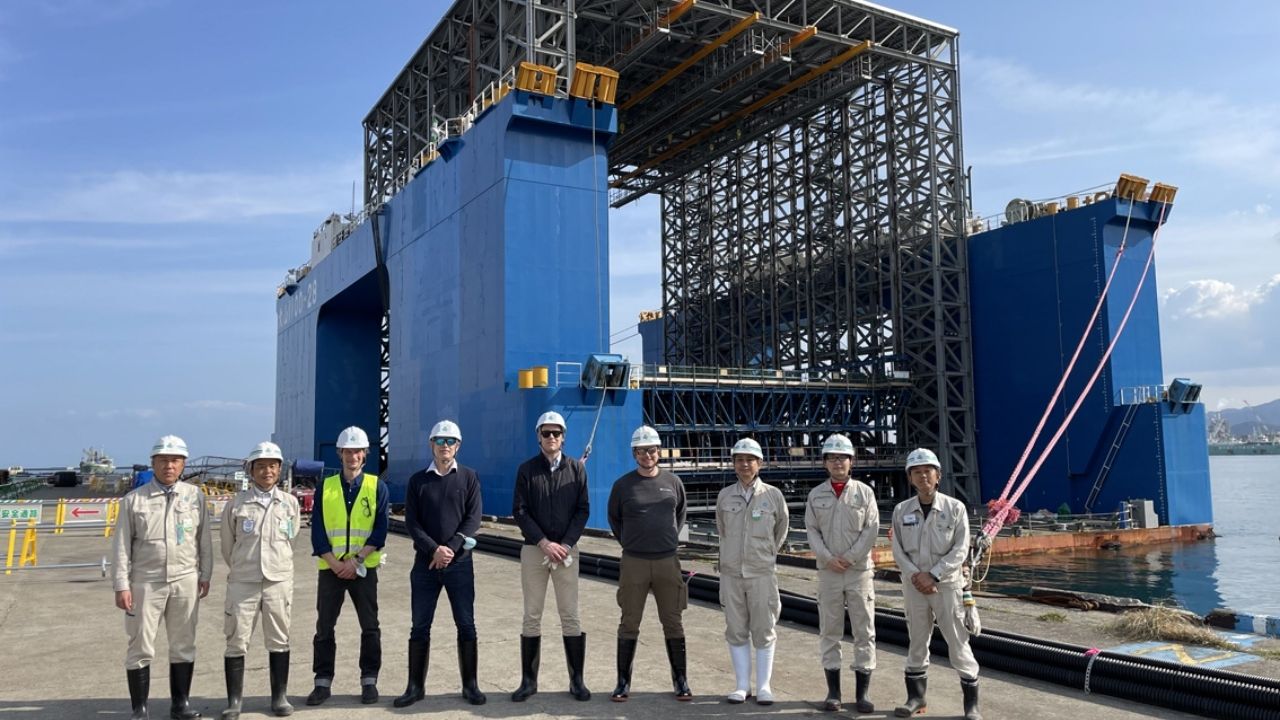
On the 11,000-ton floating dock, a gantry 35 meters wide, 37.8 meters long, and 35.5 meters high was installed. Inside it, the team set up a slip forming system with three work levels: upper, intermediate, and lower.
The system featured 28 hydraulic jacks on the upper level and eight telpher-type overhead cranes to move rebar, reposition pumping hoses, and transport materials. This combination created a vertical production line over the water, allowing concrete, reinforcement, and finishing to advance in a coordinated manner.
Construction required continuous concreting for 24 hours
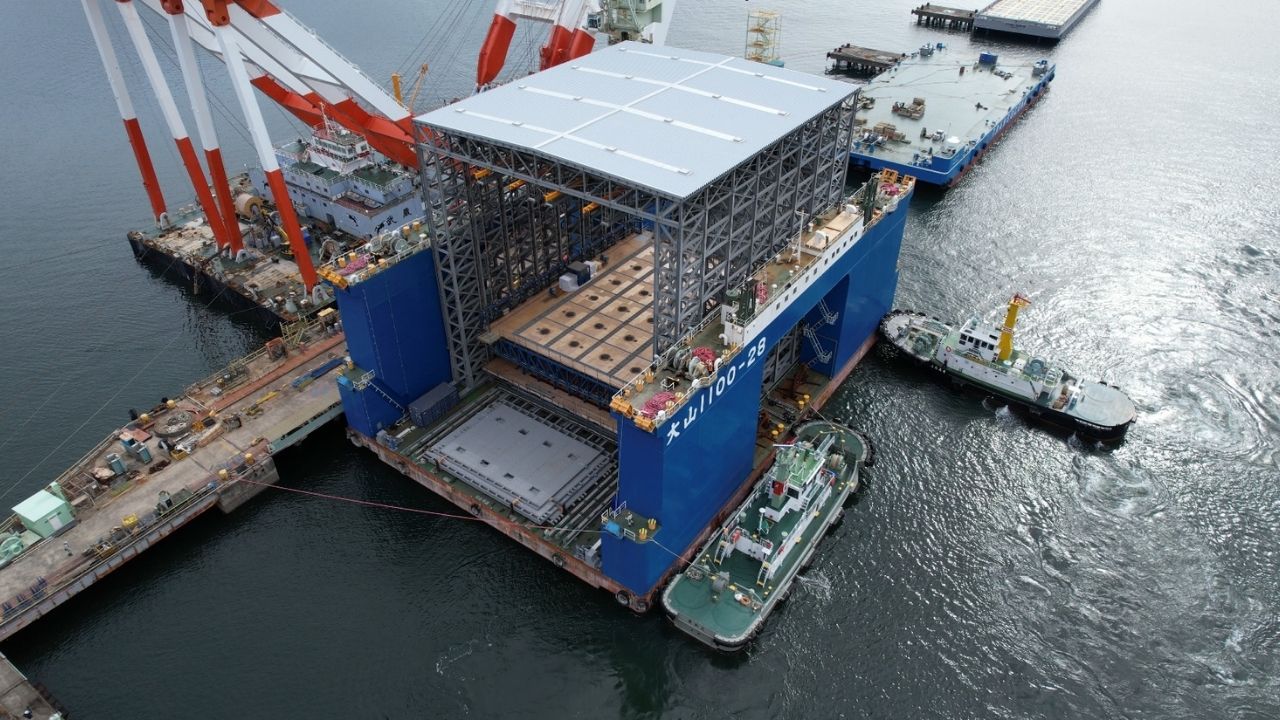
Slip forming works by raising the form as the concrete reaches sufficient strength to support itself. In the case of the concrete cofferdams in Kagoshima, the construction of the 15.5-meter walls followed a cycle of continuous concreting for 24 hours over two days, a one-day pause for hoisting and bar installation, and new continuous concreting.
The operation was organized into three nine-hour shifts, covering morning, afternoon, and early morning. Concrete mixer trucks were replaced every 12 hours to prevent the onset of concrete setting inside the equipment. Rapid production depended on a constant pace, time control, and regular supply of ready-mix concrete.
App calculated retarder according to temperature
One of the biggest technical challenges was controlling the concrete setting time in the face of temperature variations in Kagoshima. For this, an app was developed capable of automatically calculating the necessary dosage of retarder based on the air temperature forecast.
The system helped concrete plants adjust the mix so that the formwork would rise at the correct time. If removal occurred too early, the concrete would not support its own weight; if it occurred too late, adhesion would hinder the movement of the formwork. Digital technology was used to maintain speed without compromising the quality of the structure.
Strength control was decisive to avoid failures
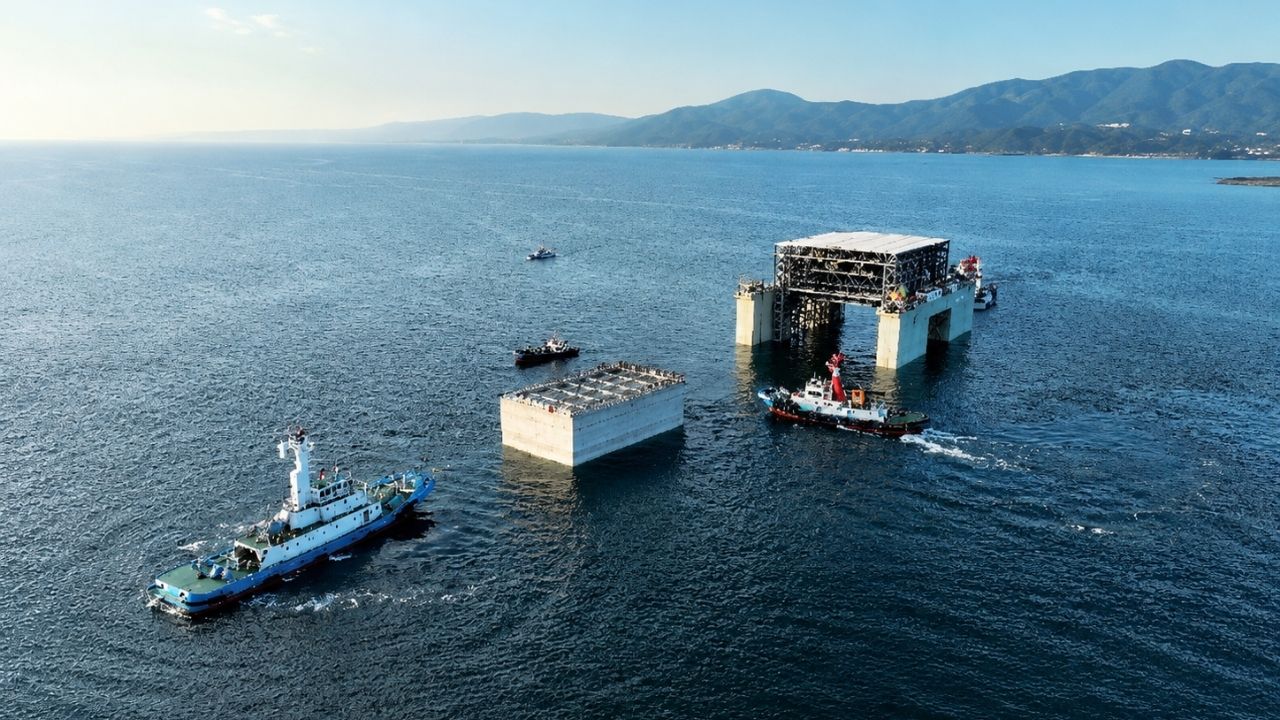
The team monitored the initial strength of the concrete with two methods: insertion of bars on the concreted surface and tests on cylindrical specimens. The goal was to confirm if the structure reached the necessary strength range to allow the formwork to rise.
During the construction, it was observed that dehydration at the bottom of the formwork influenced the development of strength. To simulate this condition, technicians produced special molds for specimens with drainage. This detail shows that innovation was not only in the equipment but also in the rigorous control of the behavior of young concrete.
Caissons were launched and towed after manufacturing
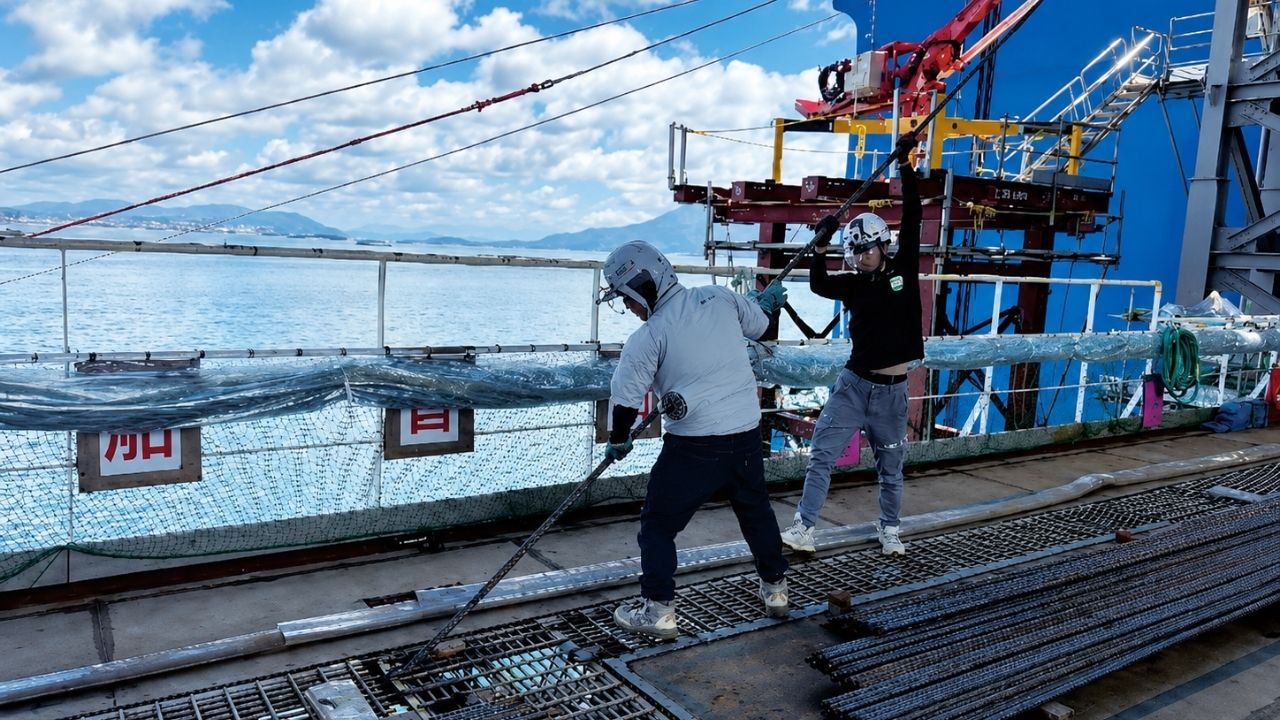
After construction, the equipment installed on the dock was removed, and the concrete caissons went through a curing period. Then, the floating dock was taken to the designated location, where the structure was launched, towed, and positioned in a temporary storage area.
The technical source describes this step as part of the sequence of manufacturing, launching, and preparing the structures. The text does not detail the final sinking or the definitive installation of each caisson, so the safest information is that they were launched into the sea, towed, and placed in a temporary position as described in the process.
Japan tested a more industrial port construction model
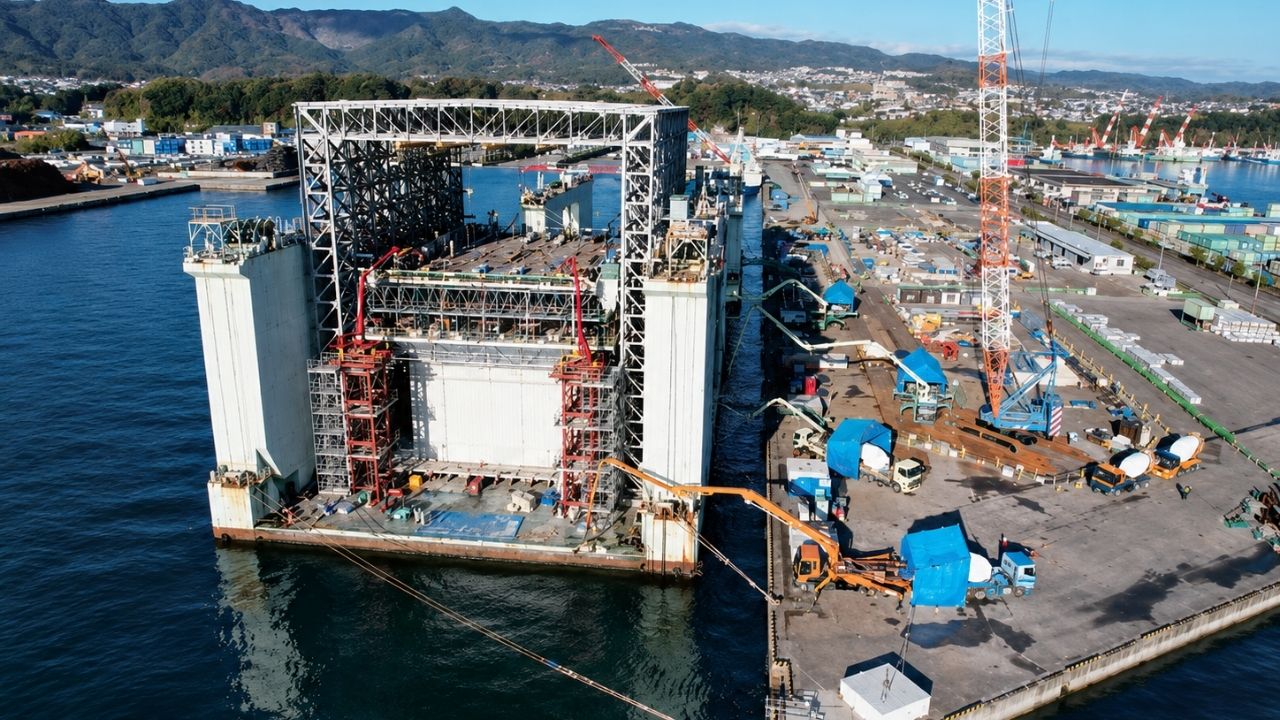
The experience in Kagoshima shows how maritime infrastructure construction can gain a pace closer to industrial production. Instead of relying on large areas on land, the project concentrated equipment, concrete, reinforcement, technological control, and logistics on floating docks.
This approach can be relevant for ports where there is little available space or where land production becomes difficult. By taking the factory to the sea, Japan tested a way to accelerate heavy structures without abandoning technical control, concrete quality, and project organization.
What this project reveals about the future of ports
The concrete caissons produced in Kagoshima indicate that port construction may enter a more automated, fast, and controlled phase. The advancement combined gantry, slip forming, floating docks, continuous shifts, dosing app, and resistance tests.
The question remains whether this type of method should become standard in large maritime projects, or if it will still be restricted to special projects, with high cost and great technical complexity.
Do you think ports built at an almost industrial pace can change coastal infrastructure in the coming years? Leave your opinion in the comments.


