Portuguese
  Spanish




Unprecedented Decision Reveals New Phase of Chinese Strategy in Price Control
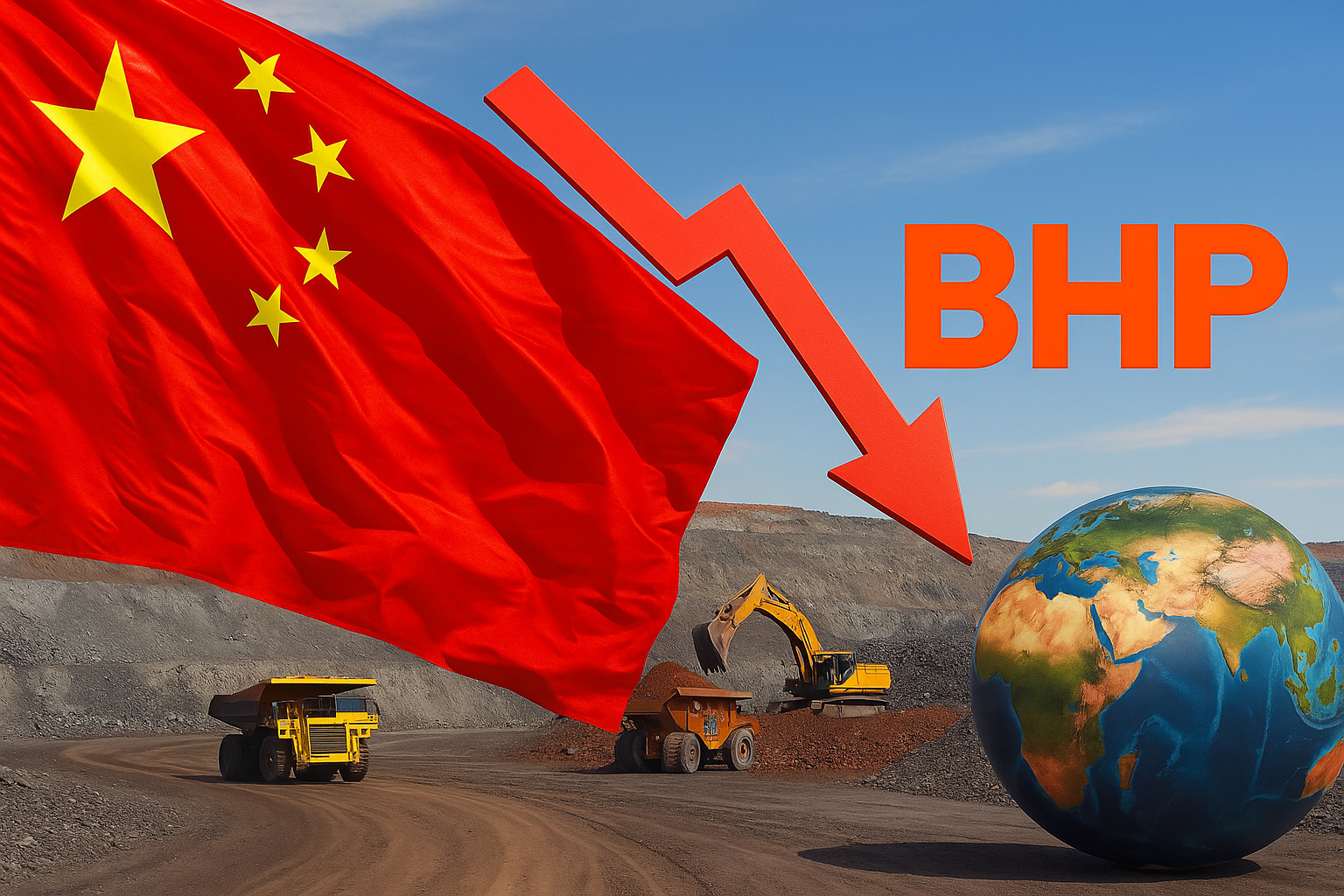
The suspension of iron ore purchases from BHP by the Chinese state-owned company CMRG was confirmed this Tuesday (30), according to Bloomberg.
The measure surprised the international market. The Australian miner accounts for about 20% of global supply and exports 70% of its production to China.
These numbers were highlighted in a report from UBS, which assessed the decision as a significant milestone in the global mineral commodities market.
-
China could reduce iron ore imports from 80% to 50% of consumption by 2030, while its share in global steel production falls from 52% to 46%, in a shift that could reshape the global market, says CMRG.

-
Brazil is sitting on one of the largest lithium reserves in the world, in the Jequitinhonha Valley, but national mining has almost become an appendage of China: 97% of the metal’s export goes to a single country, which also dominates refining.
-
Iron ore falls to 762 yuan in China as real estate sales decline and steel production hits lowest level since 2018
-
Brazil has minerals, clean energy, and a waiting market, but it could miss a billion-dollar opportunity if it doesn’t speed up the race for green minerals, while the steel industry seeks to reduce emissions.


Stalemate in Negotiations and Immediate Impact on the Market
The stalemate arose after weeks of meetings without progress between Chinese representatives and BHP. The main reason lies in the control of international prices.
China seeks to reduce costs in light of declining domestic demand for steel. The Australian miner, on the other hand, resists Chinese pressures.
The decision by CMRG, established in 2021 to centralize imports, affects ongoing contracts and suspends new negotiations. The ban includes shipments already loaded in Australia.
Moreover, the halt occurs at a time of increased assertiveness from China in the mineral sector. In September, the country also restricted exports of rare earths.
These elements are essential for advanced technologies. Analysts point out that the move amplifies Beijing’s influence in strategic markets and reinforces its global economic power.
Pressure on Vale, Rio Tinto, and Fortescue
The suspension opens up space for competitors like Vale and Rio Tinto to absorb part of the Chinese demand. However, BHP’s products do not have immediate substitutes.
Analyst Daniel Sasson from Itaú BBA explains that, even if China redirects purchases, the supply cut could cause a significant spike in prices.
According to him, BHP is part of the group of the three largest global exporters. Thus, any prolonged suspension causes inflationary pressure on a global scale.
For Artur Bontempo Filho, a consultant at Wood Mackenzie, the decision represents more than just a price dispute. It indicates a significant structural change.
He states that the centralization of purchases by CMRG alters the balance of power, placing global miners under increasing pressure in strategic negotiations.
Mutual Dependence and Uncertain Horizon
Although the suspension has an immediate impact, analysts believe it is unlikely to be prolonged. Chinese steelmakers would struggle to sustain the absence of BHP for long.
Even with declining domestic demand, China has increased steel exports in recent years. This keeps the need for mineral inputs high.
The UBS assessed that negotiations are likely to resume soon. This is because mutual dependence limits sustainable long-term alternatives.
According to Sasson, fully replacing Australian production would be costly and inefficient. Therefore, the consensus points to a relatively quick resolution.
Strategic Repercussions for the Mining Sector
The episode reflects China’s growing capacity to shape global markets. Furthermore, CMRG reinforces China’s role as an indirect price consumer and regulator.
On the other hand, the dispute with BHP goes beyond the bilateral scope. Consequently, its effects reach global miners, including Vale, which watches Chinese movements attentively.
Meanwhile, investors are monitoring the developments. For analysts, the interruption reinforces the perception that the iron ore market has entered an unstable phase.
This market is valued in trillions of dollars. Now, however, it appears more susceptible to political intervention and the power strategies adopted by China.