






 Portuguese
  Spanish


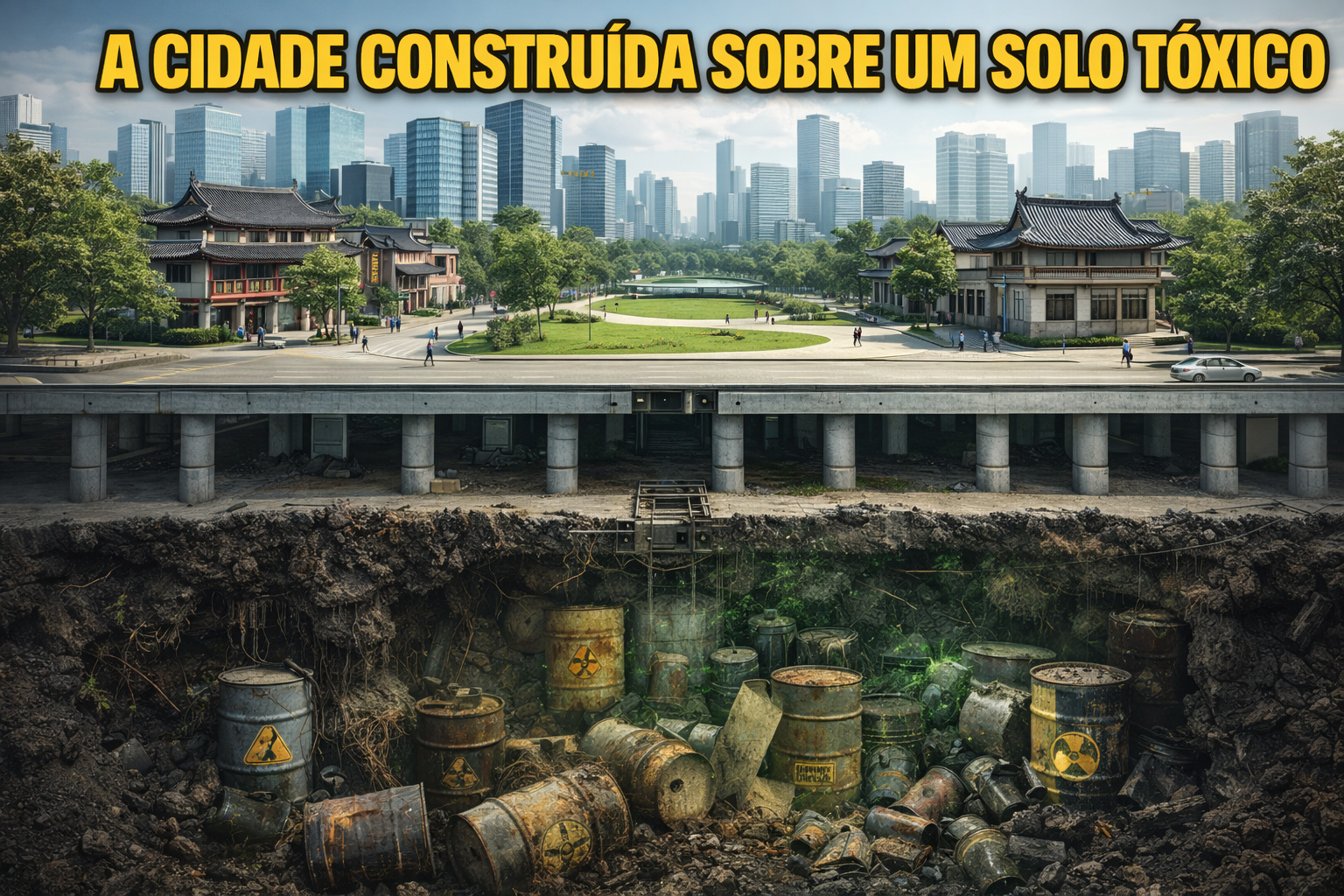

Built On Deep Piles And Continuous Structural Platforms, Tianjin Eco-City Isolated Buildings From Contaminated And Unstable Soil And Became One Of The Largest Examples Of Urban Engineering Applied In Degraded Areas Of China.
When China decided to create a new sustainable city from scratch, the biggest challenge wasn’t energy, mobility, or urban planning. It was the soil. The area chosen for the construction of the Tianjin Eco-City, in the north of the country, was considered practically unusable: a coastal land degraded by decades of heavy industrial activity, extreme salinization, shallow groundwater, and layers of soft soil unable to support conventional buildings.
Instead of removing millions of tons of contaminated soil — a costly, slow, and environmentally risky operation — engineers adopted a radical solution: build the city separated from the soil, using large-scale foundation engineering.
A Lot That Could Not Support A City
Before construction, much of the area had highly saline soil, residual chemical contamination, low load-bearing capacity, and severe differential settlements. Under normal conditions, this type of land would require deep excavations, soil replacement, or complete abandonment of the site. In Tianjin, this was discarded. The city was designed from the outset to not rely on the natural soil as a structural element.
-
Brazilian Fishing Couple Spends 4 Years Building Solar-Powered Floating Home on the Paraguay River, Now a Navy-Approved Vessel with Leisure Area and Tour Demand

-
While the World Opens New Airports and High-Speed Trains, Brazil Rushes to Complete Projects Stalled for 40 Years
-
Brazil Invests in Massive Waterway to Transport Soybeans by Barge, Reducing Costly Truck Reliance
-
Bridge Rebuilt in Just One Year Reconnects Two Brazilian States



The central concept of Tianjin Eco-City is simple in theory and extremely complex in execution: buildings, roads, and infrastructure supported on continuous structural platforms, sustained by deep piles driven down to more stable layers of the subsoil.
Instead of isolated foundations for each building, large areas were treated as urban structural slabs, distributing loads evenly and reducing the impact of localized settlements. These platforms act as an intermediate layer, physically separating the contaminated soil from the habitable urban structure.
Deep Piles On Urban Scale
The foundation of the city involves thousands of reinforced concrete piles, many of which are dozens of meters long, passing through layers of soft soil until reaching more resistant strata. The role of these piles is not only to support weight but also:
- Limit differential settlements
- Stabilize continuous platforms
- Ensure structural durability
- Allow construction on previously impractical zones
This approach is common in bridges or isolated buildings, but rare on the scale of an entire city.
Physical And Environmental Isolation Of Contaminated Soil
Besides their structural function, the slabs and platforms also fulfill a critical environmental role: preventing direct contact between buildings and the contaminated soil. This reduces the risks of gas migration, chemical infiltration, and secondary contamination.
In practice, the city operates as if it were sitting on a structural capsule, where the soil below remains isolated and monitored, without interfering with urban life.
Urban Infrastructure Integrated With Foundation Engineering
Foundation engineering was integrated from the beginning into urban planning. Water, sewage, energy, and telecommunications networks were installed within these platforms or in elevated technical galleries, facilitating maintenance and reducing interference with the problematic soil.
This also allowed future flexibility, as adjustments to the infrastructure do not require deep excavations in contaminated soil.
Real Scale Of The Project
Tianjin Eco-City occupies a planned area of approximately 30 km², featuring dozens of neighborhoods, commercial zones, light industrial areas, and public spaces.
This is not an experimental neighborhood but a functional city, built to accommodate hundreds of thousands of residents over the phases of implementation.
Each new block follows the same structural principles: elevated platforms, deep piles, and physical separation from the original land.
Why This Work Is Still Little Known Outside Of China
Despite its scale and technical complexity, Tianjin Eco-City is often presented merely as a “green” or “sustainable” project. The most impressive aspect — urban foundation engineering on degraded soil — is rarely highlighted outside of technical reports.
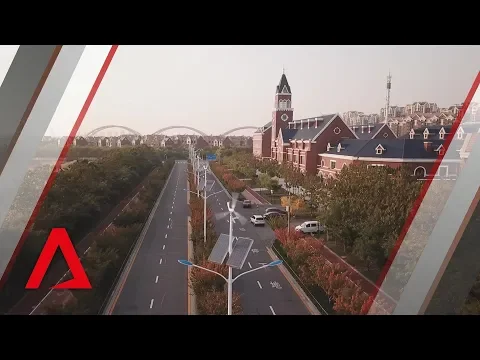
There are no iconic skyscrapers or monumental visual works. The great achievement is beneath, invisible to those walking through the city.
Engineering That Does Not Appear On The Skyline
Tianjin Eco-City does not draw attention for height or shape. Its achievement lies in what cannot be seen: millions of tons of concrete, piles, and platforms that transformed condemned land into the foundation for an entire city.
It is a work that redefines the concept of urban foundation and shows that sometimes, the greatest engineering project is precisely where no one looks: beneath the feet of the city.


