Portuguese
  Spanish



Discover How Green Hydrogen in the Energy Transition Drives Innovation, Sustainability, and the Future of Clean Energy in Brazil.
The search for cleaner and more sustainable energy sources has intensified over the past few decades. Given the climate urgency, the development of new energy solutions has become a global priority.
In this context, green hydrogen in the energy transition emerges as a promising solution. It can transform the way we produce and consume energy in Brazil and worldwide.
Moreover, it is versatile, storable, and fully sustainable, with the potential to boost industries, transportation, and innovative projects without causing negative environmental impacts.
-
Brazil Advances with JetBio’s Megaproject to Build the World’s Largest Ethanol-Based Sustainable Aviation Fuel Plant, Aiming to Become a Global Exporter

-
Brazil on Track for Record 40.7 Billion Liters of Ethanol in 2026/27 Season, Driven by Corn Ethanol
-
Petrobras Approves $1.2 Billion Refinery in Brazil to Produce Aviation Fuel and Diesel from Plants
-
US$ 7 billion, green hydrogen, and steel with up to 95% less CO₂: the first green steel plant on the planet emerges in Sweden and targets Brazil as the next chapter


Historically, hydrogen has played a significant role in science and industry. For example, since the 19th century, this element has been used as fuel for airships and balloons. Later, it served as a propulsion source for spacecraft.
However, it is only in recent decades, with the growing concern about greenhouse gas emissions, that companies and researchers began to intensely explore its potential as clean energy.
Thus, today green hydrogen represents a unique opportunity to accelerate the decarbonization of the economy. It helps reduce dependence on fossil fuels.
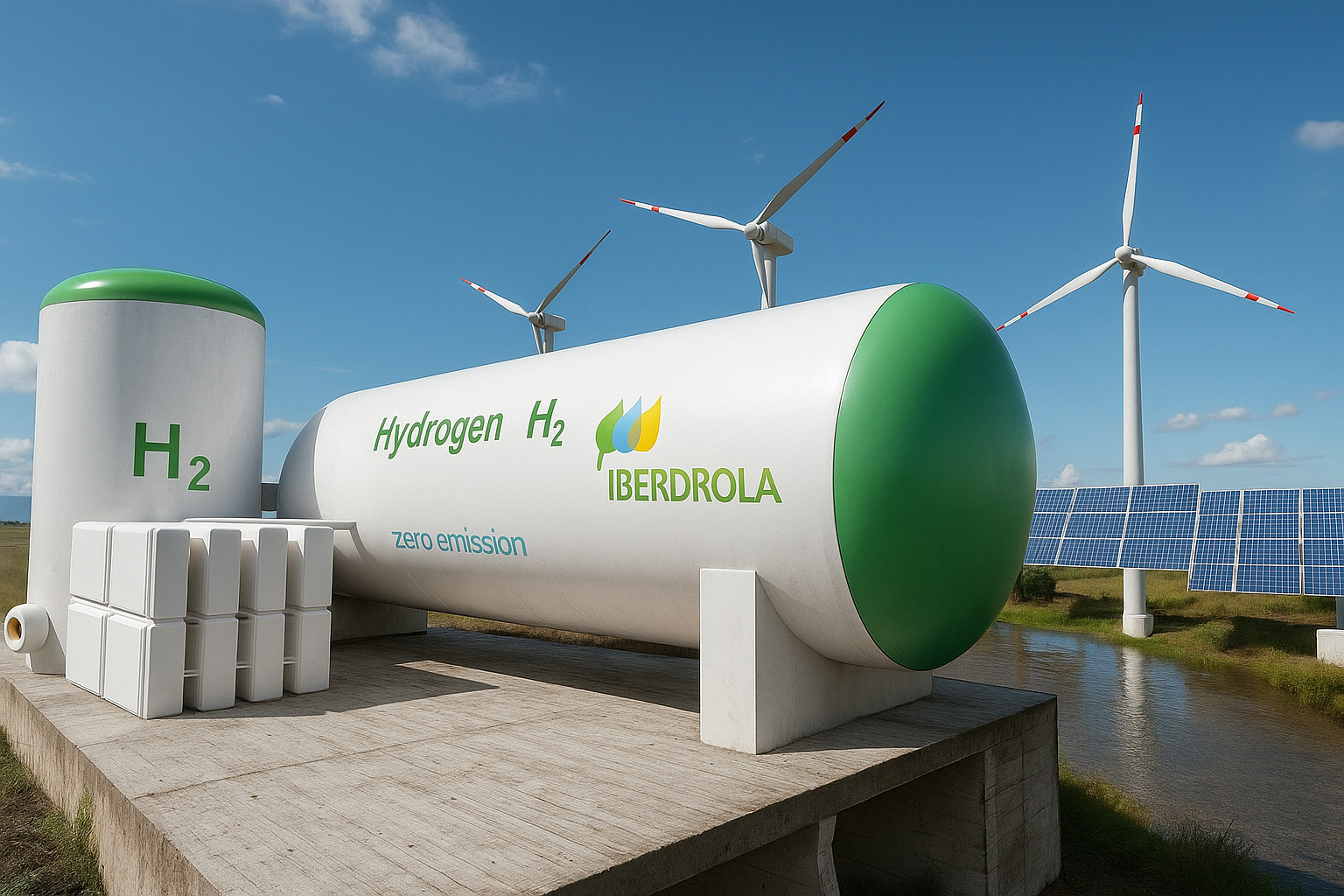
Green hydrogen is produced through a process called electrolysis. In this process, water is split into oxygen and hydrogen by the passage of electric current. When the electricity comes from renewable sources, such as solar, wind, or biomass, the process does not generate CO2 emissions.
Therefore, this characteristic solidifies the role of green hydrogen in the global energy transition. Additionally, it integrates with emerging technologies such as artificial intelligence and energy management systems. These advances allow for optimizing fuel use across different sectors.
Thus, they ensure energy efficiency and reduce waste. Consequently, the digitalization of the hydrogen chain increases traceability, transparency, and reliability. This strengthens investor and consumer trust in the sector.
Potential and Storage of Green Hydrogen
According to data from the International Energy Agency (IEA), widespread adoption of green hydrogen could prevent up to 830 million tons of CO2 emissions annually. Currently, these emissions come from the use of fossil fuels.
Moreover, to replace gray hydrogen – produced from fossil sources – with green hydrogen, we would need to generate approximately 3,000 TWh of renewable energy per year. This is equivalent to the current electricity demand of Europe.
Despite this, it is expected that the expansion of renewable energies will make green hydrogen production more accessible and feasible over time.
The energy potential of hydrogen is one of its greatest attractions. In fact, as the most abundant chemical element in nature, small amounts generate large amounts of energy. However, it is necessary to compress it for transport and storage.
Consequently, green hydrogen proves to be ideal for various applications, serving from fueling vehicles to fuel cells to generating electricity for industries and isolated communities.
Another relevant aspect of green hydrogen in the energy transition is its storage capacity. For example, renewable sources such as solar and wind energy produce electricity in an intermittent manner, depending on the weather and time of day.
Green hydrogen allows for the conversion of excess energy into fuel, which can be stored for later use. This ensures greater stability and reliability for the energy matrix.
Additionally, green hydrogen helps to decarbonize sectors historically dependent on fossil fuels, including the chemical, steel, and maritime transportation industries.
Therefore, companies investing in this technology reduce their emissions and gain a competitive advantage in an increasingly sustainability-focused global market.
Pernambuco as a Hub of Innovation
In Brazil, Pernambuco stands out as a hub of innovation in clean energy, particularly in the development of green hydrogen. The Senai Technological Park, located in the Suape Industrial Port Complex near Recife, serves as a strategic center for research, development, and implementation of sustainable technologies.
Additionally, with investments totaling over R$ 100 million, the park hosts projects aimed at the production, storage, and distribution of hydrogen, as well as initiatives for digitalization of the production chain.
Among the ongoing projects are the installation of electrolyzers for green hydrogen production, storage systems, and fuel cells, as well as refueling stations for hydrogen-powered hybrid vehicles.
Moreover, partnerships with companies such as TI Energia, Compesa, CTG Brasil, Hytron, and White Martins integrate research, technological innovation, and practical application. Consequently, these initiatives position Pernambuco at the forefront of the energy transition in Brazil, strengthening the local economy and promoting sustainable development.
Applied research plays a crucial role in this process. Institutions like UFPE, UPE, and IFPE collaborate with Senai and the national innovation network of Embrapii. They develop solutions that bridge the gap between science and the market.
For example, projects like the Zero C Network, coordinated by Facepe, explore the potential of renewable energies and green hydrogen, focusing on large-scale transport, advanced fuel production, and support for the local industry.
The strengthening of partnerships among public, academic, and private sectors ensures the success of innovation in green hydrogen.
Thus, these collaborations enable knowledge transfer, training of specialized professionals, and development of solutions tailored to the regional reality, amplifying the social and economic impact of the technology.
Innovation and Global Perspectives
In addition to enabling decarbonization, green hydrogen also stimulates technological and industrial innovation. Technologies for traceability, digital platforms, and efficient energy storage processes increase transparency and sustainability in the production chain.
Consequently, the integration of academic research and practical application reinforces the importance of green hydrogen as a driver of the economy of the future.
The global outlook for green hydrogen is promising. The international goal is to reach 30 million tons of production by 2030, consolidating it as a clean and competitive alternative to fossil fuels.
Therefore, countries investing in innovation and infrastructure for green hydrogen lead the global energy transition, creating jobs, strengthening industrial sectors, and promoting sustainable long-term development.
Green hydrogen plays a strategic role not just in energy production, but also in creating integrated solutions for smart cities, sustainable mobility, and Industry 4.0.
Thus, Brazil, with its potential in renewable energies, can become a global leader in the production and export of green hydrogen, contributing to the circular economy and international climate goals.
In Pernambuco, the combination of public and private investments, technological innovation, and applied research demonstrates that it is possible to turn green hydrogen into reality.
Therefore, this historical path of innovation and sustainability strengthens Brazil’s strategic role in the global clean energy agenda, showing that the country can not only consume but also produce advanced technologies for the energy transition.
Green Hydrogen: Sustainable Future and Continuous Innovation
Green hydrogen in the energy transition represents a convergence of science, innovation, and environmental responsibility. It reduces pollutant gas emissions, diversifies the energy matrix, and ensures security and efficiency in energy supply.
Moreover, it fosters research, industrial development, and the creation of skilled jobs, consolidating Brazil and states like Pernambuco as protagonists in the energy revolution of the 21st century.
As green hydrogen production expands, the fuel becomes increasingly accessible, contributing to a more sustainable and economical future.
Thus, its capacity to integrate with other renewable sources, combined with technological innovation and applied research, makes green hydrogen a central element in building a clean, secure, and resilient energy matrix.
The future of energy depends on solutions like green hydrogen, which combine sustainability, innovation, and efficiency.
Therefore, the energy transition is not just an environmental necessity, but also a historical opportunity for countries like Brazil to lead the development of technologies that transform society, protect the planet, and create new economic opportunities.
In summary, green hydrogen is more than just an energy alternative. Moreover, it is a vector of innovation, industrial development, and sustainability.
Its role in the global and national energy transition underscores the importance of investments in science, research, and technology, consolidating Pernambuco and Brazil as references in the global clean and renewable energy landscape.