






 Portuguese
  Spanish


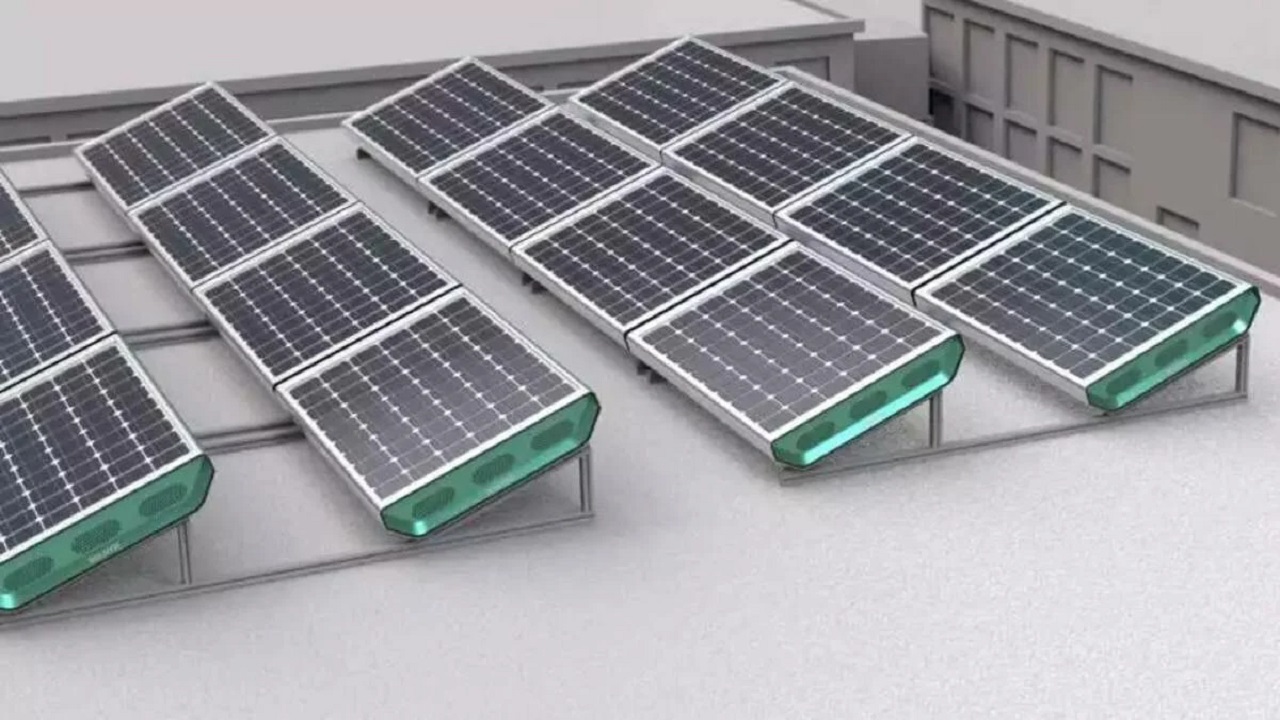

Scientists Are Working on a New Category of Solar Panels Capable of Generating Green Hydrogen. The Equipment Can Produce 250 Liters of Hydrogen Per Day.
Solar panels for rooftops that capture sunlight and water from the air could become a reality in the future. Like solar panels, hydrogen panels will be connected via gas pipes instead of electrical cables. This innovation is expected to hit the market soon, through a company called KU Leuven. For over ten years, researchers have been developing and improving the technology, with the final prototype incorporated into an attractive design by Comate Engineering & Design.
New Category of Solar Panels Can Generate 250 Liters of Green Hydrogen Daily
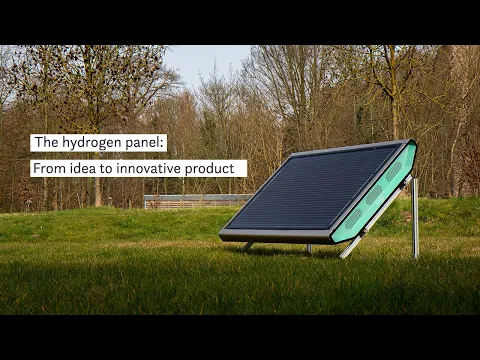

The solar panel for green hydrogen production transforms water vapor in the air into hydrogen with the help of sunlight. Scientists assure that they can generate about 250 liters of hydrogen daily, achieving an efficiency of 15%. This project, Solhyd, has entered the transition phase from research to investment through a partner company.
Hydrogen panels are solar panels that split H₂O molecules, producing hydrogen gas with the help of solar energy. Places on Earth that are very dry are not good locations for using this type of technology.
-
In a Degraded Atlantic Forest Area, a São Gonçalo Resident Transforms Land into a Living Eco-Museum, Now a Model for Environmental Education

-
World’s First Lithium-Sulfur Battery Factory Launches, Promising to Double Range Without Relying on China

-
AI Data Centers Now Feature Built-In Nuclear Power Plants and Have Ordered Non-Existent Reactors
-
In India, thousands earn about $2.50 an hour cooking and cleaning with a phone strapped to their heads, as every move is recorded to train humanoid robots for jobs they might one day replace.



These new panels are, above all, identical to regular solar panels, but instead of being connected by an electrical cable, they are connected by gas pipes. The upper layer of the panel generates energy, while a piping system underneath produces hydrogen by extracting water molecules from the air through a membrane.
Just 20 Panels Can Power a Household

According to the KU Leuven scientist, Jan Rongé, the solar energy panels that generate hydrogen are compatible with a large part of current photovoltaic modules and can be directly connected to the system.
In this way, it is possible to benefit from technological developments and cost reductions in the photovoltaic industry. To enhance this synergy, the hydrogen solar panels Solhyd are compatible with many existing mounting structures.
The hydrogen panels are small, modular, and perfect for decentralized production. The estimate is that 20 of these panels can generate energy and heat for a well-insulated house with a heat pump throughout the winter. When installed alongside a solar thermal collector and regular solar panels, green hydrogen panels can help heat homes and generate energy year-round.
What Purpose Can the Produced Green Hydrogen Serve?
These panels cannot store hydrogen and operate at low pressures, thus providing significant cost and safety benefits. The hydrogen generated is collected from the panel and then, if necessary, compressed, allowing it to be stored indefinitely. Of course, some applications do not require the gas to be compressed, or other means of storage will be utilized.
The hydrogen produced by the equipment can be used in various applications, such as mobility. Thus, for medium-use applications, such as energy support or heavy transport. Later, with the development of technology, one could think of any type of application, such as large-scale ammonia generation or even small-scale systems off the grid.
The company claims that the costs will be identical to the solar energy market, as rare metals are not used in the manufacture of these panels, allowing for an affordable price.


