Portuguese
  Spanish


Study Reveals That The Combination Of Soil Subsidence And Sea Level Rise Puts At Risk Not Only The Chinese Metropolis But Also Global Supply Chains.
A new study published in the prestigious journal Nature reveals an alarming reality: Shanghai, one of the largest financial centers in the world, is sinking at an accelerated rate, while sea level rise is reaching its highest speed in millennia. According to information from the portal Interesting Engineering, this combination of factors not only raises the risk of catastrophic flooding for the city but also represents a direct threat to ports, trade, and supply lines that connect the planet.
The research, conducted by scientists from the UK, China, and the US, indicates that most of the problem is caused by human activity. Soil subsidence, intensified by groundwater extraction, drastically worsens the effects of climate change. The phenomenon observed in Shanghai serves as a warning for other megacities built on river deltas that face an equally uncertain and vulnerable future.
The Double Threat: Local Sinking And Global Rise
The study highlighted by Interesting Engineering details that the global sea level rise since 1900 has been faster than in any other century in the last four millennia. The average global rate, at approximately 1.5 mm per year, is primarily driven by the thermal expansion of ocean water as the planet warms, in addition to melting glaciers and polar ice caps. This scenario alone would present a significant challenge for coastal cities.
-
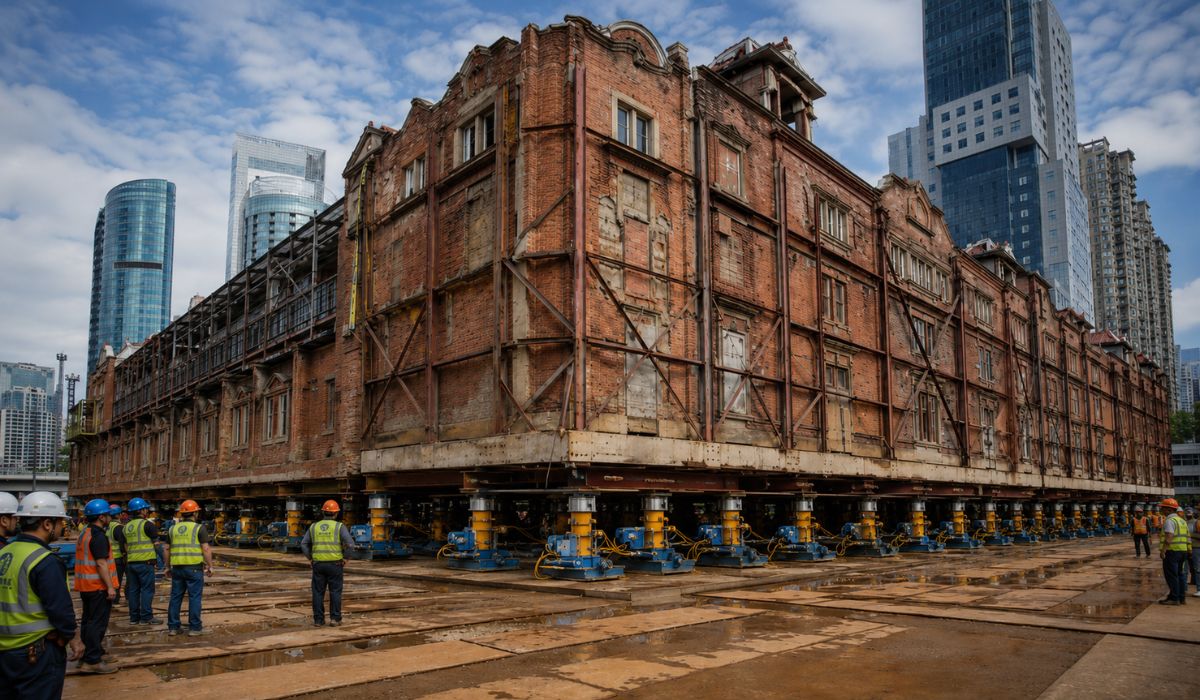
China Uses 432 Robots to Move a 7,500-Ton Historic Building in Shanghai, Preserving Architecture While Creating Space for Underground Center

-
World Cup Ball Chip Uses Technology to Detect Invisible Touches, Confirms Offside, Secures Portugal’s Victory Over Croatia

-
36-Meter Hydrogen-Powered Superyacht Arrives in Brazil to Debut German Engines and Showcase Future of Clean Navigation
-
Indian Students from Jaipur Win Top Prize at World’s Largest Science Fair with EcoFog, an Affordable Mesh to Harvest Fog Water Without Energy




However, in Shanghai, the problem is amplified. The city was built on the soft soil of the Yangtze River delta, which naturally compresses over time. The decisive factor, according to researchers, is human activity: about 94% of the accelerated sinking is attributed to anthropogenic actions, particularly the pumping of groundwater to supply industries, construction, and residences. At its peak in the 1960s, water extraction was so intense that the city was sinking 10 cm per year.
Economic Impact And The Risk To The Supply Chain


The financial consequences are already visible and in the billions. Shanghai alone has accumulated losses exceeding US$ 3 billion between 2001 and 2020 due to subsidence. Nationally, China loses an average of US$ 1.5 billion annually due to the combination of sea level rise and subsidence of its coastal lands. The danger lies in the fact that these areas, including other major cities like Shenzhen and Hong Kong, are vital economic and industrial hubs.
Any flooding event or loss of territory in these regions could disrupt supply chains on a global scale. As the team of scientists stated, as reported by Interesting Engineering: “Centimeters of sea level rise will significantly increase the risk of flooding in deltas. If coastal risks occur in these areas, the global supply chain will be vulnerable”. Even small increases in water levels can now trigger consequences of great magnitude.
A Global Challenge: From Jakarta To New York
The drama in Shanghai is not an isolated case. The same dynamics of sinking and sea level rise threaten other megacities built on deltas, such as Jakarta (Indonesia), Manila (Philippines), and even New York (USA). Historically, these areas attracted civilizations for being fertile and ideal for agriculture, fishing, and urban development. However, their flat geography and propensity for subsidence make them extremely vulnerable.
In response, Shanghai has implemented measures to mitigate the problem, such as strengthening regulations on groundwater extraction and artificial recharge of aquifers. These actions have significantly reduced the rate of subsidence. Still, the long-term combination of rising oceans and residual subsidence means that risks remain high, requiring ongoing and robust planning in coastal engineering and water management.
The situation in Shanghai serves as an urgent warning. The interaction between sea level rise and human-induced subsidence creates a complex challenge that threatens not only millions of lives but also the stability of the global economy.
Do you believe that cities like Shanghai will be able to reverse this scenario in time? How could the impact on the global supply chain affect your life? Leave your opinion in the comments; we want to hear from those closely following the topic.