Portuguese
  Spanish


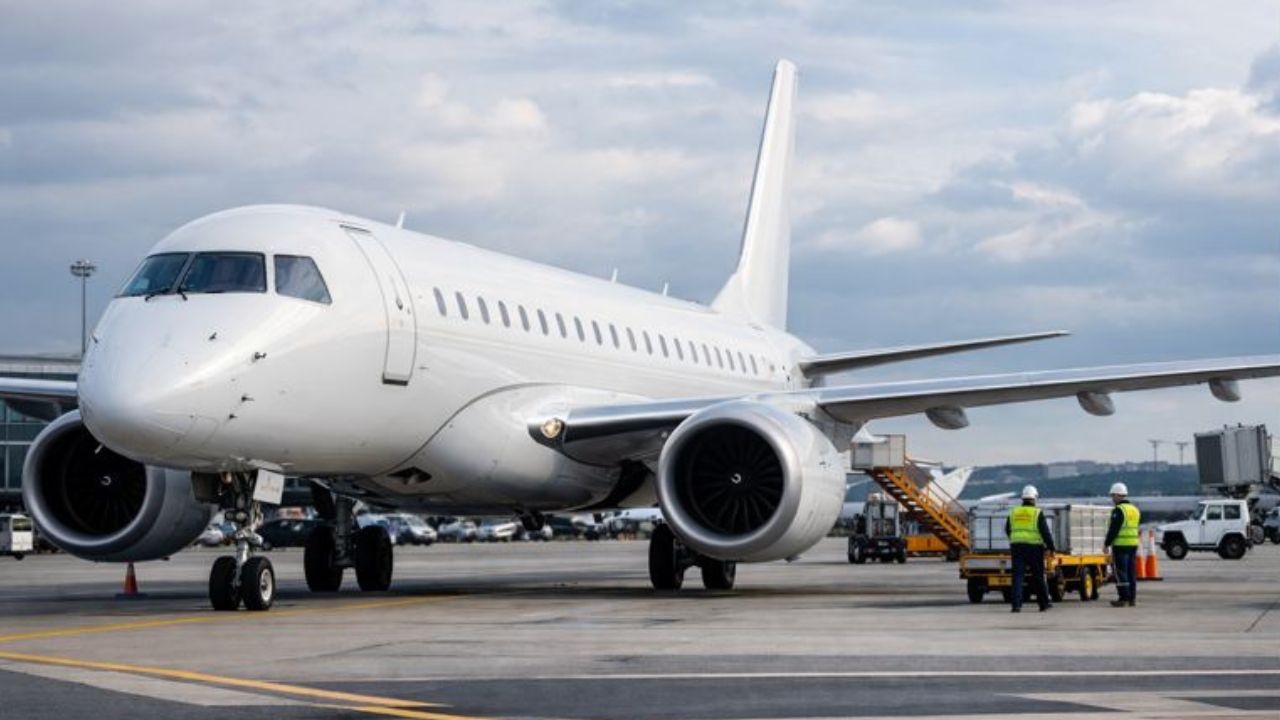


Embraer Plans To Increase Aircraft Production By Almost 30%, Boosted By Global Orders And Direct Competition With Airbus.
Embraer announced plans to accelerate aircraft production and expand commercial aircraft deliveries over the next two years, following a significant surge in global orders. The strategy was detailed by Embraer Commercial Aviation CEO, Arjan Meijer, before the Airline Economics conference in Dublin, and anticipates a nearly 30% increase in production pace by 2026.
The move comes amid a fleet renewal in the post-pandemic period, a gradual improvement in the supply chain, and direct competition with Airbus in the regional jet segment.
See More: Military Drones And Defense Industry: How The Conflict In Ukraine Led Renault To Change Course
-
Brazil Welcomes Spanish Wamos Air and Nigerian Air Peace, Potentially Transforming International Routes and Increasing Competition

-
Offshore air transport soars in Brazil, surpasses 2.5 million passengers, and reveals how oil has transformed Rio’s airports into key pieces of national logistics.

-
Latin America becomes the “global champion” of aviation taxes, tickets may become more expensive in Brazil, and IATA’s warning exposes risk for flights, tourism, and passengers.
-
Brazil has lost 85 air routes since 2019 and is still flying less than before the pandemic, leaving passengers with fewer destinations, fewer frequencies, and a more limited air network.




Production On The Rise And Focus On Scale
Embraer’s industrial plan starts with a clear goal: to recover the historical level of around 100 annual deliveries, a level observed before the global health crisis.
In 2024, the Brazilian manufacturer delivered 78 commercial jets, a number that fell within the official projection but still below the market potential identified by the company.
According to Arjan Meijer, the initial goal is to reach the mark of 100 aircraft per year again. However, given the current demand and recent commercial performance, the company assesses that it will be necessary to go beyond this volume.
“The first goal is to get back to 100 deliveries, but with the demand we currently have and the sales results… we will probably have to go beyond that,” the executive told Reuters.
Heated Demand Drives Strategy
Despite geopolitical and macroeconomic uncertainties, demand for regional jets remains strong.
Airlines have resumed fleet replacement plans that were postponed during the Covid-19 pandemic, creating a favorable window for manufacturers with efficient and lower-fuel-consumption portfolios.
In this context, Embraer recorded significant commercial performance in 2024. Even after losing a politically sensitive dispute in Poland, the company quadrupled sales of the E2 family, easily surpassing Airbus’s A220.
There were 131 net orders, including significant orders from companies such as All Nippon Airways and Latam.
Supply Chain Still Requires Attention
Although the logistical situation has improved compared to the most critical years of the pandemic, the global supply chain remains a point of concern.
Structural components and engines continue to be among the most sensitive items to delays, which necessitates careful planning of aircraft production.
Still, Meijer highlighted the evolution of Pratt & Whitney, the supplier of the engines used in the E2.
According to the executive, the American company has managed to overcome much of the shortage and maintenance bottlenecks that have affected the sector in recent years.
Engines And Operational Reliability
The positive assessment contrasts with the public dispute between Airbus and Pratt & Whitney concerning the Geared Turbofan engines, which are also used in the A320neo family.
In the case of the E2, Meijer explained that the engine variant has a lower propensity for durability issues, as the aircraft is lighter and entered service more recently, avoiding early failures.
This advancement is reflected in operational numbers. The total number of aircraft grounded due to maintenance delays has fallen to a single digit, after fluctuating between 25 and 40 units at the peak of the crisis.
Embraer’s expectation is to eliminate this indicator by the end of the year.
India On The Radar But Without Confirmation
When asked about rumors of a potential historic deal for aircraft assembly in India, Meijer preferred not to comment.
Sources cited by Reuters in New Delhi indicate that the aerospace group linked to billionaire Gautam Adani is exploring a partnership with Embraer, a move that coincides with the preparation for President Luiz Inácio Lula da Silva’s visit to the Asian country.
Technological Future And Strategic Caution
Regarding new developments, the CEO made it clear that Embraer is in no rush to launch an immediate successor to the current aircraft line.
The priority, at this moment, is to deepen technological studies and evaluate different scenarios before making a structural decision.
“We are analyzing all options. A new platform for a manufacturer is an important decision, and we will have to act calmly and carefully,” said Meijer.
Thus, Embraer signals that current growth will be sustained by operational efficiency, pent-up demand, and an industrial strategy focused on scale and reliability.