






 Portuguese
  Spanish


Bricks, Paving, and Even Art: See How Mining Waste Is Being Reused in Sustainable and Creative Projects in Brazil.
For a long time, mining waste was seen as a problem. Mountains of waste piled up, trapped in dams that, in extreme cases, caused tragedies like those in Mariana and Brumadinho. But this view is changing. With advances in science and materials engineering, what was once discarded is now gaining new life in the form of bricks, road paving, cement, works of art, and even decorative pieces. What seemed impossible has become reality thanks to universities, startups, and large mining companies that have started investing in reuse technologies. In Brazil, the movement is led by institutions such as Federal University of Ouro Preto (UFOP), and companies like Vale, which seek to transform environmental liabilities into sustainable and economically viable opportunities.
What Are Mining Wastes?
Wastes are the materials left over after the extraction of useful ore. In the case of iron ore, for example, it is a slurry composed of silica, clay, residual iron, and other minerals that have no immediate commercial value. Historically, these wastes have been accumulated in large dams, requiring constant maintenance and monitoring to avoid risks.
With the intensification of discussions about safety and sustainability following the disasters that occurred in Minas Gerais, pressure grew for cleaner, circular, and responsible mining models. The solution found was to reuse the waste as raw material for other sectors.
-
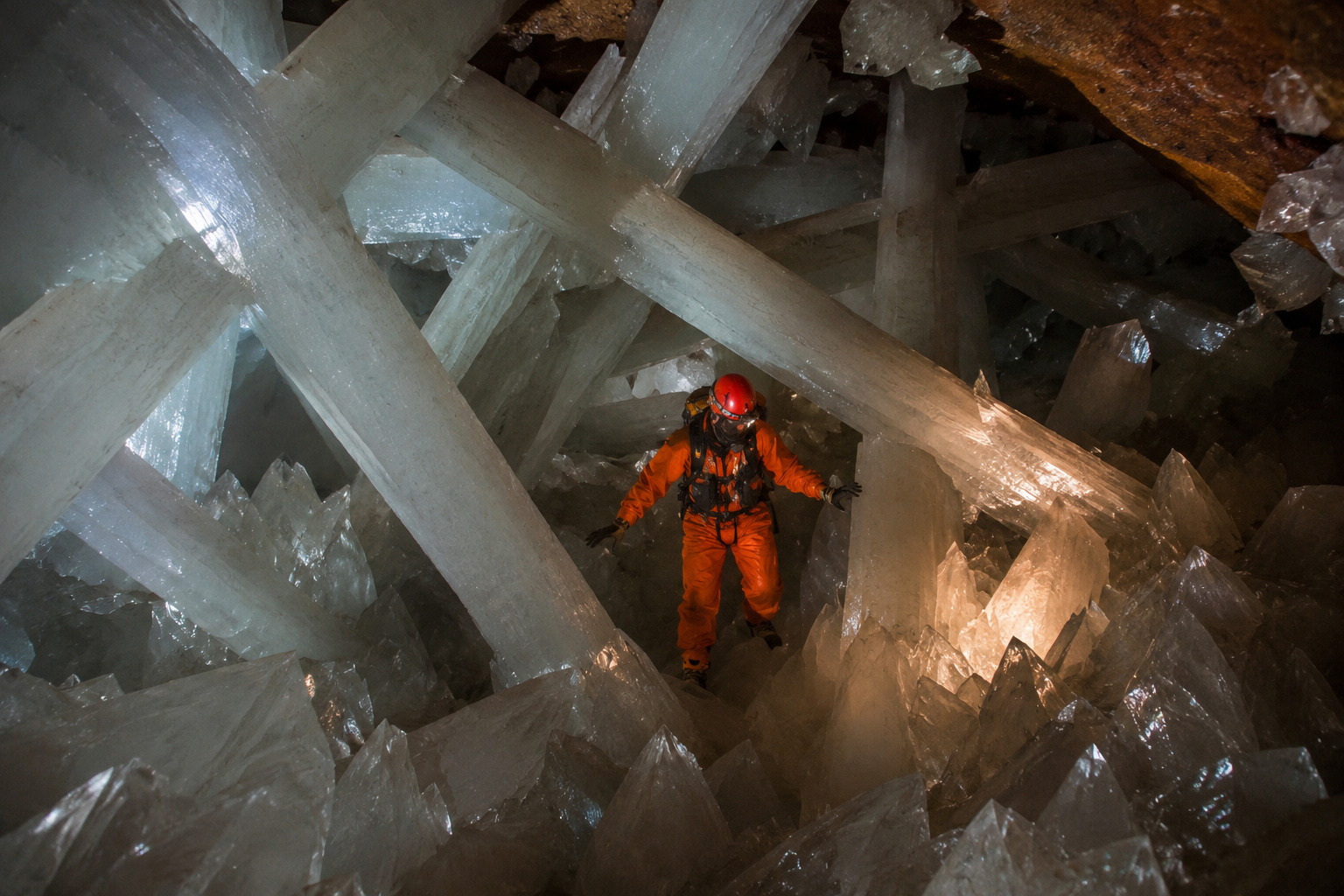
Mexico’s Giant Crystal Cave: A Deadly 58°C Underground Palace with 11-Meter Crystals Formed Over Nearly a Million Years

-
China Dominates Over 90% of Rare Earth Refining, Prompting Global Concerns: Canada and Japan Launch Billion-Dollar Plan to Reduce Dependency and Safeguard Batteries, Semiconductors, and Defense

-
Ancient Mines in Spain Reveal Tools and Metals That May Explain Bronze Age Trade with Scandinavia
-
XCMG Launches 240-Ton Mining Truck in Brazil, Promising Increased Productivity with Lower Fuel Consumption


Sustainable Bricks Made with Mining Waste
One of the most emblematic cases is that of UFOP, which developed a type of eco-brick produced with iron ore waste. The product has resistance equivalent to traditional bricks, lower cost, and, most importantly: avoids the use of clay taken from nature, reducing deforestation for ceramic production.
Researchers discovered that by mixing the waste with cement and specific additives, it is possible to obtain a material with good mechanical and thermal resistance. Furthermore, the final product has lower water absorption, which increases its durability in outdoor environments.
The project has been awarded and gained national visibility as a promising solution for sustainable construction in areas near mining regions.
Asphalt and Cement with Mining Waste
Another area of innovation is the application of waste in road paving. Vale itself has already conducted tests in Minas Gerais with experimental paving made from a mix that includes ore waste. The initiative aims not only to reuse the material but also to reduce the costs of road works in remote regions.
Additionally, some of the waste can be utilized in the cement industry. The waste acts as a partial substitute for clinker, reducing CO₂ emissions in the cement manufacturing process — one of the most polluting in the industrial sector.
In its sustainability report, Vale claims that it has already managed to reuse about 40% of its operations’ waste in 2022, with ambitious targets for the coming years.
Art Made with Waste: From Slime to Symbol of Resilience
In a more symbolic and emotional approach, artists have used waste as raw material for works of art. One example is the collective “Lama” — a group of artists from Minas Gerais that transformed the sediments from Mariana into sculptures and paintings.
The artworks aim to re-signify the pain caused by the rupture of the Samarco dam, transforming waste into memory, protest, and contemporary art. The project received support from NGOs and has been exhibited in national and international galleries.
This type of initiative shows that waste can also carry immaterial value, serving as a bridge between science, society, and culture.
Circular Economy in Mining: A Global Trend
The logic of reusing waste is part of the concept of circular economy, where nothing is lost — everything is transformed. Mining, historically linear (extract → process → discard), is starting to adopt this new model, where waste becomes resources.
According to the International Energy Agency (IEA), the reuse of waste and slag can be crucial to meet the demand for materials in the energy transition, such as lithium, copper, and nickel.
In Brazil, progress is still slow but growing. It is estimated that less than 30% of mining waste is currently reused, but new regulations and market pressures are accelerating this curve.
Barriers and Challenges of Reuse
Despite its potential, the use of waste faces technical, regulatory, and even cultural challenges. Many construction companies still hesitate to use materials sourced from waste, due to prejudice or lack of technical standardization.
Moreover, not all waste is the same. The chemical composition varies from mine to mine, and it is not always economically viable to transform the material. Transporting the waste to use locations can also increase operational costs.
To change this scenario, it is essential to invest in research, product certification, and tax incentives for low environmental impact constructions.
The Future of Mining May Be in Its Own Waste
The so-called “future mining” goes far beyond excavating the underground. It involves extracting value from what was once just waste. Wastes that once occupied vast areas are now becoming raw materials for new productive chains — from civil construction to art, from paving to sustainable fashion.
Companies that manage to integrate innovation, sustainability, and social impact will lead in an increasingly demanding and regulated global market.
The transformation of mining waste into bricks, roads, and works of art is more than a technological innovation — it is a new paradigm of value. Brazil, having been the stage for major environmental tragedies, can now also lead the way in regeneration, showing that even slime can bloom.
What was once a symbol of loss is now an example of reinvention. And perhaps, in the hands of engineers and artists, the waste can teach us to rebuild an entire sector with more purpose.


