Portuguese
  Spanish


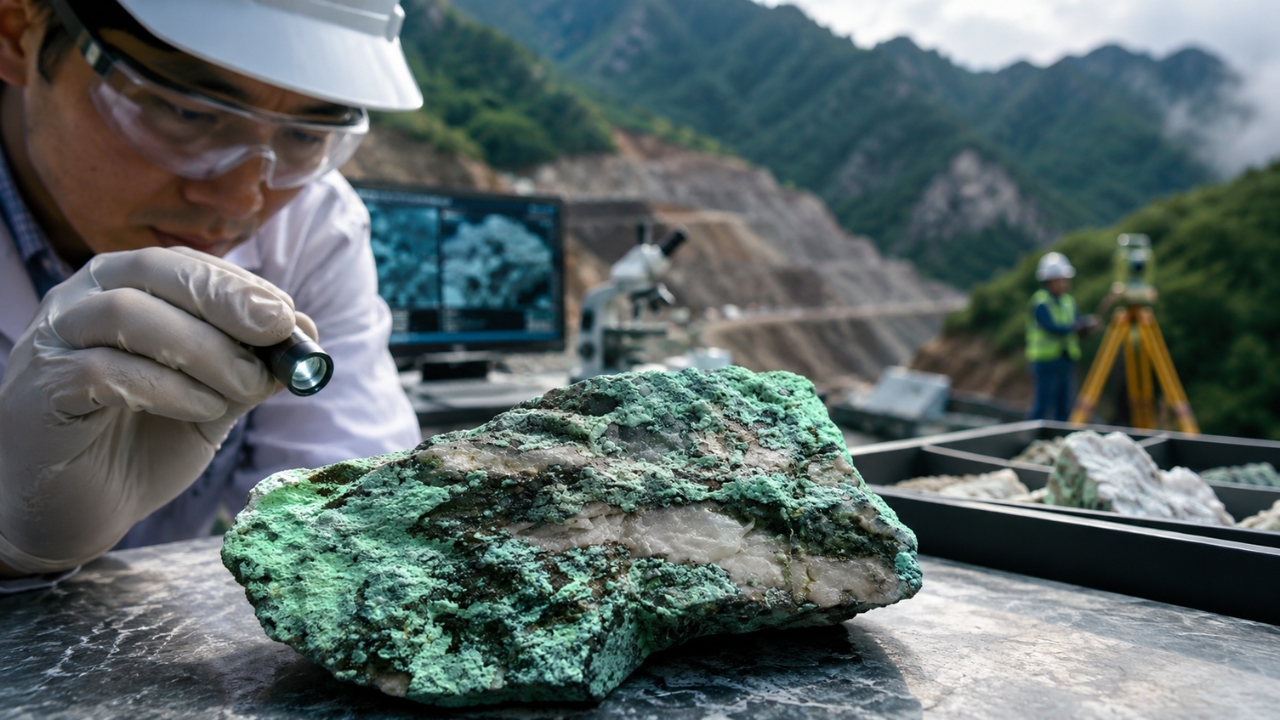


Researchers from the Chinese Academy of Geological Sciences identified a compound of nickel, bismuth, antimony, arsenic, and sulfur that does not fit into any existing mineralogical category and paves the way for more efficient and cheaper energy storage materials.
In December 2025, researchers from the Chinese Academy of Geological Sciences (CAGS) announced the discovery of a mineral completely unknown to science — never recorded in any mineralogical catalog on the planet. The compound was officially approved by the International Mineralogical Association (IMA) under the code IMA2025-059 and named Jinxiuite, in honor of the location where it was found: the Jinxiu Yao Autonomous County, in the Guangxi Zhuang Autonomous Region, in southern China.
The mineral that no geologist had seen before
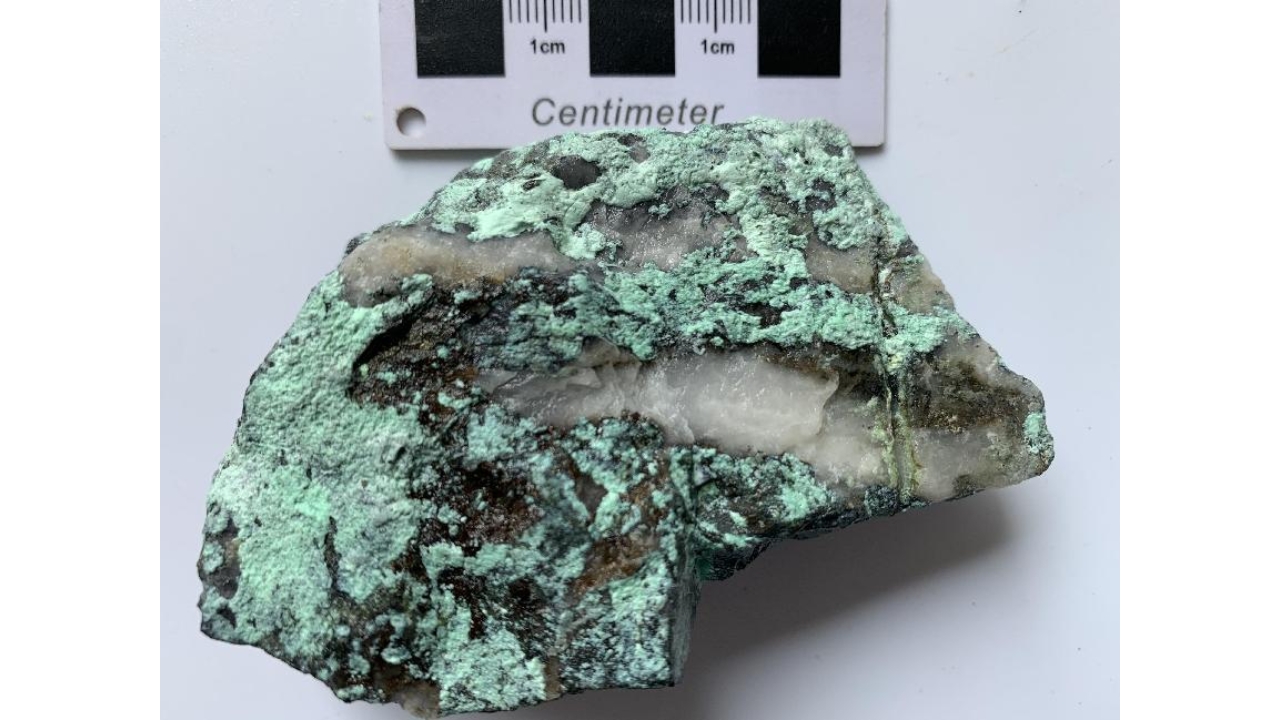
The identification was conducted by the team of geophysicist Yan Jiayong, director of the deep mineral exploration division of CAGS, and underwent formal review and approval by vote of the IMA commission — the body that internationally regulates the recognition of new minerals. Chemically, Jinxiuite is a sulfide of nickel, bismuth, antimony, arsenic, and sulfur, with the formula Ni₁₈Bi₂SbAsS₁₆ and a tetragonal crystal system that does not fit into any previously existing mineralogical category.
According to Yan Jiayong himself, the discovery of a new mineral represents a concrete expansion of the limits of human knowledge about the material world — and opens up perspectives still under investigation for materials science.
-
Texas Teens Win $50,000 at World’s Largest Science Fair for Developing Non-Surgical Brain-Controlled Bionic Prosthesis with 98% Accuracy

-
Samsung Galaxy A27 Launches with 6.7-inch Super AMOLED Display, Full HD+ Resolution, Android 16, Six Years of Updates, Snapdragon 6 Gen 3, and Dust and Splash Resistance; Available for Pre-order in the US for $350

-
Five Brazilian Students Invent Drug Test Pen That Detects Date Rape Drugs in Seconds
-
Giant 142 kg Emerald from Brazil’s Bahia Region Auctioned with Starting Bid of Nearly $16 Million


Concentrations that surprise even the experts
The Longhua deposit, where Jinxiuite was found, presents 17.5% nickel and 1.5% cobalt — which, according to CAGS researchers, represents concentrations almost 80 times higher than conventional benchmarks of the mining industry, which considers economically viable any content above 0.2% for nickel and 0.02% for cobalt.
How this mineral forms in nature
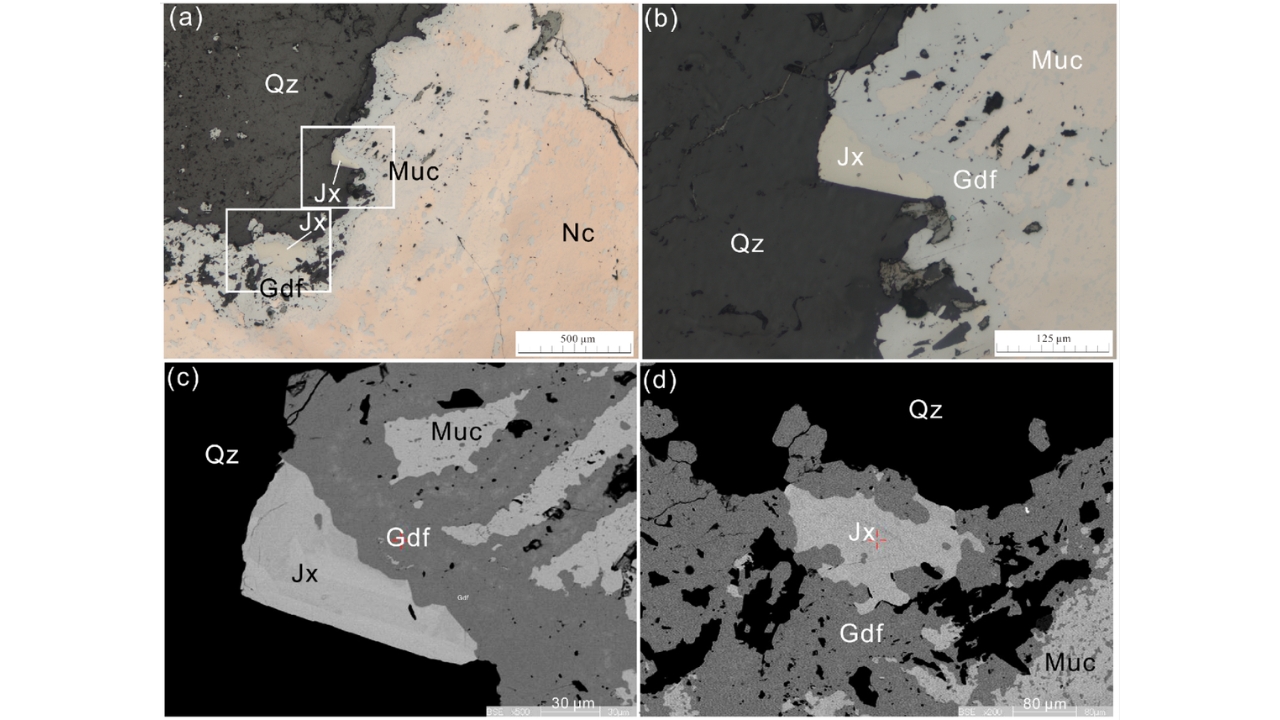
According to Yan Jiayong, Jinxiuite emerges when pre-existing nickel-rich compounds are progressively replaced by new materials carried by hydrothermal fluids — superheated liquids that travel through deep fractures in the Earth’s crust. As these fluids cool, they crystallize and build entirely new atomic arrangements. The result, according to scientists, is a dense and stable structure with no recorded equivalent in nature.
What researchers say about the mineral’s potential
Senior engineer Tang Hejun, who led the discovery at CAGS, stated that Jinxiuite contains multiple valuable metals — nickel, cobalt, and bismuth — but emphasized that further research is still needed to determine if these metals can be efficiently extracted. According to him, this outcome will directly influence recovery rates and the economic viability of similar deposits in the future.
A possible compass for still hidden deposits
The CAGS team plans to use Jinxiuite as a geological prospecting indicator: if the mineral is found in rock samples during future exploration campaigns, its presence may signal the existence of hidden nickel and cobalt bodies nearby. This is, according to the researchers themselves, a potential tool — still in the theoretical model development phase.

What experts point out about future applications
Yan Jiayong described the unique atomic stacking pattern of Jinxiuite as what he called the “nature’s architectural design” — a structure that, according to him, can inspire researchers to develop artificial compounds with special properties. The Chinese scientific media highlighted that discoveries of this kind open prospects for the synthesis of new materials, although the scientists involved have not made concrete promises about short-term industrial applications.
The geopolitical context is also relevant: as pointed out by the CAGS experts themselves, cobalt is a critical resource on which China depends on imports — and the discovery of a deposit with these exceptional concentrations has direct strategic significance for the country, regardless of the future applications of Jinxiuite itself.
Jinxiuite is, for now, a confirmed and officially recognized scientific discovery. What it can become — that, according to the geologists themselves, is still being investigated.