






 Portuguese
  Spanish
  3 min of reading


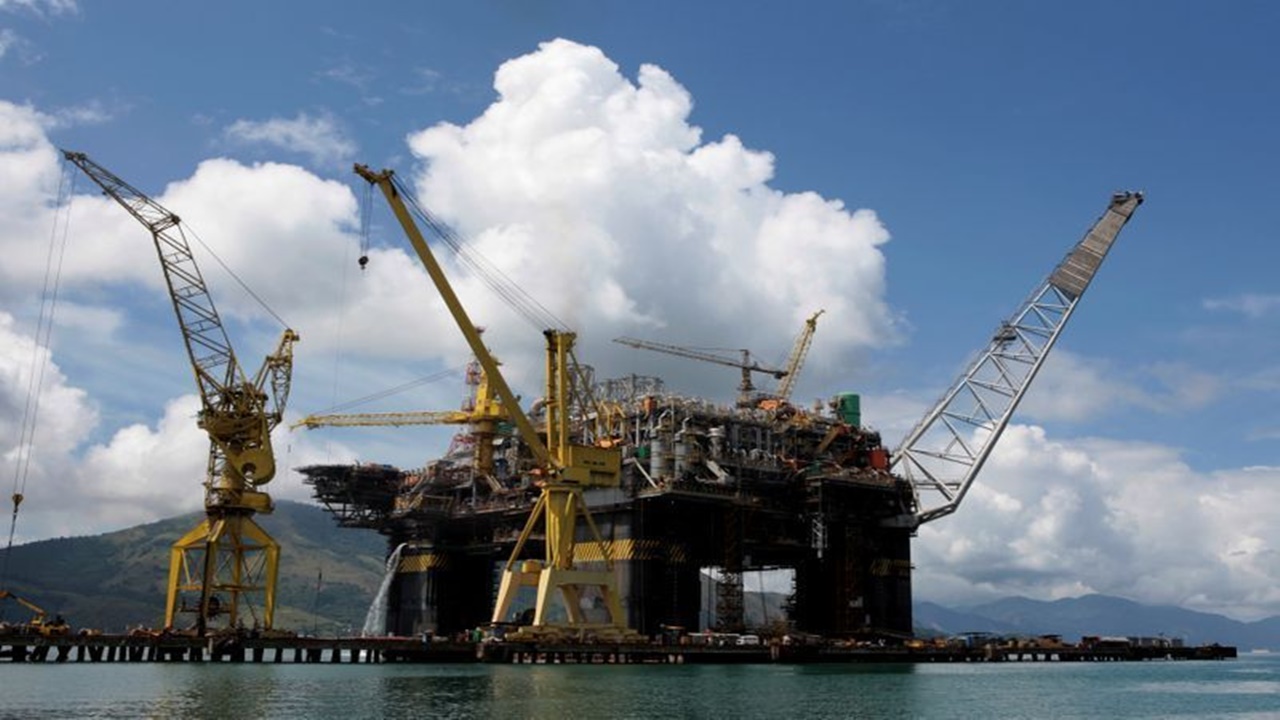
Shipbuilding: Petrobras Platforms P-78 and P-79 Will Be Constructed by Asians
Petrobras received on Monday (02/01) the commercial proposals from the pre-qualified companies for the bidding of the construction of platforms P-78 and P-79, which will operate in the Búzios field, in the pre-salt of the Santos Basin. Three consortia with the participation of Asian shipyards prepared to submit offers to the state company.
Read Also
- 100 Job Openings for Fundamental Education in the Role of ASSISTANT for Construction Works
- Oil Giant Halliburton Is Hiring for Job Openings in Macaé and Rio de Janeiro, Today February 4
- February Starts with 60 Job Openings to Work at the World Leader in Steel Manufacturing ArcelorMittal
- The National Leader in Energy Generation Eneva Wins Bid and Acquires 7 Onshore Blocks from Petrobras in Amazonas
The bidding, launched in July 2020 by Petrobras, foresees the hiring of platforms P-78 and P-79 for the important Búzios field, in the pre-salt of the Santos Basin, the company’s main bet to ensure the growth of its future production curve.
The auction was supposed to include the participation of shipyards in Brazil, but due to the contracting model, only proposals from South Korea were received: Daewoo, Samsung, and Keppel (Hyundai).
-
A mother of four sought a safer family environment, watched tutorials on the internet, built a 325 m² house with her family, and learned foundation, walls, plumbing, and electrical work without any professional experience.

-
Iron ore falls to 762 yuan in China as real estate sales decline and steel production hits lowest level since 2018

-
Bothered by millions of bricks discarded every year in Norway, a company cuts old pieces into thin slices, secures them with a metal system, and transforms demolition into a new 1,800 m² facade.
-
While cigarette butts appear on sidewalks, beaches, and sewers, researchers tested the waste in clay bricks and calculated a 10% savings in burning with just 1% in the mixture.


At this stage, the companies presented their prices, as well as the technical proposal. Here are the prices presented and the names of the two potential winners:
- 1st Keppel (Hyundai) – R$ 12.521.821.104,00
- 2nd Daewoo – R$ 14.107.992.912,00
- 3rd Samsung – R$ 15.146.522.280,35
About Platforms P-78 and P-79
Both platforms will have the capacity to process 180,000 barrels of oil and 7.2 million cubic meters of gas daily. The expectation is that these units will begin operations in 2025.
Platforms of similar size have an estimated construction cost of around US$ 1.7 billion, according to a source from Reuters.
New Contracting Model Required by Petrobras
The new platforms are a result of Petrobras’ strategy to develop new projects of its own units, incorporating lessons learned from the FPSOs already installed in the pre-salt, including aspects of contracting and shipbuilding, the company stated previously.
The state-owned company has used both its own platforms, contracted under the so-called EPC model, and chartered ones, depending on economic decisions over time.
According to the Brazilian oil company, the high indebtedness of the company in the past decade contributed to the decision to prioritize the chartering model, whose costs can be diluted on the balance sheet over 15 to 20 years, instead of billion-dollar outlays for the construction of the units.
The decision was reinforced after Operation Car Wash, launched in early 2014, when various illegalities in contracts for the shipbuilding of offshore production units in Brazil began to be revealed, which ultimately prevented the hiring of several companies and led to the closure of others.
Due to all these problems, the contracted own platforms faced many delays, leading Petrobras to opt for chartering new platforms.
According to Petrobras, in order to diversify its portfolio again, the company launched a new contracting modality that, as previously reported, incorporated lessons learned.
Among the changes, Petrobras will hire a single supplier under the EPC model, responsible for all stages of the project. In the past, the state company participated in the hiring of suppliers who built different parts of the same unit.







Be the first to react!