






 Portuguese
  Spanish


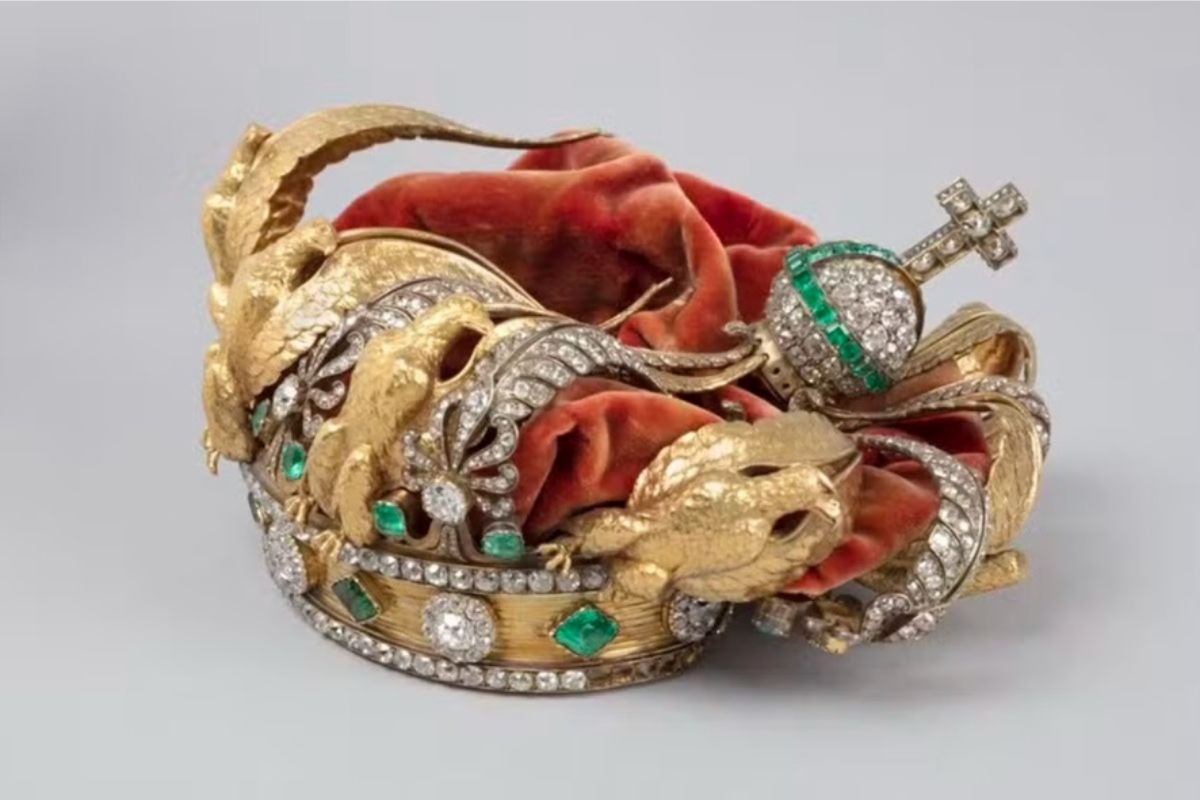

In Paris, Criminals Invaded the Louvre Museum and Damaged a 170-Year-Old Crown Valued as a Rare Historical Piece, Requiring an Investment of US$ 47,000 for Restoration and Provoking Mobilization of Experts and Cultural Authorities.
One of the most emblematic pieces in the Louvre Museum’s collection in Paris was damaged following a robbery reported on October 19. It is an imperial crown with 170 years of history, linked to Napoleon III and Empress Eugénie.
The object was created for the 1855 Universal Exhibition in Paris and is part of an extremely restricted group of only three crowns of French rulers still existing in the country. The incident had an immediate impact on the French cultural scene.
The restoration has already been officially announced and is expected to cost around US$ 47,000, equivalent to approximately R$ 245,000 at the current exchange rate.
-
Billionaire says the most valuable skill will help overcome job elimination caused by AI, following Bill Gates’ fears

-
A Dutchman created a ‘box’ that makes trees grow in the desert almost without water and without irrigation: the invention has already brought seedlings to dozens of countries and achieves up to 90% survival where common planting did not exceed 10%.

-
Abandoned warehouse hid a giant collection of rare computers, with over 2,000 artifacts from the 1930s to the 1980s.
-
Scientists warn that melting ice is triggering an alarming chemical transformation in preserved areas, and the first signs are already concerning researchers worldwide.




Invasion of the Apollo Gallery Involved Four Men and the Use of a Grinder
The criminal action took place in the traditional Apollo Gallery. Four men invaded the space after jumping through a window.
They used a grinder in an attempt to cut the glass showcases protecting the jewels linked to the collection of Napoleon III and his wife, Empress Eugénie. In total, eight pieces were taken.
What seemed impossible caught attention: the glass resisted the attack. This forced the criminals to remove the objects through a very narrow opening.
During the escape, the crown fell onto the sidewalk. Initially, it was thought that the deformation had been caused by the external fall. However, authorities explained that the main damage occurred when the piece was forced to pass through the reduced opening.

Deformed Metal Structure, but Gemstones Remain Intact
The crown impresses with its numbers. There are 56 emeralds, 1,354 diamonds, and eight golden eagles symbolizing the empire.
Despite the impact of the theft, most of the ornamentation remains intact. The main diamonds and emeralds are still in their original positions.
Small diamond fragments are missing, as well as one of the golden eagles. When the metal frame deformed, a palm-shaped ornament came off.
The detail that stood out is that, even with several loose pieces, few elements are actually missing.
Scientific Committee and Traditional Jewelers Will Supervise Restoration
To conduct the process, the Louvre will create a scientific committee. The group will gather professionals from the institution itself and specialists from museums such as the d’Orsay and the Natural History Museum.
Representatives from five historic French jewelers will also participate: Mellerio, Chaumet, Cartier, Boucheron, and Van Cleef & Arpels.
According to the specialists’ assessment, since nearly all the elements remain fixed, the intervention will likely require only remodeling of the metal structure, without the need for complete reconstruction.
The expectation is to complete the work by the end of the year, when the piece will return to public display.
Symbol of the Second Empire and Rare Piece in French History

The crown was commissioned by Napoleon III from the official jeweler of the imperial family, Alexandre Gabriel Lemonnier, with the support of a sculptor and another jeweler.
It was lighter than the emperor’s crown. After the death of Empress Eugénie in 1920, the Louvre acquired the piece.
Today, it is one of the only three remaining examples of crowns of French rulers still existing in the country. The four suspects of the theft have been arrested, but the other stolen jewels remain missing.
When it returns to the Apollo Gallery, the jewel will carry not only the symbolic weight of the 19th century but also the mark of one of the most dramatic recent episodes in the museum’s history.
The case reinforces how even highly protected historical treasures can become targets of bold actions and shows the constant challenge of preserving relics that have survived for centuries.
Do you believe that museums should further strengthen the security of rare historical pieces? Leave your opinion in the comments.





