Portuguese
  Spanish




The Trajectory Of The Safra Family Combines Century-Old Banking Tradition, International Expansion, And Billionaire Philanthropy. The Lebanese-Brazilian Clan Built A Global Financial Empire And Remains Influential After The Death Of Joseph Safra In 2020.
Subtitle: Discretion, International Expansion, And Billion-Dollar Donations: How The Lebanese-Brazilian Clan Structured One Of The Most Traditional Financial Groups In The World And Remains Relevant After The Death Of Joseph Safra.
The trajectory of the Safra family combines banking tradition, international expansion, and strong philanthropic action.
The clan, which arrived in Brazil in the 1950s, built one of the largest private groups in the country and maintained global relevance even after the death of Joseph Safra on December 10, 2020, at the age of 82, in São Paulo.
-
Brazilian Construction Worker Moves to France, Earns Up to €2,500 Monthly with Home Renovations, Gains Social Media Attention

-
US Navy Sinks USS Oriskany with 230 kg of C-4, Creating World’s Largest Artificial Reef in 37 Minutes

-
U.S. Dumped Tanks, Jeeps, and Coca-Cola into the Pacific in 1945 After British and French Lowball Offer, Creating “Million Dollar Point”
-
WHO Warns of Unnecessary Interventions in Natural Births Worldwide, Advocates for More Human-Centered Care, Reigniting Debate on Medicalization





Origins In The Middle East And Arrival In Brazil
The family’s story dates back to the 19th century in the Middle East, where the Safras were already engaged in trade and financial services.
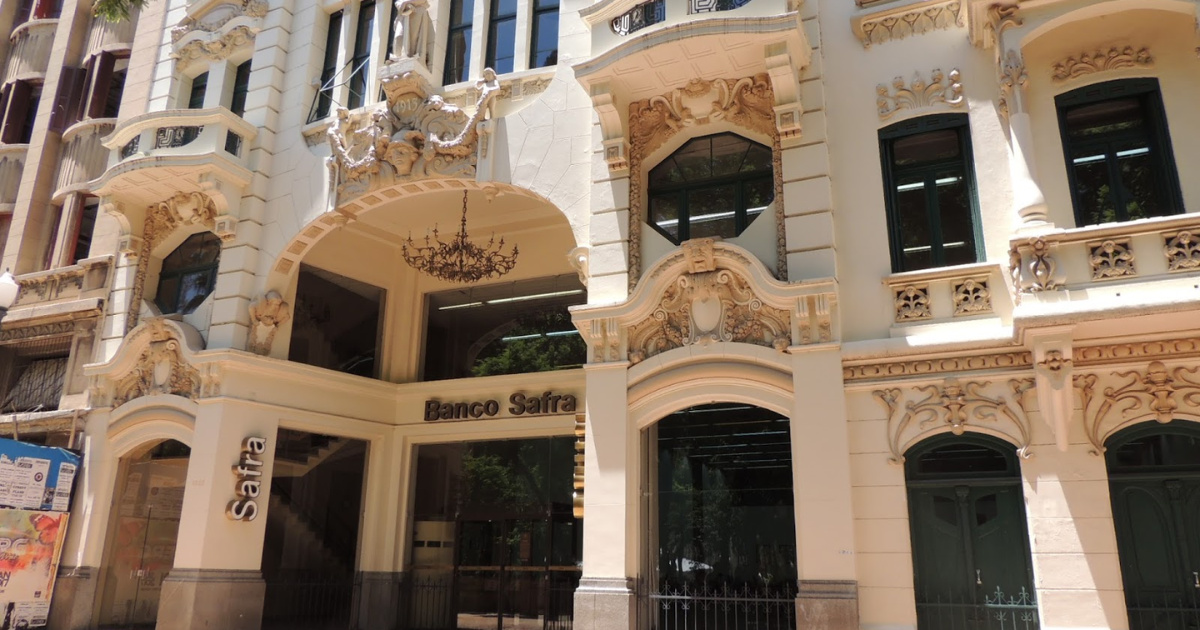
Starting in the 1950s, some members settled in São Paulo, beginning the Banco Safra.
Over time, the institution established itself in the high-income and corporate segments, in contrast to banks focused on mass retail.
Joseph Safra became a central figure in this expansion.
Recognized as the richest banker in the world, he led the transformation of the institution into an international conglomerate while maintaining the discreet profile that characterized the family.
Banco Safra In Brazil
The bank maintained a conservative credit strategy and focused on high-wealth clients.
Today, it is among the largest private banks in the country by assets, frequently appearing in major national and Latin American rankings.
The expansion in Brazil was marked by strategic operations.
In November 2022, the institution acquired the Alfa conglomerate in a deal valued at approximately R$ 1 billion, strengthening its operations in credit and investments.
International Reach: J. Safra Group
Outside Brazil, the business falls under the umbrella of the J. Safra Group, which includes the Swiss bank J. Safra Sarasin, acquired in 2011 from Rabobank for US$ 1.13 billion, and the Safra National Bank of New York.
The group operates in over 25 locations, establishing itself as a reference in private banking.
In March 2025, J. Safra Sarasin announced the purchase of 70% of the Danish Saxo Bank, for about € 1.1 billion.
This move expanded the family’s presence in digital trading technology and opened doors to new markets.
The group also faced regulatory challenges.
In August 2025, the Swiss Public Prosecutor’s Office imposed a fine of 3.5 million Swiss francs on J. Safra Sarasin in a development of the Lava Jato operation.
The bank did not acknowledge criminal guilt, settled, and stated that it had implemented corrective measures.
Succession Dispute And New Power Arrangement
The death of Joseph Safra triggered disputes among the heirs.
Alberto Safra, one of the sons, contested the division and opened lawsuits in different jurisdictions against his mother and siblings.
The deadlock ended on July 19, 2024, when the parties announced a global agreement.
With the decision, Alberto left the family group to pursue his own business at the management firm ASA Investments.
Vicky Safra, Joseph’s widow, and the other children remained in control of the conglomerate.
The settlement concluded one of the most significant succession disputes in the Brazilian financial system.
The Mark Of Philanthropy
In addition to banking, the family built a large-scale philanthropic legacy.
The Vicky Safra Foundation, created by Joseph’s widow, finances projects in health, education, culture, and the arts.
Among the landmarks in Brazil is the Vicky and Joseph Safra Pavilion, inaugurated in 2009 at the Albert Einstein Israeli Hospital in São Paulo.
Another pillar is the Edmond J. Safra Foundation, focused on science, social assistance, and community support.
Hospitals such as Sírio-Libanês and Einstein itself are among the beneficiaries of the family’s donations.
These initiatives reinforce the presence of the name Safra in prestigious institutions both inside and outside the country.
Timeline Of The Safra Family
- 1950s: Arrival Of The Safra Family In Brazil And Creation Of Banco Safra.
- 2011: Acquisition Of Bank Sarasin In Switzerland, Which Became J. Safra Sarasin.
- 2020: Death Of Joseph Safra At The Age Of 82 In São Paulo.
- 2022: Purchase Of The Alfa Conglomerate By Banco Safra.
- 2024: Global Agreement Concludes Inheritance Dispute Among Heirs.
- 2025: J. Safra Sarasin Acquires 70% Of Saxo Bank.
Current Relevance
Today, the Safra family maintains one of the most traditional financial empires in the world, with a solid presence in Brazil, Switzerland, and the United States.
The management model, characterized by discretion and prudence, has allowed the group to navigate decades of transformations in the banking sector.
The recent reinforcement in the digital sector, the organized succession after intense disputes, and the continuity of philanthropy indicate that the Safra surname will continue to occupy a relevant space in business and global society.
Amidst so much tradition and expansion, a question arises: how will the group balance the pursuit of innovation with maintaining a conservative style that has always marked its identity?