Portuguese
  Spanish


At 24 years old, Luzia Alves is the daughter of a bricklayer, a building technician, and a construction helper at a site in Iguatu, Ceará, but the dusty uniform hides a career plan: she is studying civil engineering to move up from the base of the construction industry and, one day, sign her own projects.
On the construction site, Luzia Alves does the usual heavy work: fills the wheelbarrow, carries bricks, sand, and cement, mixes mortar, and helps build walls. The difference is that she sees each stage with the eyes of someone studying the project coming to life. The daughter of a bricklayer, she learned the trade by helping her father and turned her love for construction into a career choice.
According to Jornal A Praça, the 24-year-old is a building technician and is studying civil engineering in Iguatu, in the interior of Ceará. She wants to be the first engineer in the family, completing the full path of construction: from the base of the site to the drafting table of the one who signs the project.
Who is Luzia Alves, the construction helper who studies the project
Luzia is 24 years old and works as a construction helper in Iguatu, Ceará.
-
Over 5,000 Families Join Brazilian Network Providing 3D-Printed Prosthetics, Founded by Teacher Inspired by Daughter’s Limb Difference

-
Over 1,060 Wheelchairs Created from 102 Tons of Aluminum Tabs Collected Across Brazil, Turning Waste into Mobility Nationwide
-
Explore the History, Architecture, and Unique Features of Arena Fonte Nova, One of Brazil’s Most Iconic and Modern Football Stadiums

-
Indian School in Assam Expands Enrollment by Accepting Plastic Waste as Tuition Payment


Before construction, she had been a saleswoman, but it was on the site that she found herself.
The first teacher was her own father, a bricklayer who took her to the site and taught her the basics of the job.
As the daughter of a bricklayer, she grew up watching plumb lines, levels, and mortar turn into walls.
Today she is also a building technician, which places her a step above manual labor.
Knowing the construction from the inside is the advantage she brings to civil engineering.
What a construction helper does on the site
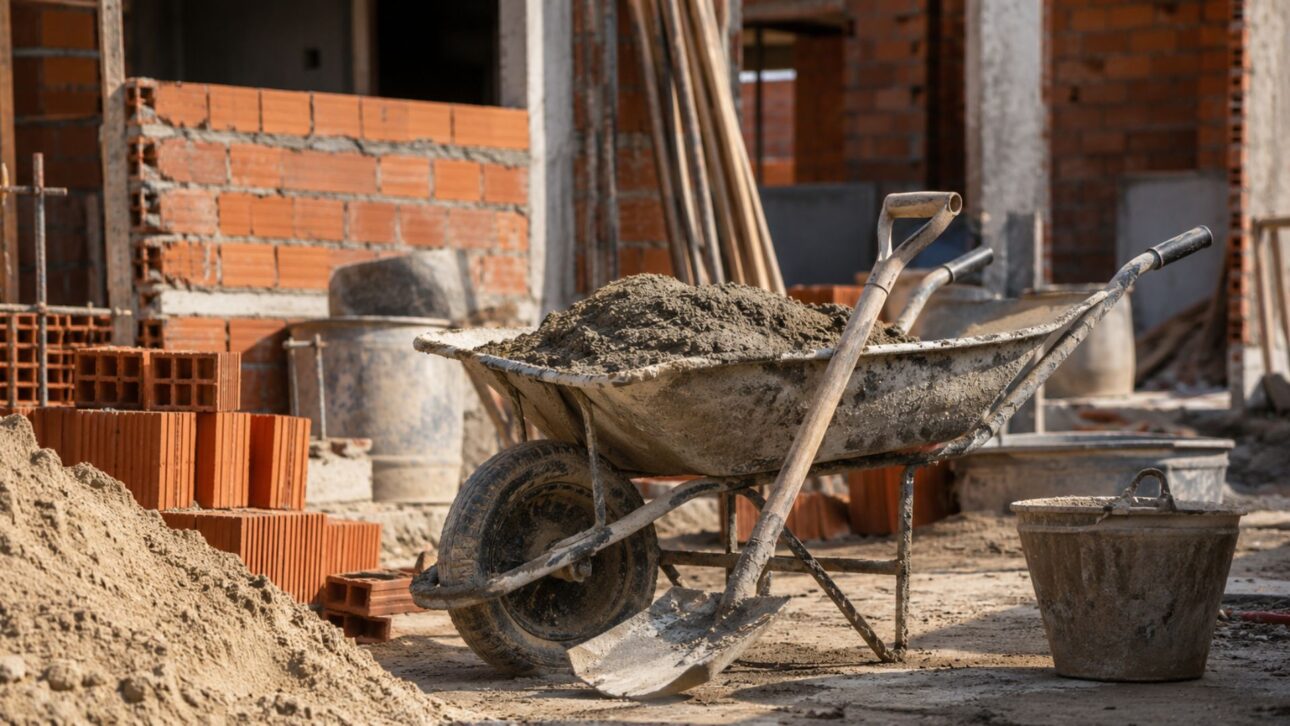
It’s a wheelbarrow full, a bag of cement on her back, and plaster on the wall under the sun.
She mixes mortar, cuts ceramic, helps dig foundations, and unloads materials.
Each of these tasks teaches, in practice, how a construction is sustained.
For someone who will become an engineer, knowing the effort behind each slab is a real advantage.
In civil construction, those who started at the base usually understand the work better than those who only saw it on paper.
Woman on the construction site and the prejudice she faced
Being a woman in a predominantly male environment was not simple.
Luzia says she faced jokes and distrust at the beginning, just for being a woman on the site.
Over time, her work spoke louder, and her colleagues began to respect her service.
Alongside her father and fellow workers, she dismantled prejudice in practice.
The presence of a construction worker who is also a building technician already changes the game day-to-day.
Competence became the best response to those who doubted.
From construction worker to civil engineering: the career plan

She attends college while working, balancing the construction site with the classroom.
The goal is to bridge the gap between the theory of calculations and the practice she already masters on the site.
Being the daughter of a bricklayer and having worked as a construction worker, she enters the course with field experience.
In Iguatu, this profile of a student coming from civil construction is still rare, and therefore attracts attention.
The idea is simple and ambitious: stop carrying the project to start signing it.
The value of those who understand the work from the ground up
In the construction market, on-site experience is worth gold.
Engineers who have gotten their hands dirty tend to plan more realistically.
Luzia knows how long it takes to build a wall because she has built many.
This knowledge from being a construction laborer becomes a technical criterion when she analyzes a schedule.
The Brazilian construction industry faces a shortage of qualified labor, and profiles like this are valuable.
Combining on-site practice with a diploma is what can make her a different kind of engineer.
What Luzia Alves’s story shows
Luzia’s journey connects two ends that rarely appear together: the laborer and the engineer.
She shows that construction can also be a career school, not just a place of sweat.
It’s worth keeping your feet on the ground, though.
Luzia is still in the middle of her civil engineering course, so the diploma and registration have not yet come.
Being the first engineer in the family is a goal, not an accomplished fact.
And the routine of being a construction laborer combined with college is tough, with no guarantee of a happy ending.
Even so, few stories summarize so well the idea of climbing step by step within the construction industry.
From the daughter of a bricklayer to a future engineer, Luzia is building this bridge in Iguatu, Ceará.
And you, would you hire an engineer who knows the work from the wheelbarrow to the structural calculation? Comment here if in your city there is also a construction laborer aiming for civil engineering, we want to tell this story.