





 Portuguese
  English
  Spanish
  4 min of reading
  0 comments


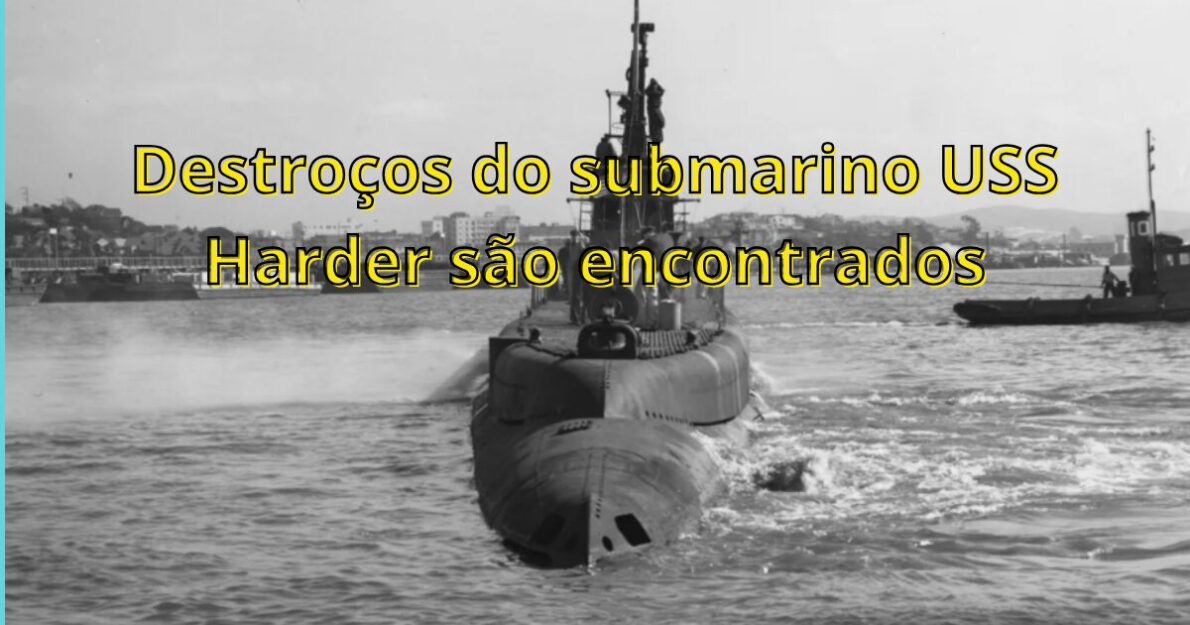
USS Harder Submarine, Which Disappeared During World War II, Was Found at Over 900 Meters Depth in the Philippine Sea. The Discovery, Made by the Lost 52 Project, Marks a Crucial Point in U.S. Naval History and Offers New Insights into Naval Battles in the Pacific.
In a historic discovery that promises to rewrite part of World War II, the wreckage of one of the most legendary submarines of the United States Navy, the USS Harder, has been located.
The depth? A staggering 914 meters in the Philippine Sea. The mystery surrounding the fate of this powerful submarine, which challenged the Japanese Imperial Fleet for years, seemed impossible to solve until a combination of high technology and dedication revealed its location, decades after the end of the conflict.
The USS Harder, missing for nearly 80 years, has been finally rediscovered, but what this discovery reveals goes far beyond the mere find.
-
Almost no ship sails directly between South America and Australia, and the reason is a combination of the vast distance, winds that circle the planet nonstop, and the absence of ports along the way, leaving the South Pacific as a water desert.

-
More than 85 million homes in China heat water for free with vacuum glass tubes invented at a Chinese university, a cheap technology with no moving parts that faces certification rules and codes in the United States, making installation too expensive.
-
In a boat just 1.19 meters long, smaller than many kayaks, Briton Andrew Bedwell wants to cross nearly 3,000 kilometers of the North Atlantic alone and spend more than two months without being able to lie down or stand up, all to break a record and honor cancer victims.
-
While most dealerships in Brazil take days to deliver cars, in Germany two 48-meter glass towers hold 800 vehicles and release each model via automatic elevators in a few seconds.




Cutting-Edge Technology and the Lost 52 Project
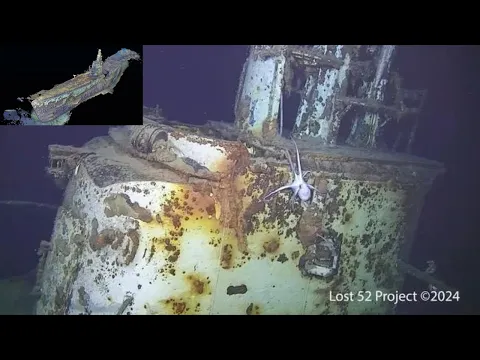
According to sources linked to the Military Society, the discovery was made possible thanks to the Lost 52 Project, a cutting-edge initiative that utilizes the latest technological innovations to locate U.S. Navy submarines lost during World War II.
Using autonomous underwater robots, multibeam sonar, and LIDAR (Light Detection and Ranging) technology, the explorers managed to identify the wreckage of the USS Harder, nearly intact, resting on the ocean floor.
According to information from the Military Society, the Lost 52 Project is already famous for its discoveries, having located five submarines between 2010 and 2019: the USS R-12, USS S-26, USS S-28, USS Grunion, and USS Grayback.
Now, with the addition of the USS Harder, the project reaches a new milestone, offering history and the U.S. Navy the opportunity to honor again the war heroes who had their fates sealed in deep waters.
The Feared USS Harder: Legend and Bravery in Combat
Under the command of the legendary Commander Samuel David Dealey, the USS Harder, part of the “Cat” class, was one of the most efficient submarines in the American fleet during the war.
Nicknamed “Hit ’em Harder,” the submarine and its crew were responsible for devastating the Japanese Imperial Fleet, sinking a series of enemy ships on missions that became true war epics.
Armed with 10 533 mm torpedo tubes and two deck guns, the USS Harder showed its strength right in its first patrol in June 1943 by sinking the tanker Kyoei Maru No. 3 and the aircraft carrier Sagara Maru.
This winning streak continued for months, with the submarine continuing to inflict heavy losses on the enemy, including Japanese freighters and destroyers.
According to Navy records, one of the boldest and most decisive missions of the USS Harder occurred in 1944 during its fifth patrol in the Celebes Sea.
In just four days, the submarine sank three destroyers and damaged two others, forcing the Japanese fleet of Admiral Ozawa to retreat.
These actions had a significant impact on the course of naval battles in the Pacific, especially in the crucial Philippine Sea.
The Last Mission and the Tragic Fate of the USS Harder
As glorious as its trajectory was, the story of the USS Harder would end tragically. On its sixth patrol in August 1944, the submarine continued to operate offensively, this time in the South China Sea.
The USS Harder managed to sink the corvettes Matsuwa and Hiburi, which were responsible for escorting an important Japanese convoy.
However, on August 24, 1944, as it prepared to attack the tanker Niyo Maru, the USS Harder was intercepted by the Japanese corvette Kaibokan CD-22, which launched a series of depth charge attacks.
The submarine was destroyed, and the entire crew lost their lives, ending the cycle of victories of the legendary submarine.
Historic Discovery at 914 Meters Depth
Decades passed until the fate of the USS Harder was finally revealed. Thanks to the tireless work of the Lost 52 Project, the submarine was located at more than 914 meters depth, near the coast of Luzon in the Philippines.
Although the exact coordinates of the discovery have not been disclosed, the location of the USS Harder marks a crucial moment for U.S. naval history.
The submarine, which contributed so much to the Allies’ victories in World War II, now rests on the ocean floor, being considered a “war grave” protected by U.S. legislation.
This discovery not only reinforces the importance of technological innovations in underwater exploration but also serves as a tribute to the bravery of the crew who, under the command of Samuel David Dealey, faced crucial battles for Allied victory.
Legacy of Bravery and Sacrifice
The USS Harder is more than a lost submarine; it is a symbol of courage and sacrifice. By finding its wreckage decades later, the Lost 52 Project not only recovered part of forgotten history but also revived the memory of the heroes who risked their lives to secure freedom.
With the discovery of the USS Harder, historians gain a new chance to study and understand the details of U.S. naval operations in World War II.
For the families of the lost crew members, this discovery represents the possibility of finally closing a painful chapter and honoring the memory of their loved ones.
And you, what do you think of this historic discovery? Are there still other legendary submarines waiting to be found in the depths of the ocean?







Be the first to react!