






 Portuguese
  Spanish
  3 min of reading
  1 comment


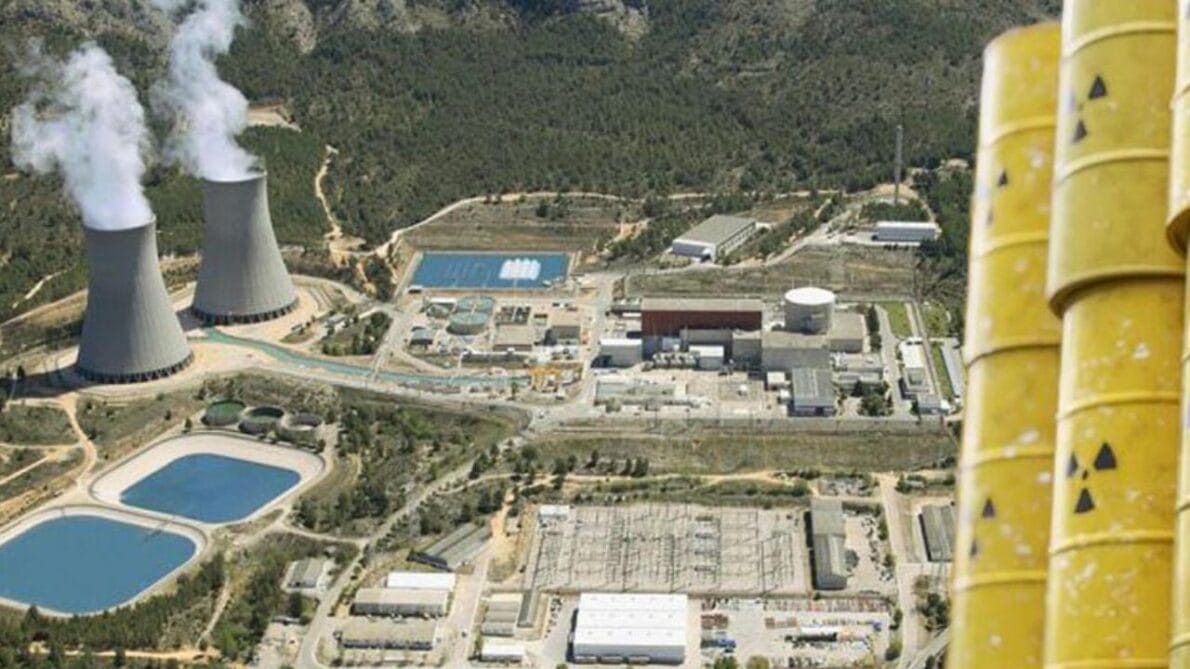

Nuclear Innovation: Technology from the Nobel-Winning Scientist That Reduces Radioactive Waste by 80%. Learn How This Impacts Waste Management and Nuclear Energy Safety
Carlo Rubbia is 90 years old. In 1984, he won the Nobel Prize in Physics for the discovery of W and Z bosons. Between 1989 and 1993, he served as the Director-General of CERN. Now, he may revolutionize nuclear energy with a new type of reactor that radically reduces radioactive waste.
The Issue of Nuclear Waste
The operational safety of nuclear power plants often receives more attention, especially since the Chernobyl disaster, but it is the management of spent nuclear fuel that usually causes more headaches.
Nuclear waste remains radioactive for hundreds of thousands of years after all its usable energy has been extracted. Therefore, countries like Finland, Sweden, and Spain are building underground cemeteries at great depth to store it permanently.
-
American company drills a 1,830-meter hole in Kansas using oil well technology, places a nuclear reactor inside, and claims it will generate electricity without any cooling tower.

-
Canada invests more than 2 billion dollars to upgrade an old nuclear laboratory and try to rival the world’s major atomic energy powers.
-
Nuclear company backed by Bill Gates partners with Hyundai for next-generation 345 MW nuclear reactor

-
Russia is sailing all 8 nuclear icebreakers of its fleet simultaneously for the first time in history, as the Arctic freezes two weeks earlier than expected.




The Transmutex Solution
What Carlo Rubbia proposes, and what the Swiss company Transmutex will now attempt to commercialize, is to combine a particle accelerator with a subcritical nuclear reactor to be able to use a slightly radioactive element as fission fuel.
Like alchemists trying to turn metals into gold, Transmutex’s technology uses the particle accelerator to transmute thorium into a uranium isotope that can be processed immediately, but without producing plutonium or other highly radioactive waste.
Investor Explanation
Steel Atlas, one of the investors in the project, explains it this way:
Safer than fission and more practical than fusion, transmutation is based on a two-step process that is ideal for exploring the neglected common metal, thorium, as fuel: first, the absorption of a neutron that transmutes thorium into uranium isotope 233 (U-238), the stable element found in nature, which then undergoes fission, producing energy.
On the other hand, nuclear energy based on uranium (which uses U-235 or U-238) mainly involves a direct fission process. U-235, when hit by a neutron, undergoes fission immediately, splitting into smaller nuclei and releasing energy, without an intermediate transmutation step.
80% Less Radioactivity
The technology from Transmutex has been reviewed for months by Nagra, the Swiss national agency responsible for managing nuclear waste. Nagra confirmed that Transmutex can reduce the volume of nuclear waste by 80%, as well as the time that this waste remains radioactive: from hundreds of thousands to 500 years.
An Incalculable Impact
The most interesting aspect of transmutation technology is that it could be applied to 99% of existing nuclear waste, which would have a global impact on nuclear waste management while minimizing the proliferation of new waste.
As for operational safety, the particle accelerator allows for an immediate shutdown of the transmutation reaction within two milliseconds, and the liquid lead cooling in the reactor has self-cooling properties in case of malfunction.
It Won’t Be an Easy Path
The support from the Swiss government and rounds of private financing have given a boost to Transmutex. The technology arrives at an ideal time as the world tries to move away from fossil fuels while simultaneously demanding more energy than ever.
However, Transmutex needs to overcome two major obstacles. The opposition to fission for obtaining nuclear energy, with countries like Germany and Spain closing their plants. And the high cost. Although Carlo Rubbia had access to a $5 billion particle accelerator at CERN, no nuclear plant has access to such luxuries, perhaps not even on a small scale. Therefore, strong state support will be necessary.
Images
Transmutex, Markus Pösse (CC BY-SA 3.0)




Esse pessoal da Transmutex são brabos mesmo