Portuguese
  Spanish


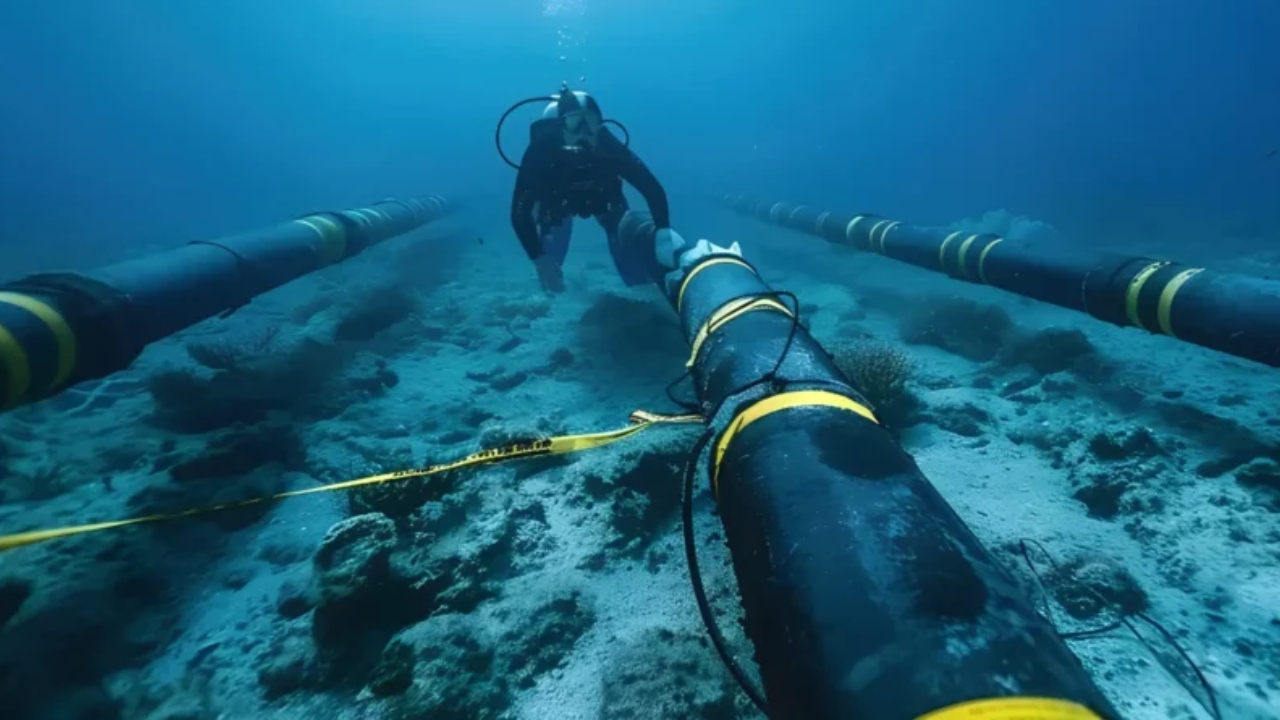


Retired from service in 2002 and “asleep” on the seabed, the TAT-8, the first transatlantic fiber optic cable, resurfaces in 2026 in a dismantling operation that mixes technology, extreme logistics, and large-scale recycling
After more than two decades abandoned on the floor of the Atlantic Ocean, the historic TAT-8 cable has begun to be removed and recycled. Considered a landmark of digital infrastructure, it was the first transatlantic system to use fiber optics, paving the way for high-speed internet between the United States and Europe.
The dismantling operation marks the symbolic end of an era. At the same time, it draws attention to the invisible importance of submarine cables that still support virtually all global communication today.
The Cable That Changed The History Of Global Connection
Inaugurated in 1988, the TAT-8 was developed by a consortium formed by AT&T, British Telecom, and France Telecom. Although it was the eighth transoceanic system in the Atlantic, it was the first to use fiber optics to transmit large volumes of data between continents.
-
Polar Air Mass to Hit Brazil: Temperatures to Plummet in Nine States, Near Freezing in the South with Frost Risk Until Monday

-
Chinese “dark factories” produce electric cars 24/7 with minimal human intervention, as Zeekr assembles 800 units daily, raising concerns in Brazil.

-
Spectacular Green Aurora Seen from Space Illuminates International Space Station, Captivates French Astronaut

-
In Tasmania, a Beach Features a Natural Stone Mosaic Formed by Earth’s Cracks Millions of Years Ago



At the time, the cable’s capacity was revolutionary, but it was exhausted in just 18 months due to the rapidly growing demand. Even so, its success served as a model for dozens of new projects that expanded global digital infrastructure in the following decades.
Why Are Submarine Cables So Essential?
Today, over 95% of international data traffic passes through submarine cables. They enable messages, video calls, banking transactions, and streaming services to cross oceans in a matter of milliseconds.
Although satellites are also used for communication, they do not offer the same capacity and stability as submarine fiber optics. The global internet relies on thousands of kilometers of cables installed on the seabed, connecting continents and supporting the digital economy.
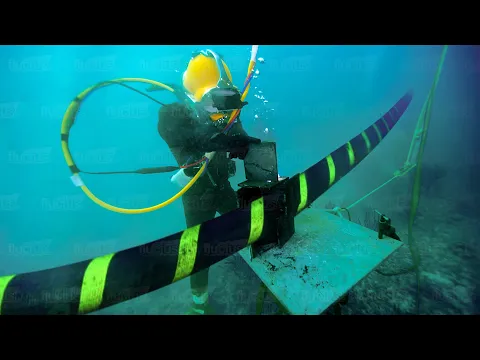

What Happens When A Cable Is Retired?
The TAT-8 was taken out of service in 2002 and remained inactive on the seabed for over 20 years. Now, Subsea Environmental Services, one of the few companies in the world specialized in the recovery and recycling of submarine cables, is conducting the removal process.
In addition to its historical value, repurposing the materials also has a positive environmental impact. Components such as copper and other metals can be recycled, reducing waste and minimizing ecological impacts.
A Symbol Of The Past Amid A New Digital Era
The dismantling of the TAT-8 takes place at a time when the demand for internet continues to grow exponentially. New cables, much more powerful and efficient, are being installed to meet the expansion of data traffic driven by artificial intelligence, high-definition streaming, and cloud computing.
Even invisible to most people, submarine cables are the backbone of the connected world. The end of the TAT-8 not only represents the removal of an old structure but also the closing of a fundamental chapter in the history of the global internet.