The WION report details the achievement of the EAST reactor, the annual investment above US$ 1.5 billion, and China’s leadership in patents in the nuclear fusion race
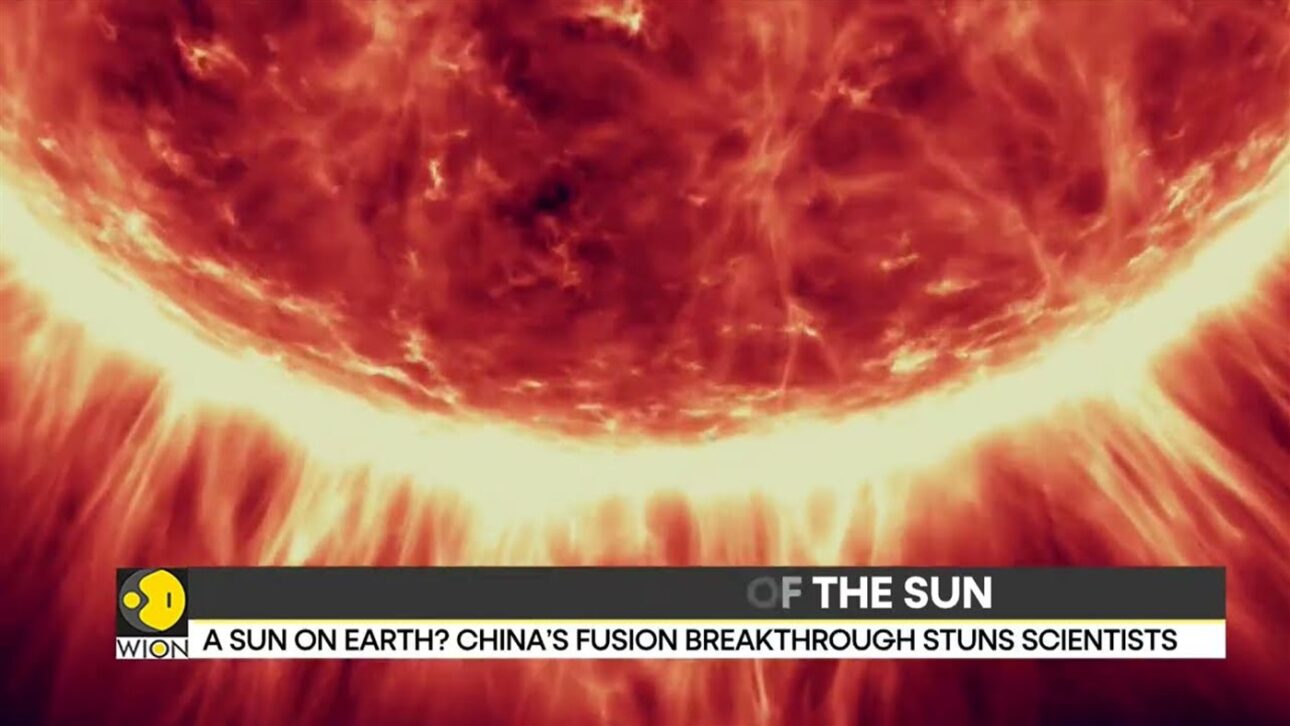
Chinese scientists created in a laboratory a temperature 6 times hotter than the core of the Sun itself. According to WION, in a report published in March 2025, the fusion reactor known as China’s artificial sun reached a scorching 100 million degrees Celsius, a milestone in the race that could redefine global power dynamics for centuries.
The protagonist’s name is technical, but the ambition is simple. The achievement belongs to EAST, China’s experimental advanced superconducting tokamak, designed to replicate on Earth the natural fusion process that powers the Sun, as WION describes. If successful, humanity unlocks the Holy Grail of energy production: unlimited power, clean and without toxic legacy.
100 million degrees: 6 times the core of the Sun
The astronomical comparison gives the measure of the laboratory. According to WION, the temperatures reached by Chinese scientists break barriers previously considered impossible: the core of the Sun operates at around 15 million degrees, and the Chinese reactor sustained 100 million.
-
Steam Machine Converts All Types of Plastic Waste into Durable Building Blocks, Processes Over 90 Tons Monthly, and Is Sold to Municipalities

-
John Deere’s Autonomous 9RX Tractor Uses 16 Cameras for 360-Degree Vision, Operates in Short Weather Windows While Monitored by Smartphone

-
Scientists Develop Needle-Free Insulin That Penetrates Skin, Reduces Glucose in Animals Within an Hour, Paving the Way for Diabetes Patches and Creams for Humans

-
After 40 Years of Research, Powdered Coconut Water to Be Produced in Brazilian Biorefinery, Aiming to Revolutionize Health for Children, Elderly, and Hospital Patients


The reason for such exaggeration is physical. On Earth, there is no colossal pressure of a star’s interior, so fusion needs to compensate with much higher temperature to force hydrogen nuclei to unite, a requirement of physics that explains why any artificial sun needs to be hotter than the real Sun. It’s the laboratory version of lighting a star inside a magnetic bottle.
What is the artificial sun and how the reactor works
The poetic nickname hides a precision machine. According to WION, EAST is located in Hefei, China, and seeks to reproduce the Sun’s fusion process on Earth, inside a tokamak: a donut-shaped chamber where giant magnetic fields hold the incandescent plasma away from the walls.
The principle is the opposite of what the world uses today. Unlike conventional nuclear fission, which breaks atoms, fusion joins hydrogen nuclei under extreme conditions to release tremendous amounts of energy, as WION explains. It is the same mechanism that has made stars shine for billions of years, tamed by superconducting coils and steel walls.
The adjective superconducting in the name is not just decoration. The reactor coils operate cooled to temperatures close to absolute zero to conduct electricity without resistance, allowing the giant magnetic fields to stay on for long periods without melting the system. It is the engineering paradox that sums up fusion: in the same equipment coexist one of the hottest things ever created by humans and one of the coldest, separated by centimeters of vacuum and precision.
Fusion vs. Fission: Why This Energy is Considered Clean
The difference between the two nuclear technologies defines the prize of the race. According to WION, fusion promises to deliver unlimited clean energy without a carbon footprint and without the dangerous radioactive waste that current plants produce, the two Achilles’ heels of traditional nuclear energy.
The fuel also changes the geopolitical equation. The hydrogen used in fusion is the most abundant element in the universe, with isotopes extractable even from seawater, which would make the source practically inexhaustible, a notable contrast with the mined and enriched uranium of fission. No risk of reactor meltdown, no waste lasting thousands of years, and no CO2 chimney: this is the promise that justifies billions in research.
The Challenge That Separates the Laboratory from the Outlet
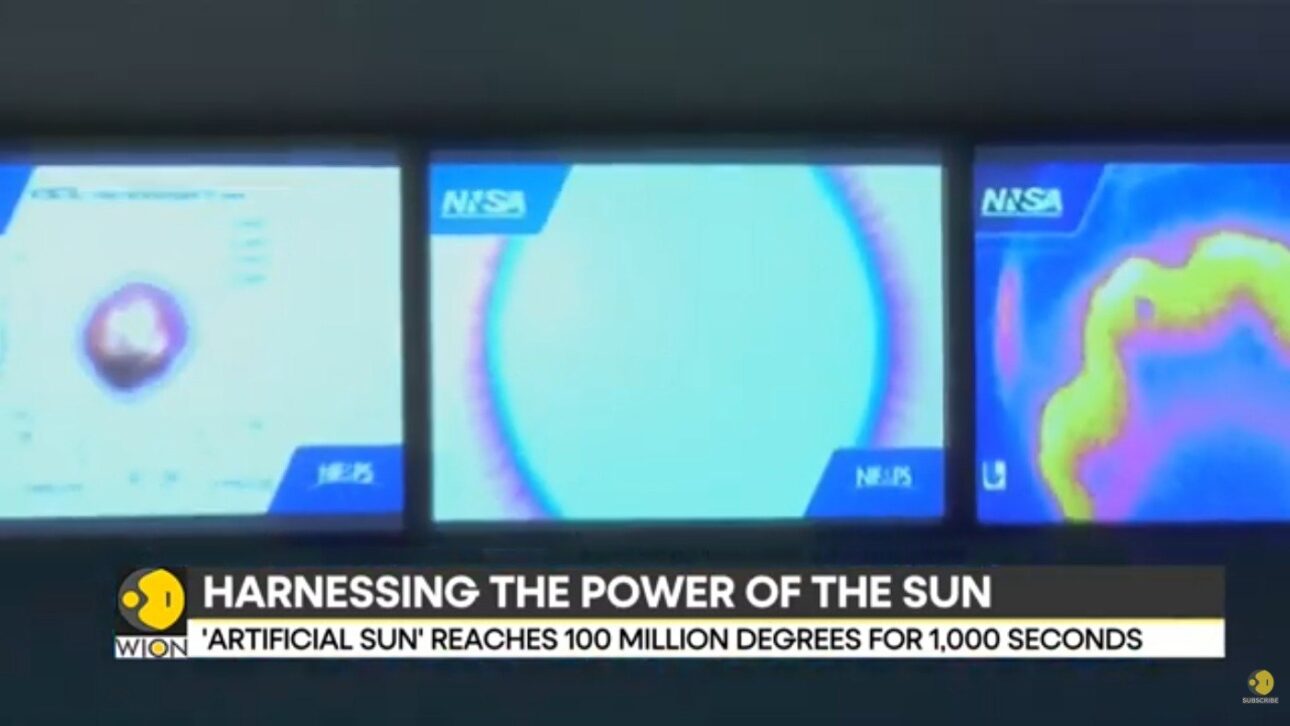
Heating plasma to 100 million degrees is only half the problem. According to WION, the great challenge of fusion has always been maintaining these extreme conditions long enough to extract usable power, an obstacle that Chinese scientists are rapidly overcoming.
Physics charges dearly for every second. Plasma is unstable by nature, and any touch on the reactor walls cools everything instantly, so the superconducting magnets need to hold the bottled star in continuous magnetic levitation, the engineering puzzle that separates the successful experiment from the commercial plant. Each record of duration of the artificial sun shortens this distance.
There is still the barrier of energy balance, the final test of any fusion project. A real power plant needs to generate more energy than it consumes to heat and confine the plasma, an equation that no reactor in the world has commercially achieved to date. That’s why every additional degree and every extra moment of confinement makes headlines: they are the building blocks of the equation that one day needs to close positively on the scale of an entire city.
US$ 1.5 billion per year and a mountain of patents
The Chinese leadership is no accident, it’s budget. According to the WION channel on YouTube, with an annual investment exceeding US$ 1.5 billion, China has surged ahead in the fusion race and accumulates more patents in the technology than any other nation on the planet.
The contrast with rivals appears in speed. While the United States and European countries pursue similar technologies through initiatives like ITER, China’s focused approach and strategic investments have accelerated progress at an unprecedented pace, as WION analyzes. The international consortium ITER, which is building the world’s largest tokamak in France, has become the benchmark against which China’s solo advancement is measured.
What the artificial sun race has to do with Brazil
The competition seems distant, but it affects the electrical system worldwide. A viable commercial fusion would change the global energy price and the relative value of each energy matrix, including Brazil’s, which is currently one of the most renewable on the planet thanks to hydroelectric, wind, and solar power.
Brazil also has a modest seat in this laboratory. The University of São Paulo (USP) maintains a research tokamak in operation, the TCABR, which trains Brazilian plasma physicists in the same science that China scales in Hefei, a notable reminder that fusion is not exclusive to superpowers. The difference between the projects is budget and scale, not physics: the equations are the same.
The size of the prize: endless energy


The conclusion of the report sizes up what’s at stake. According to WION, the artificial sun is no longer a distant dream: as Chinese engineers perfect their tokamak designs, they are getting closer to turning science fiction into reality and potentially reshaping the map of global influence from the 21st century onwards.
The conclusion serves as a warning to the West. Whoever first masters fusion controls the ultimate energy source: carbon-free, without hazardous waste, and with no physical fuel limit, as WION summarizes. In the race that could mean centuries of advantage, Beijing has taken the lead with a robust command: more money, more patents, and a reactor that is already 6 times hotter than the Sun.
The report shows the reactor in operation and the context of the global nuclear fusion race.
China’s artificial sun condenses the next major technological dispute in the world: whoever first lights the bottled star sets the price of energy for everyone. Tell us in the comments: how many decades do you bet fusion will reach your electricity bill?