Portuguese
  Spanish




Images Taken With Telephoto Lenses Transformed the Eshima Ohashi Bridge Into a Global Phenomenon by Exaggerating Its Incline, Hiding Technical Data, Regional Logistical Function, and Strategic Role in Linking Japanese Cities
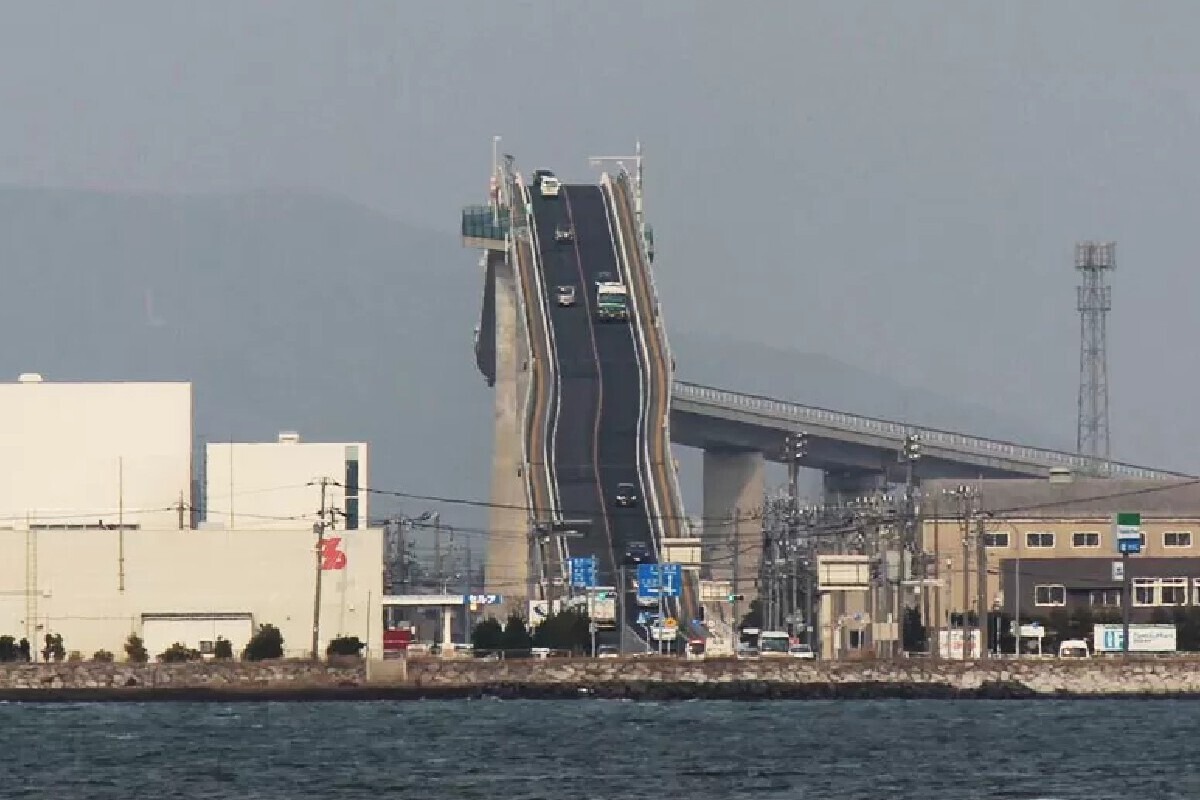
In Japan, a bridge that looks like a roller coaster went viral worldwide for appearing to have an extreme incline, but the Eshima Ohashi structure draws attention due to an optical illusion that distorts its real engineering, strategic location, and importance for regional urban and maritime traffic.
The Eshima Ohashi Bridge in Japan gained notoriety for appearing almost vertical in images, confusing observers and raising safety concerns, even though its real incline is consistent with urban standards and fully functional.
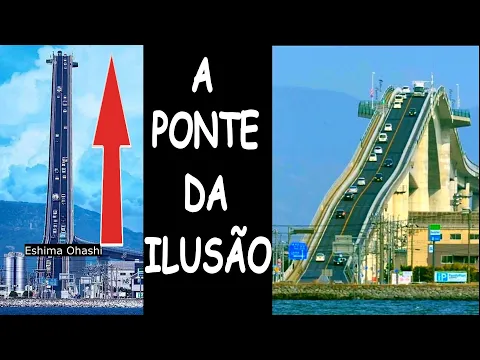

Visual Illusion Transforms Bridge into Online Phenomenon
At first glance, the construction resembles a roller coaster, but a few minutes of observation reveal it to be a conventional bridge, whose visual impact is a direct result of the perspective adopted.
-
Brazilian Fishing Couple Spends 4 Years Building Solar-Powered Floating Home on the Paraguay River, Now a Navy-Approved Vessel with Leisure Area and Tour Demand

-
While the World Opens New Airports and High-Speed Trains, Brazil Rushes to Complete Projects Stalled for 40 Years
-
Brazil Invests in Massive Waterway to Transport Soybeans by Barge, Reducing Costly Truck Reliance
-
Bridge Rebuilt in Just One Year Reconnects Two Brazilian States


The exaggerated effect occurs because many images are taken from a distance, using telephoto lenses, which compress the landscape and make the ascent appear much steeper than it really is.
In practice, the incline of the bridge is 6.1% on one side and 5.1% on the other, rates considered normal for urban roadways.
Strategic Link Between Japanese Cities
Built between 1997 and 2004, the bridge connects the cities of Matsue and Sakaiminato, crossing Lake Nakaumi and replacing an old problematic crossing.
With about 1,700 meters in length and 44 meters in height at its highest point, the structure became the longest rigid bridge in Japan.
It also ranks as the third largest in the world of this type of construction, reinforcing its relevance in Japanese regional infrastructure.
Engineering Designed for Land and Water
The elevated form is not only aesthetic but functional, allowing large vessels to pass through the lake without interrupting vehicle traffic on the roadway.
Before the new bridge, the crossing relied on a drawbridge, which was often open, blocking traffic for up to eight minutes at a time.
Moreover, only vehicles weighing less than 14 tons could cross, and the daily flow did not exceed 4,000 vehicles, limiting local development.
Impacts on Traffic and Tourism
The new structure reduced maintenance costs, increased traffic flow, and improved logistical efficiency for cars and freight transportation.
Without compromising navigation, the bridge began to simultaneously meet roadway and waterway demands, resolving long-standing bottlenecks in the region.
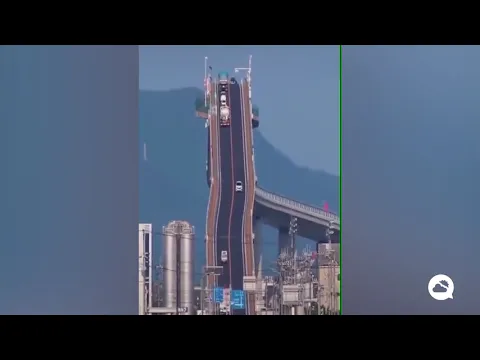
Since its inauguration, the Eshima Ohashi has also become a tourist attraction, especially viewed from the Shimane side, where it looks like the steepest bridge in the world.
This fame, despite being based on an optical illusion, continues to attract photographers, curious travelers, and visitors seeking to see the curious visual effect up close.
With information from Xataka.