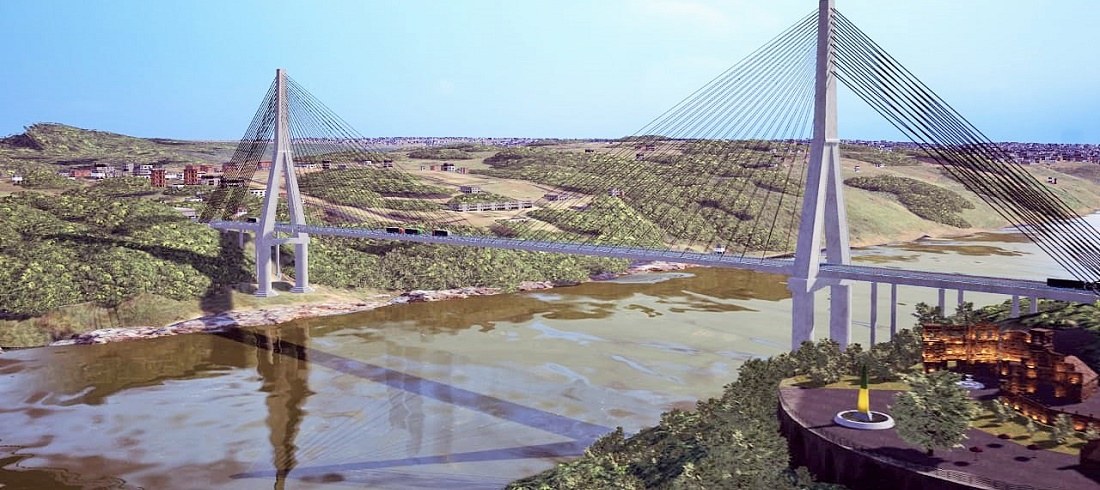
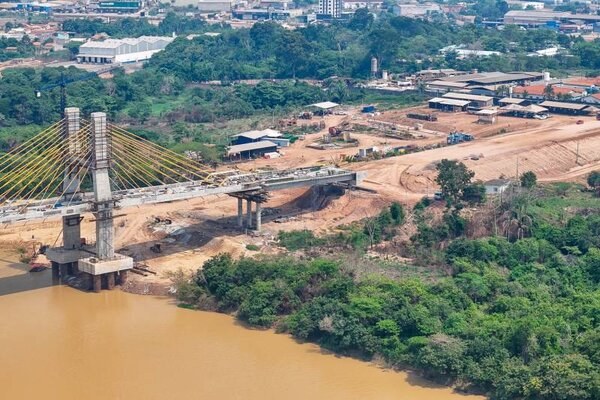
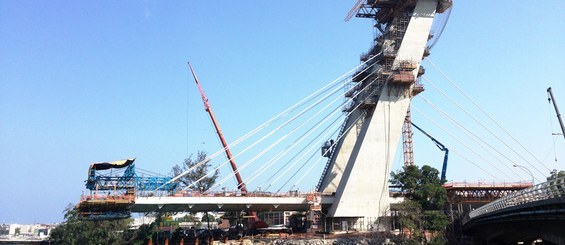
A little over a year after the old structure came down and left two regions separated by the river, the new Juscelino Kubitschek bridge was rebuilt in record time and reconnected Maranhão to Tocantins, restoring one of the most important corridors for transporting goods from the Central-North of Brazil.
When a bridge falls, the damage goes far beyond the concrete. The crossing between Estreito, in Maranhão, and Aguiarnópolis, in Tocantins, over the Tocantins River, is part of a vital route, and its interruption forced trucks and residents to take long detours, increasing freight costs and isolating communities. Rebuilding quickly became a national priority.
The result was a lightning-fast construction. In about a year, a very short timeframe for a structure of this size, the new Juscelino Kubitschek bridge was completed and restored the direct connection between the two states. It’s the kind of engineering feat that often goes unnoticed but changes the lives of those who depend on that path every day.
The engineering of rebuilding quickly
Building a large bridge in a year requires military planning and execution without slack. It was necessary to design the new structure, lay foundations in the riverbed, assemble the spans, and ensure everything could withstand the weight of heavy trucks, all while racing against time and the river’s floods. Work was done at several points simultaneously to speed up the process.
-
Custom Furniture Costs in Brazil Expected to Range from $350 to Over $1,450 per Square Meter by 2026, with Kitchens, Closets, and Laundries Highlighting the Impact of Premium Features

-
Australia Builds Entire Airport from Scratch to Spark Development of New City
-
17-Story Building with 112 Apartments Opens in Australia to House Homeless Population, Offering Fully Equipped Units with Daily On-Site Support

-
81-Meter Bridge Made from Over 7 Tons of Recycled Plastic Connects Isolated Communities in Panama Canal Basin, Allowing Safe Passage for Over 300 Residents


In this case, haste was not the enemy of safety. The new bridge was built with modern techniques and reinforcements to prevent the previous problem from recurring, with extra attention to the foundations and structure. Rebuilding quickly and well at the same time is precisely what makes the construction remarkable.
For the local population, each day less of waiting meant less loss and less hassle. The detour forced by the collapse added hours to the journey, a huge cost for those transporting goods or simply needing to cross the river to work or study.
A logistical knot of the Central-North
The importance of the bridge goes far beyond local traffic. It is part of a corridor that connects the agricultural and mineral production of the Central-North to ports and railways, integrating with the North-South Railway and the region’s waterway. A significant portion of the grain and cargo that supply the domestic market and are exported passes through there.
When this knot jams, the effect spreads throughout the entire logistics chain. Trucks face queues and detours, freight costs rise, and the producer’s competitiveness falls. That’s why the rapid reconstruction was treated as a strategic issue, not just a regional interest project: Brazil could not afford to keep that corridor broken.
The new bridge reinforces the so-called multimodal integration, the dream of making road, rail, and waterway work together to reduce transportation costs. Each piece that functions in this puzzle helps unlock the flow of production from a rapidly growing region that needs logistics to match.
The cost of a broken corridor
To understand the extent of the loss from the interruption, just look at what passes through there. The region is a route for transporting grains, minerals, and fuel, and each day with the bridge down meant trucks stopped, detours of hundreds of kilometers, and goods arriving more expensive at their destination. In a chain that lives on tight margins, this turns into real loss for producers and consumers.
There is also the human side, often forgotten in statistics. Residents who crossed the river to work, study, or seek medical care were left at the mercy of slow ferries and detours. A bridge, in the end, doesn’t just move cargo: it moves people, and its absence isolates entire communities that depend on that crossing for daily life.
A lesson on infrastructure
The episode carries a dual lesson. On one hand, it shows the fragility of infrastructure that, in many parts of the country, is old and poorly maintained, and can fail with serious consequences. On the other hand, it proves that when there is political will and resources, Brazil is capable of building quickly and well, dispelling the notion that every project here drags on for decades.
The difference lies in priority. A bridge that collapses and isolates entire regions becomes urgent, and urgency unlocks resources and decisions that usually stall. The challenge is to bring the same agility to projects that haven’t yet become emergencies but are equally important for the country.
I imagine how much Brazil would gain if it treated all its infrastructure projects with the same urgency and focus it dedicated to rebuilding this bridge. The country has the technical capacity; what usually lacks is the consistency to prevent everything from becoming an emergency before taking action.
The project also reignites the debate on maintenance. Many of the country’s bridges and roads were built decades ago and have never undergone major renovations, and experts warn that inspecting and repairing in time is much cheaper than rebuilding from scratch after a collapse. Preventing, in the case of infrastructure, is literally more economical than remedying.
For now, the positive side of the story remains: a strategic corridor back on the map, two states reconnected, and proof that when it wants to, Brazil builds quickly. The new JK is both an engineering achievement and a reminder of our dependence on well-maintained bridges, roads, and rails.
If Brazil rebuilds a bridge in a year when it’s urgent, why not treat all projects with this urgency?