Portuguese
  Spanish



Solar-Energy Irrigator Created by Embrapa – Brazilian Agricultural Research Company Can Help Agricultural Industry If Patented
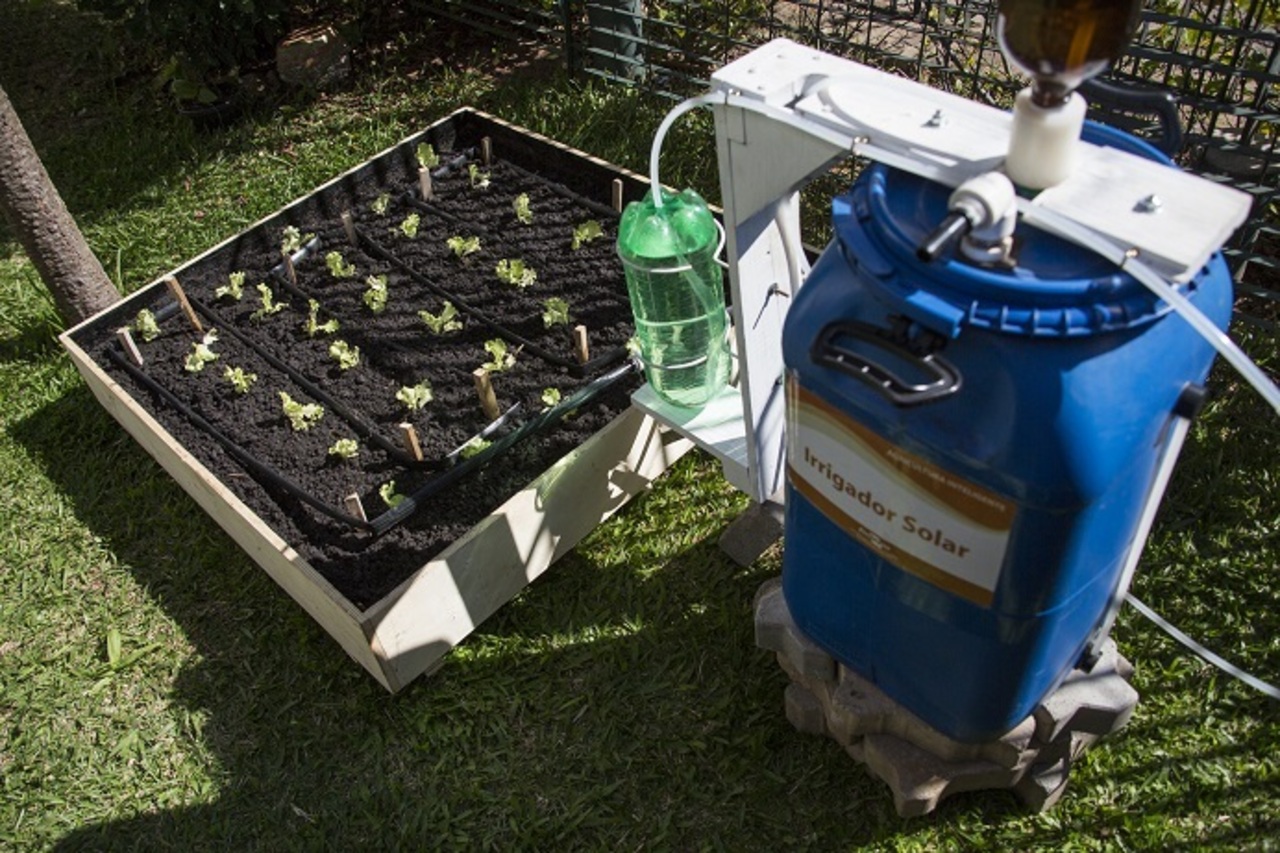
The Brazilian Agricultural Research Company, Ministry of Agriculture, Livestock and Supply (Embrapa Instrumentation), invented a solar-energy irrigator. The product was developed by researcher Washington Melo and is powered by sunlight, irrigating small areas of cultivation.
Also Read
The solar-powered irrigator from Embrapa for agriculture utilizes a drip irrigation method, although the product still needs to gain water flow control valves. The valves aim to ensure that water is used more efficiently in agriculture, being directly connected to the output of the solar-powered irrigator.
According to the Embrapa researcher, if the soil is moist and does not need water, the device will be prevented from releasing water, even if it is receiving sunlight.
-
After a Year of Success in Switzerland, Solar Railway Attracts Italy’s Interest for Clean Energy Transformation

-
Robots Clean Solar Panels in Desert Power Plants Without Water, Preventing Energy Losses
-
Brazil’s Offshore Wind Energy Potential Worth $1 Trillion Stalled by Long-Delayed Agreement

-
World’s Largest Engie Solar Plant in Brazil Highlights Billion-Dollar Energy Waste Issue: Company Considers Batteries and Bitcoin Mining to Avoid Wasting Production



Advantages of the Solar-Energy Irrigator in Agriculture
Currently, the product is well-regarded, with more than 60,000 views about it on the internet. This is due to its advantages, such as the fact that the device is easy to assemble and also has an affordable price.
Washington Melo reports that the product can be built with discarded objects, such as bottles, as well as glass, metal, and plastic containers. Another benefit of the solar-powered irrigator for agriculture is its drip intensity, which can be adjusted through the height of the dripper. Additionally, the producer can add nutrients or other types of inputs to the water in the reservoir, further improving the irrigation system.
Finally, with the solar irrigator, it is possible to have a more economical operation since it uses solar energy and also promotes water savings.
About Embrapa
Embrapa was created on April 26, 1973, and is linked to the Ministry of Agriculture, Livestock, and Supply (Mapa). Since its inception, it has taken on the challenge of developing, together with its partners in the National Agricultural Research System (SNPA), a model of tropical agriculture and livestock that is genuinely Brazilian, overcoming the barriers that limited the production of food, fibers, and energy in our country.
Today, its agriculture is one of the most efficient and sustainable in the world. We have incorporated a large area of degraded land in the cerrados into productive systems. A region that is now responsible for almost 50% of its grain production. The supply of beef and pork has quadrupled, and the supply of chicken has increased 22 times.