Portuguese
  Spanish


New generation of Proteus brings natural language commands to Amazon warehouses, expands autonomous navigation in logistics centers, and is planned for implementation in Europe in 2027, as part of an investment package aimed at automating operations.
Amazon has introduced a new generation of Proteus, an autonomous mobile robot used in logistics operations, capable of receiving instructions in natural language and moving through larger areas of distribution centers without relying on fixed tracks or barcodes on the floor.
The implementation in Europe is scheduled for the first half of 2027, according to information released by the company, which has been expanding the use of automated systems in warehouses, distribution centers, and delivery units in different markets.
The announcement was made at a company event in Dartford, on the outskirts of London, as part of an investment plan of over €10 billion in Amazon’s European fulfillment and logistics network.
-
Texas Teens Win $50,000 at World’s Largest Science Fair for Developing Non-Surgical Brain-Controlled Bionic Prosthesis with 98% Accuracy

-
Samsung Galaxy A27 Launches with 6.7-inch Super AMOLED Display, Full HD+ Resolution, Android 16, Six Years of Updates, Snapdragon 6 Gen 3, and Dust and Splash Resistance; Available for Pre-order in the US for $350

-
Five Brazilian Students Invent Drug Test Pen That Detects Date Rape Drugs in Seconds
-
Viedma Glacier Retreat in Patagonia Uncovers 900-Meter-Deep Basin, Making Viedma the Deepest Lake in the Americas


With this measure, the company aims to expand the use of robots in internal cargo movement tasks, especially in stages that involve transporting items between operational areas, supporting teams, and organizing flows within the facilities.
Amazon tests natural language commands on Proteus
The new version of Proteus changes how employees can guide the equipment during the work routine, as the robot now accepts commands made in natural language, without requiring technical instructions or specific programming.
Instead of relying solely on specialized software, workers will be able to inform the task to the system through conversational instructions, in a model that Amazon presents as closer to the communication used between people.
According to the company, the system uses artificial intelligence to interpret the request, set priorities, calculate routes, and estimate the time needed to complete the requested operation in the warehouse environment.
“You tell it what needs to be done. It determines the priority, the route, and the time,” said Scott Dresser, vice president of Amazon Robotics, explaining the proposed interaction between employees and robots.
In practice, the update allows Proteus to organize part of the task before starting the movement, always within the parameters defined by the operation and the safety rules applied to the company’s logistics centers.
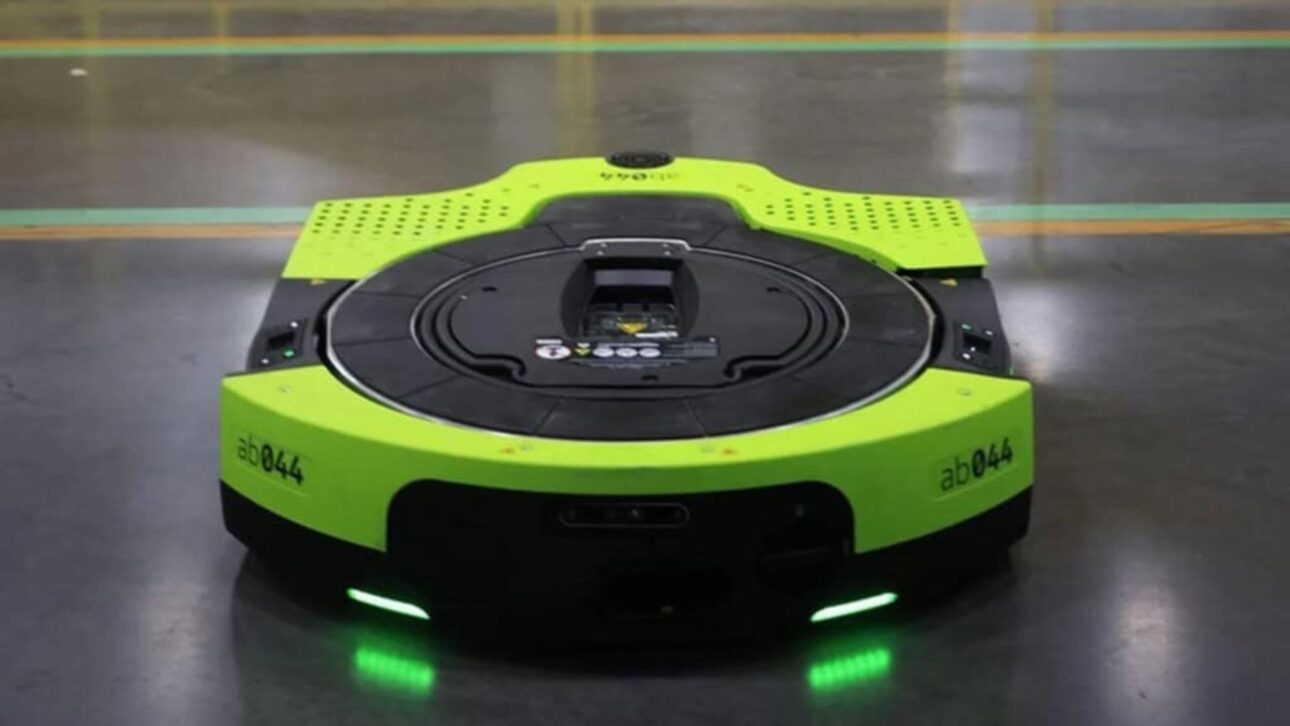
This function does not turn the equipment into a system without human supervision, but it increases the level of operational autonomy compared to robots that only execute pre-programmed routes or tasks restricted to specific areas.
How Proteus moves in Amazon warehouses
Proteus was originally introduced by Amazon in 2022 as its first fully autonomous mobile robot, developed to transport carts and loads in environments shared with employees.
The version currently in use operates in units in the United States, with its activity concentrated in dock areas, where it transports carts with packages in designated sections of the company’s logistics facilities.
In the new generation, Amazon states that the robot will be able to operate in a larger area of the warehouse, including container arrival points, movements between workstations, and support for operations in distribution centers and delivery units.
This expansion changes the role of the equipment within the operation, as Proteus stops operating only in specific loading and unloading zones and starts being tested for movements in different points of the facilities.
Unlike other robots used by the company, such as Hercules and Titan, Proteus does not need to follow only paths marked by codes on the floor, according to the technical description released by Amazon.
To navigate the environment, the equipment uses sensors and navigation technologies that allow it to recognize obstacles, adjust routes, and operate in spaces shared with workers, machines, carts, and goods.
The company reports that the goal is to allow autonomous movements in areas with simultaneous circulation of people and equipment, without restricting the robot to isolated corridors or zones completely separated from human operation.
This model depends on continuous safety testing, integration with internal systems, and validation in real environments, especially because logistics centers have intense movement and constant changes in the position of loads and equipment.
Deployment in Europe is scheduled for 2027
Amazon is still testing the new version of Proteus in its laboratories and plans to start adopting the technology in Europe in the first half of 2027, according to the schedule released by the company.
The deadline is part of a broader strategy for logistics automation on the continent, which includes investments in robotics, artificial intelligence, operational infrastructure, and new solutions to accelerate internal processes.
In addition to Proteus, the company announced the expansion of other robotic systems in the region, including Vulcan, described by Amazon as its first robot with touch sensors.
Another system mentioned by the company is STARK, aimed at collaborative handling of smaller containers and initially tested in Barcelona, within the company’s European operations.
According to Reuters, STARK is expected to reach 15 European units by 2027, in an expansion that follows Amazon’s plan to expand automated technologies in its logistics centers.
The company also reported that it intends to open more than 25 sub-same-day delivery points in Europe in 2026, including operations in the United Kingdom and Germany, focusing on shorter delivery times.
The European package announced by Amazon exceeds €10 billion and includes the modernization of logistics centers, the implementation of new technologies, and operational expansion in countries considered strategic for the company’s service network.
In this context, Proteus appears as part of a set of systems intended to move items, organize internal flows, and support physical stages of the logistics process.
Automation and Human Work in Logistics Centers
The expansion of the use of robots in warehouses accompanies a recurring debate about the impact of automation on human work, especially in sectors marked by repetitive tasks and physical movement of loads.
Amazon claims that its systems are developed to support teams, improve safety, and make processes more efficient, not to replace workers on a large scale.
The company also says it has created hundreds of thousands of jobs since it began incorporating robotics into its global operations, although the expansion of autonomous machines changes part of the routine within logistics centers.
With equipment like Proteus, internal transport tasks can be redistributed between automated systems and employees, while human teams remain involved in supervision, problem-solving, maintenance, flow organization, and system operation.
According to Amazon itself, the adoption of natural language commands seeks to reduce the technical barrier between workers and robots, allowing employees to interact with the equipment without relying on programming or specialized commands.
However, large-scale application will still depend on testing, operational validation, and safety evaluation in environments with high circulation of people, goods, and machines.
Until the expected arrival in Europe, the new generation Proteus will remain in the validation phase before entering the daily flow of Amazon’s logistics centers.