Portuguese
  Spanish


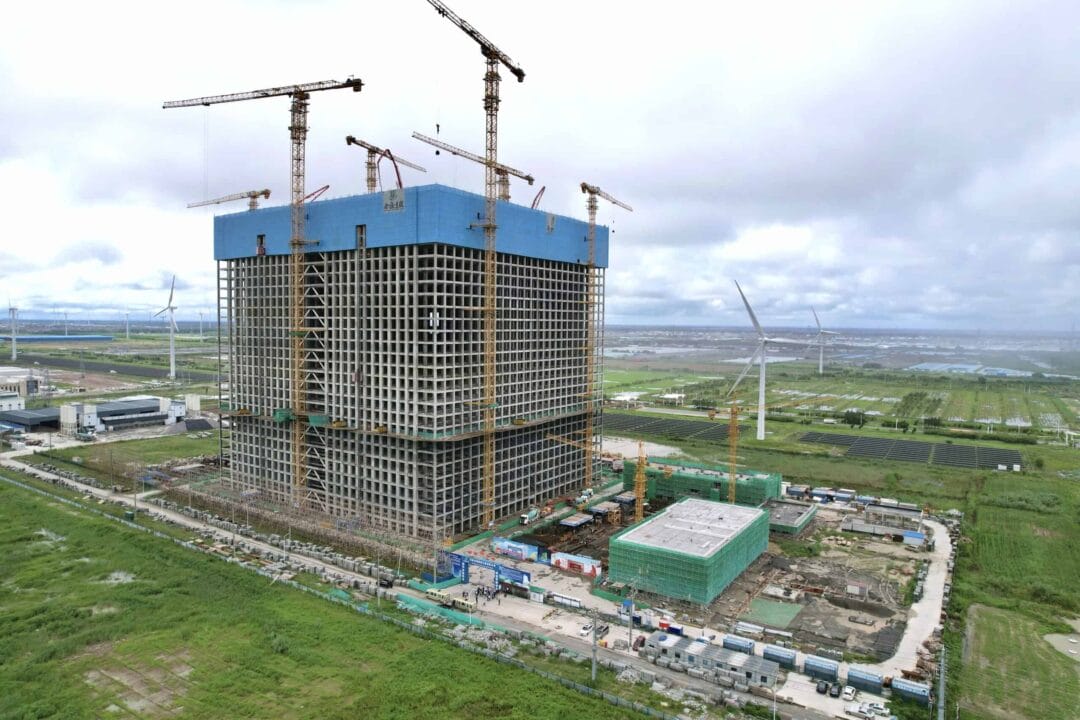


Energy Vault Announces The First Commercially Viable Gravity Energy Storage Project In China And Promises To Revolutionize The Renewable Market.
The Swiss energy storage developer Energy Vault recently confirmed the interconnection of China’s state grid and the operation of reverse gravity energy for the Rudong EVx system announced in 2023. This is the first commercially available gravity energy storage EVx at grid scale (GESS).
The innovative gravity energy project by Energy Vault, called EVx, is the first to be sold and China has already announced three other grid-scale projects in the country following the same line. There is the deployment of a 17MW/68MWh GESS EVx in the city of Zhangye, Gansu Province, being built adjacent to a renewable energy generation site and a national grid interconnection site. A 50MW/200MWh EVx located in the city of Huailai Cunrui, Zhangjiakou County, Hebei Province.

How Much Gravity Energy Will Energy Vault Generate In China?
The company’s last two projects in China were announced earlier at the same time as other deployments in the country and are already being constructed. It is worth mentioning that Energy Vault’s gravity energy projects are adjacent to renewable energy generation and national grid interconnection sites.
-
World’s Largest Engie Solar Plant in Brazil Highlights Billion-Dollar Energy Waste Issue: Company Considers Batteries and Bitcoin Mining to Avoid Wasting Production

-
Air Products Cancels $2.9 Billion Clean Hydrogen Megaproject in Louisiana, Shuts Down Arizona Unit, Highlighting High Costs of U.S. Energy Transition
-
Over 60 Tractors Take to the Streets in Lopera as Solar Parks Compete with Olive Groves, Affecting 13,000 to 100,000 Trees According to Conflicting Reports

-
Green Hydrogen Projects in Northeastern Brazil Stalled for 18 Months Awaiting Government Decree, Delaying Billions in Investments


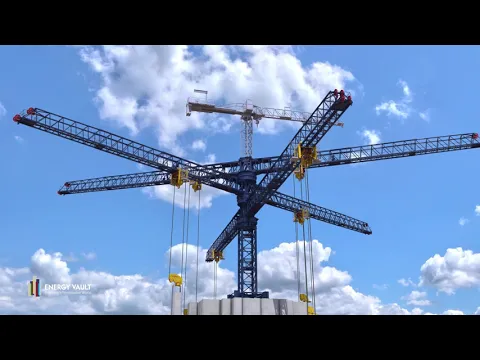
In August 2020, Energy Vault secured US$ 110 million from the Soft Bank Vision Fund. The company has already built a 122-meter tall demonstration tower and plans to build cranes with six heads up to 30 meters taller.
China Is The Largest Gravity Energy Storage Market
Robert Piconi, chairman and CEO of Energy Vault, stated in a statement that the company is pleased to see the growing adoption in the market of Energy Vault’s gravity energy storage technology in China, the largest energy storage market in the world, supported by innovative announcements of the new project and other milestones within China’s national energy policy framework for gravity energy storage.
The EVx systems in Rudong and Zhangye City were recently selected and formally announced as part of a list of projects rated as new pilot demonstration energy storage projects by China’s National Energy Administration (NEA). According to Energy Vault, this highlights the substantial increase in demand for renewable energy sources and emphasizes the role of gravity storage in China’s path to decarbonization.
How Does Energy Vault’s Gravity Energy Storage Work?
The entire concept relies solely on one of the four fundamental forces of nature, gravity. A pre-programmed crane atop a massive tower lifts and stacks colossal bricks on top of each other, using excess energy from solar and wind plants. When demand exceeds energy production, the crane reverses the process, recovering energy by unstacking the brick tower.
Lithium-ion batteries rely on rare earth materials, the extraction of which comes with various environmental and humanitarian issues, and tend to lose capacity over time. The concept is similar to pumped hydroelectric systems, which use bodies of water in place of heavy blocks and a hill instead of a tower, and have existed for at least a century.
Other gravity-based systems are also being developed in Germany, Scotland, the USA, and Morocco. The company claims that its system can operate for over 40 years with standard maintenance, providing an advantage over conventional batteries.