






 Portuguese
  Spanish
  6 min of reading
  0 comments


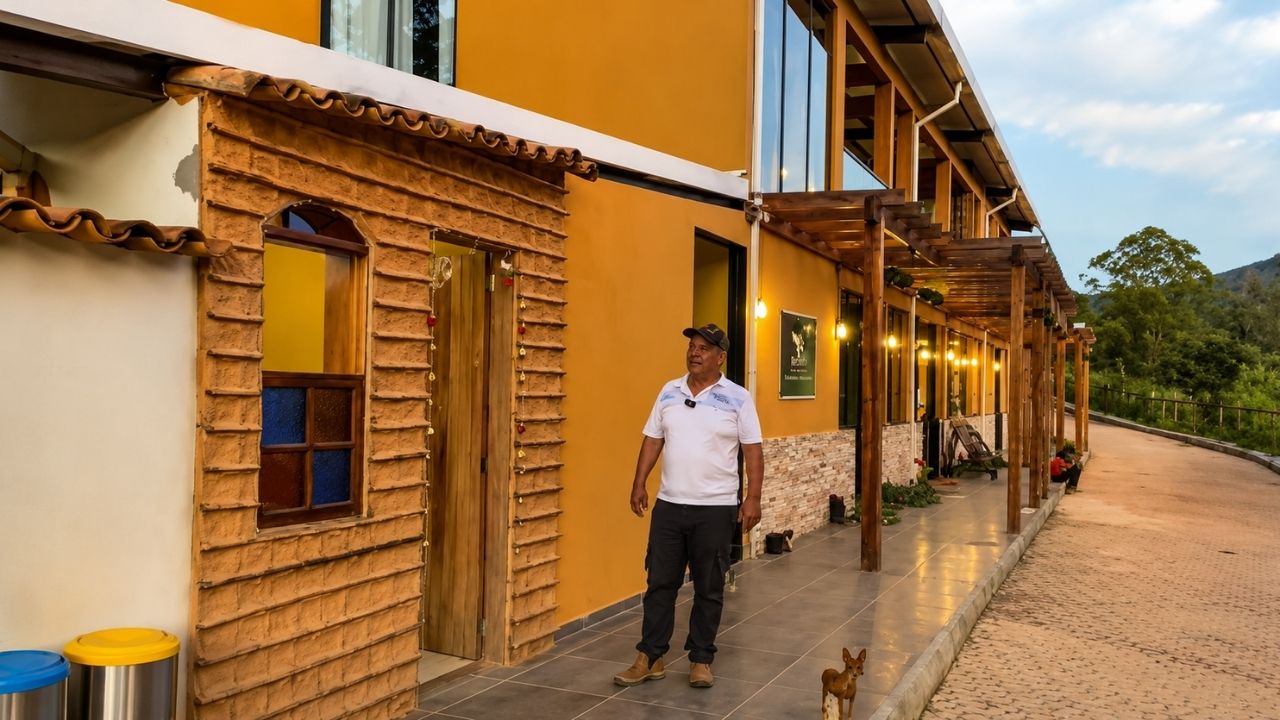
Olimar left Espírito Santo, emigrated to Canada with permanent residency, and after almost two decades, exchanged the northern hemisphere for a farm in Santa Rita de Ouro Preto, where he built from scratch a sustainable life surrounded by nature, soapstone, and Atlantic Forest.
When the civil engineer Olimar decided to leave Canada after 19 years living in the country with permanent residency, most people would expect him to return to a big city, perhaps to resume his career in projects and construction. Instead, he went straight to a 21-hectare farm in Santa Rita de Ouro Preto, a historic district of Minas Gerais, with a view of the Espinhaço Mountain Range and pure water springing from the ground, a place that, in his own words, he didn’t think was within his reach, but that God called him to.
What came next surprised even him. What was meant to be a country house with a support shed turned into a complete inn, then gained a restaurant, then a local products store, and today houses an expanding agroforestry project, solar energy generation, sewage treatment, spring recovery, and a collection of rural experiences that have already hosted hundreds of guests since its opening. According to the YouTube channel Campo Rural, the farm became a living laboratory of sustainable living, and the story of the man who created it is even more interesting than the place itself.
From the northeast of Minas to Canada, passing through Espírito Santo

Olimar is originally from Taiobeiras, in the northeast of Minas Gerais, but it was in Ouro Preto that he graduated as a civil engineer, at the School of Mines of UFOP, where he spent five and a half years. After graduation, he built his first professional life in Espírito Santo, for 20 years, working with projects, calculations, and civil construction. It was there that he created his first family and consolidated his career.
-
Federal Police involved in the case to identify the person responsible for hacking the Civil Defense system, which sent ten false alerts, frightened residents of different capitals, and turned messages about real risks into notifications with “misanthropy” and even alien attacks.

-
Extreme drought causes ghost village to reappear at the bottom of the reservoir that supplies Athens, revealing houses, a school, and ruins swallowed since the 1980s as the lake shrinks and exposes the water crisis threatening the capital of Greece.

-
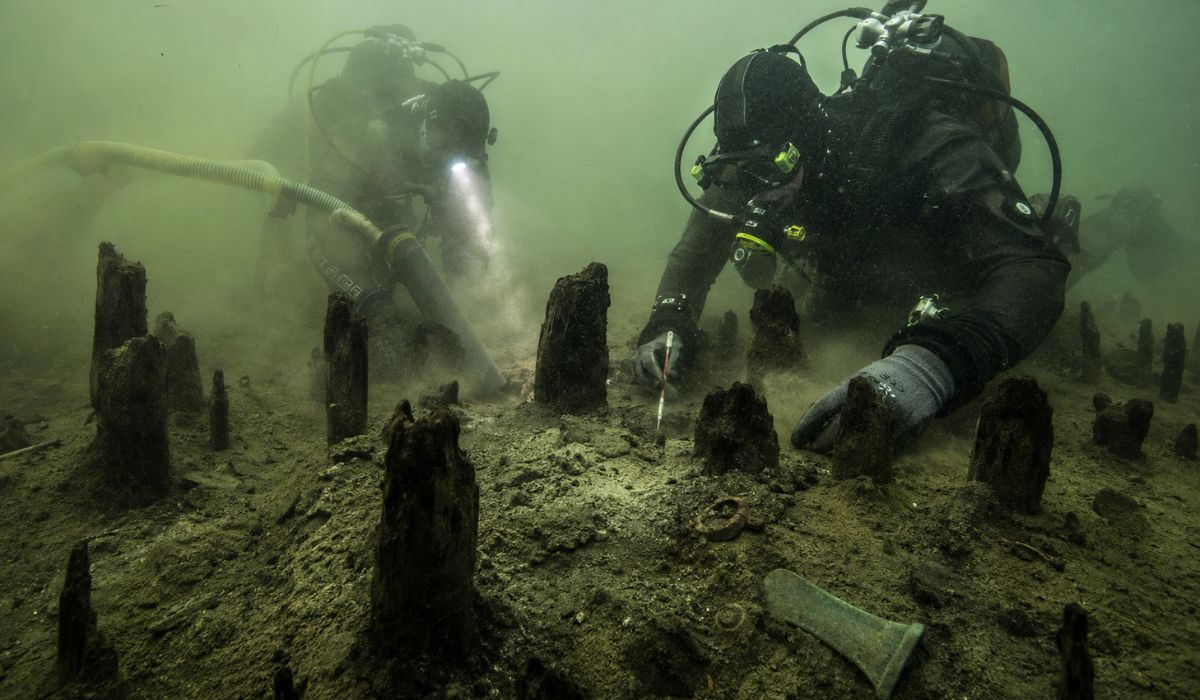
An entire village lay asleep at the bottom of a lake for 3,000 years: divers suction sediments in Italy and reveal more than 600 wooden stakes, bronze tools, and traces of a Bronze Age settlement hidden underwater.
-
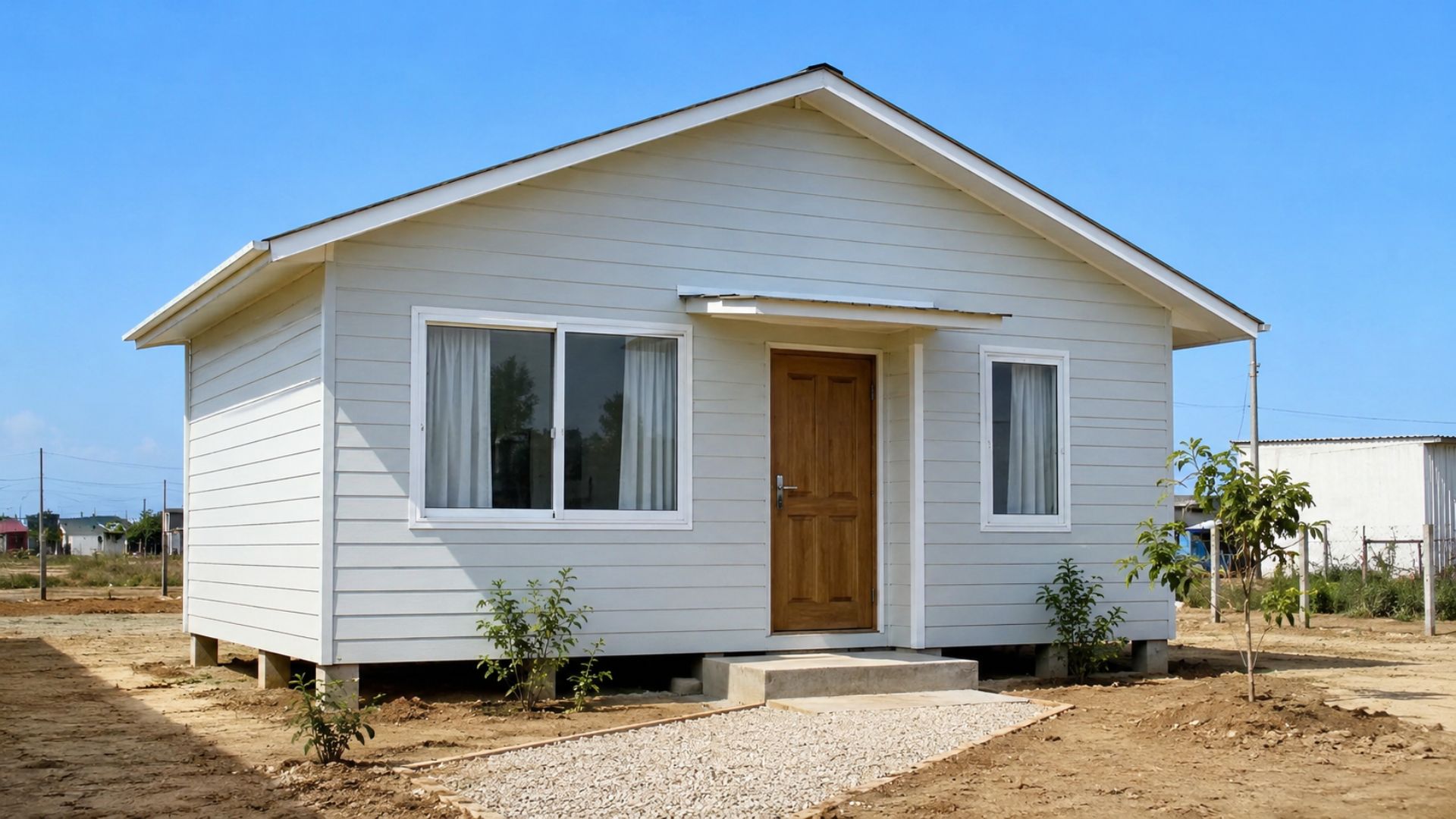
They call it the “Shopee house” and even cardboard, but the R$ 20,000 house is a certified Wood Frame from Alea, financed by Minha Casa Minha Vida: understand if it’s worth more than masonry.


The turning point came with the decision to emigrate to Canada, a process that took two years just for the approval of the permanent residence visa. Once in the country, Olimar completely changed his professional field and stayed for 19 years. Canada gave him a different perspective on quality of life, sustainability, and what it means to live well, a perspective he brought back to the interior of Minas when he decided it was time to fulfill a childhood dream that had waited more than 60 years.
The farm that was almost not bought

The farm in Santa Rita de Ouro Preto was not the obvious destination. Olimar arrived in the region intending to find a smaller property nearby, but the place he found had 21 hectares and a price that, at the time, slightly exceeded his means. Even so, he went ahead, and today he describes the decision not as a purchase, but as a calling.
“I don’t even say I’m the owner, I’m a guardian of this land,” said Olimar during the visit. The phrase sums up the philosophy that guides every decision on the site: from the hand-made paving of the entrance, through the recovery of the springs, to the choice not to use any monoculture on the property. At 1,500 meters from the asphalt, with a direct view of the Serra do Caraçanha, a name that means “big Indian face” and integrates the source of the Espinhaço Range, the farm has as its immediate neighbor a remnant Atlantic Forest reserve about 80 to 100 years old, part of the Itataia State Monument.
From house to inn: how one project becomes another

A story of the construction of the inn is an example of how plans change when the place speaks louder. The original idea was simple: a house for Olimar and the family upstairs, and a support shed for the farm downstairs. As the works progressed, the space seemed too large for exclusively private use.
The conversation with his wife Eliane brought the first change: what if part of the house became an inn, to welcome the people who would inevitably come to visit? Then came the second: Eliane loves to cook, so why not a restaurant too? The result was that the house became secondary, the inn took the main space, and the restaurant joined in, with a fully equipped professional kitchen, cold storage, event structure, and a shop to sell the farm’s produce and local crafts, including soapstone pieces handmade by masters from Santa Rita de Ouro Preto.
Agroforestry, pure water, and sustainability

The property has no monoculture around it, ensuring that the water that springs there reaches the taps pure. Olimar drinks this water, consumes milk exclusively from pasture-raised cows, and harvests sweet potatoes, cassava, corn, and mango from his own land. The energy comes from photovoltaic plants installed on the roof, with solar water heating. The sewage is treated internally. The springs are in the process of recovery. It’s what he calls a sustainable footprint, not as a marketing concept, but as a daily routine.
The experience of those who arrive as guests


Those who book a room at Pousada Raíada de Luz, 1,500 meters from the asphalt, but with top-line mattresses and 200-thread count linens, find not just a comfortable bed with a view of the Espinhaço Mountains. They find sugarcane to chew on the spot, mango picked from the tree, morning milking, a trail through the agroforestry, and the real possibility of encountering jaguar tracks, which have already appeared in the neighboring reserve.
The rooms are themed, each with a color palette and works by different artists, including an entire wall of rose quartz and handmade graphite panels by a São Paulo artist. The treehouse, built by a craftsman from Amarantina with a soapstone basin inside, has become a separate attraction for children. Since September of the first year of operation, hundreds of people have visited the site, and Olimar says that the exchange of experiences with guests has been as enriching as the construction of the project itself.
The Soapstone and the History the Place Carries
It would be impossible to visit the site without talking about soapstone, and Olimar does not let the subject pass. The material, with hardness equivalent to talc, is hand-sculpted by local artisans and is present in practically every corner of the inn: from the bathroom niche to the garden fountain, from the shop’s vases to the restaurant’s pots. It is also the material that covered the Christ the Redeemer in Rio de Janeiro, chosen after university research precisely for its extraordinary resistance to weathering.
The sculptures by Aleijadinho in Congonhas have been exposed to the elements for 300 years and remain intact, all in soapstone from Ouro Preto. Olimar is promoting the first soapstone sculpture course at the site, taught by the master craftsmen from Santa Rita de Ouro Preto. It is another layer of a project that grows along with the forest: slowly, with intention, and with an eye on the long term.
Would you trade the city for a place like this? What stops you, or what would make you take this step? Tell us in the comments. And if you know someone who left everything to start over in the countryside, tag them here, this story might be theirs too.



-

-

-

-

10 people reacted to this.