





 Portuguese
  English
  Spanish
 6 min of reading
  0 comments


Renewable Energy Is A Solution For Environmental Imbalance And Global Warming, Experts Say At The XII Energy Seminar In Cuiabá.
Renewable energy is the solution for environmental imbalance and global warming, according to experts who participated in the XII Energy Seminar in Cuiabá. The search for cleaner and more sustainable energy sources has become increasingly urgent in face of ongoing climate changes.
The discussions at the event emphasized the importance of energy transition for the adoption of clean energy and alternative sources that can reduce greenhouse gas emissions and mitigate the impacts of global warming. The growing demand for energy has driven the search for innovative and sustainable solutions, placing renewable energy at the center of discussions about the planet’s energy future.
Expansion Of Renewable Energies Highlighted At The Sindenergia-MT Event
The event was hosted by Sindenergia-MT with the support of the Federation of Industries of Mato Grosso (Fiemt) and sponsors. The energy transition is a topic of discussion primarily due to global warming and the consequent increase in climate tragedies that have been occurring more frequently in various parts of the world, such as Rio Grande do Sul.
-
Brazil may fall behind, and irreversibly so, in the global technological race involving the implementation of Data Centers and investments in Artificial Intelligence (AI). Much smaller but more agile economies, such as those of Argentina and Paraguay, have taken the lead.

-
Brazil is generating so much clean energy that the ONS had to implement an unprecedented emergency plan to contain the solar and wind surplus in the grid.

-
USA covers canal with 2,556 solar panels and transforms irrigation into a clean power plant in the middle of a drought-stricken region

-
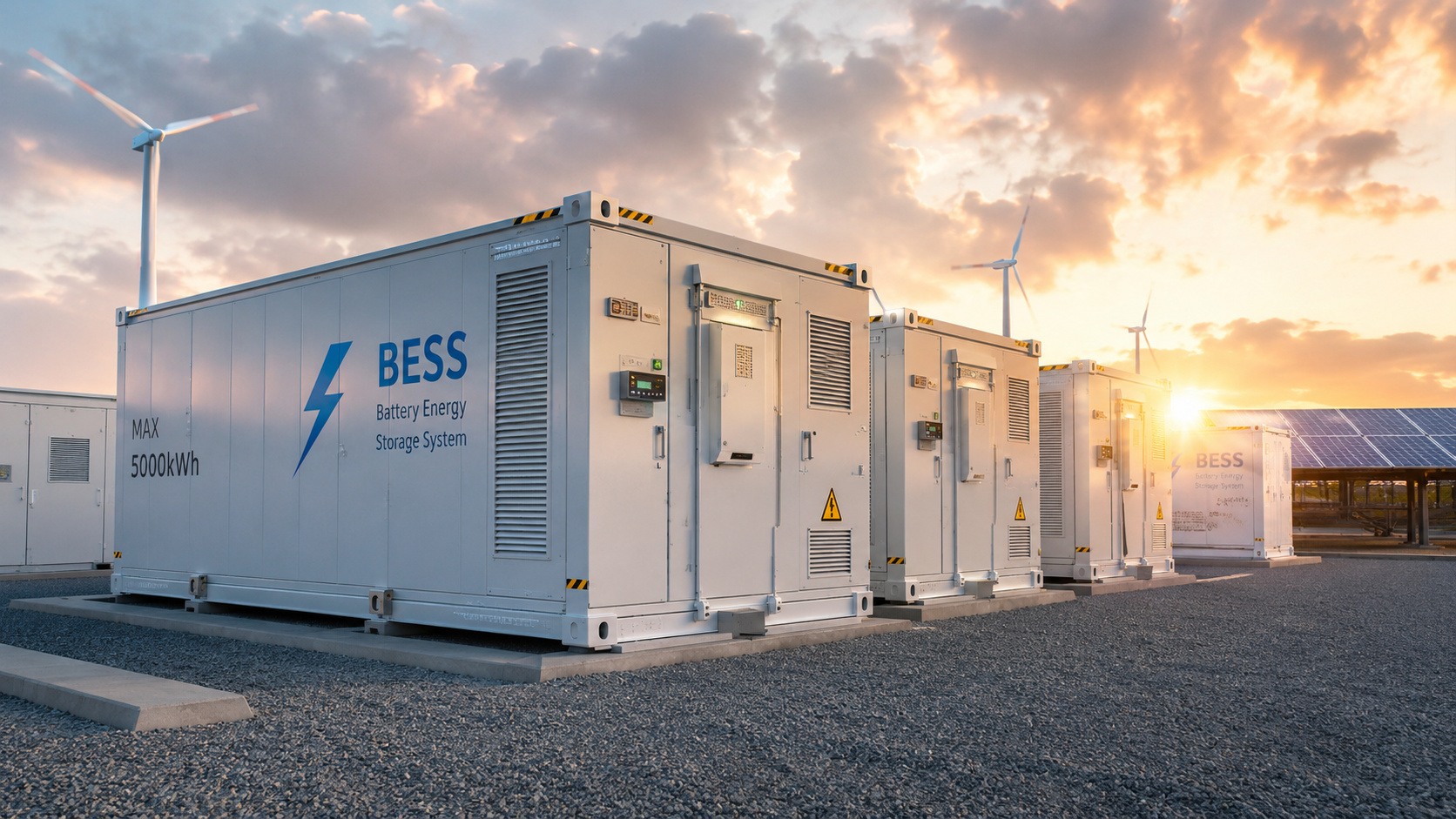
In a historic decision, Aneel regulates the use of batteries in the Brazilian electrical system and lays the groundwork for large-scale energy storage, reducing waste, enhancing energy security, and attracting new billion-dollar projects.


The environmental imbalance of the planet has been occurring due to the increase of greenhouse gases, especially throughout the 20th century, which has worsened and gained more prominence in the last 20 years. Experts and policymakers are trying to reverse the situation and promote meetings to discuss the topic in various places around the world.
One of the alternatives for sustainable development, according to experts, would be the expansion of renewable energies, which are cleaner and less impactful on the environment.
For this reason, the main topic addressed at the Energy Seminar in Mato Grosso was the need to migrate from non-renewable energies to cleaner alternative sources, especially solar energy, which today accounts for 10% of the market share in Mato Grosso, according to Sindenergia-MT.
Mato Grosso is a promising state for the generation of renewable energy and the expectation is that its production will increase even more in the coming years. The president of Sindenergia-MT, Tiago Vianna, explains that, ‘almost 90% of our energy source is clean, but the difficulty is getting this energy to the end users, in the most remote areas of the state.
We consume about 11 TWh a year and produce about 20 TWh, of which the surplus is exported. Most of that still comes from hydropower’, he said.
Challenges Of Energy Security And Sector Tariffs
In addition to the energy transition to renewables, energy security and sector tariffs were points addressed at the event. The Chief Secretary of the Civil House of the Mato Grosso government, Fábio Garcia, emphasized that the Brazilian energy industry needs to be more competitive so that the final consumer is not so adversely affected when paying for various fees in their electricity bill.
Garcia explains what could be done to increase this competitiveness. ‘Brazil is still a developing country and needs to industrialize a lot to generate quality jobs for people. Two pillars are fundamental to sustain this development: the first is energy security, the second is tariff moderation.
In other words, we need competitive energy prices’, he asserts. Fábio Garcia also noted that there are some points that need to be reviewed in the Brazilian electricity sector model, since, according to him, every time a subsidy is given to an energy source, someone pays the bill. ‘Today, all subsidies are concentrated in the electricity bill, in our energy tariff.
Almost half of it is federal and state tax and charges from the electricity sector. Therefore, we need to rethink who will pay for these subsidies in the energy sector. Currently, consumers are paying for the system and this needs to be reviewed’, concludes Fábio Garcia.
Advancement Of Solar Energy And The Challenges In Distribution
The former Minister of Agriculture, Blairo Maggi, spoke about the advancement of solar energy and explained that, ‘if everyone produces their own energy and wants to transit through the utility’s grids without paying anything, how will that work in the future? The system breaks.
So, the government gave an initial incentive, this business started to grow a lot, now it [the government] should withdraw the incentive in the coming years for the process to proceed normally without harming the rest of society’, he explained. The state of Mato Grosso has seen significant growth in the demand for solar energy and residential and industrial subscription services.
Maggi explained that the advantage of the photovoltaic system is that, ‘society and the world found a cheap way to generate energy. Now, its transmission is a more complicated business that will depend on how each one will pay a little for it’, he concludes.
The Potential Of Renewable Energies And The UN Pact
Currently, one of the greatest barriers is the distribution of renewable energies, due to the territorial dimension of the country and technical criteria of the sector. Brazil is rich in natural resources, making it promising in renewable energy generation (hydropower, wind, solar, among others).
The biggest challenge is to reconcile all necessary activities (generation, transmission, and distribution) so that it reaches homes, industries, businesses, and rural areas. The country currently has an energy matrix with about 78% renewable energy, according to data from the National Energy Balance (BEN), a number higher than the global average, which is close to 29%, according to data from the International Energy Agency (IEA).
It is also the second-largest producer of ethanol in the world, and it is considered a clean fuel. The country is investing in carbon credits and alternative energy sources, such as solar and wind, which account for 16.8% and 44.53%, respectively, making Brazil the 6th largest producer in the world of both, according to data from the Global Wind Energy Council.
UN Pact At the Energy Seminar, the CEO of Dona Lamparina, Silla Motta, presented the UN Global Pact and opportunities in the Legal Amazon. She explained how the adhesion process works and what protocols must be followed to join the UN Pact. ‘To join, you must fill out a form, send a letter, and submit it for UN approval.
After approval, it is necessary to pay an annual fee and also prepare a report demonstrating all your initiatives in favor of the 2030 Agenda [sustainable development]’, she explained. The Legal Amazon was established by the Brazilian government in the 1950s with the aim of integrating the Amazon Basin region and providing tax incentives and public policies in the region.
It is a geographically significant area for environmental and political importance. It has approximately 5 million square kilometers and accounts for 59% of Brazilian territory. It encompasses nine states, including Mato Grosso. Silla Motta discussed the potential and challenges of this crucial region for the country’s sustainability.
‘The Legal Amazon has great potential for photovoltaic energy generation, integrating storage systems with battery support. However, there is logistical complexity in the region and limitations for obtaining environmental licenses, making it difficult to plan sector actions.
Photovoltaic energy is the most suitable in the Legal Amazon compared to hydropower and wind energy, which are more complex to enable’, said Motta. The XII Energy Seminar of Mato Grosso gathered various specialists in Cuiabá and was held by Sindenergia-MT between May 21 and 22, with the support of Fiemt and sponsors.
‘
Source: © 220 Assessoria








Be the first to react!