Portuguese
  Spanish


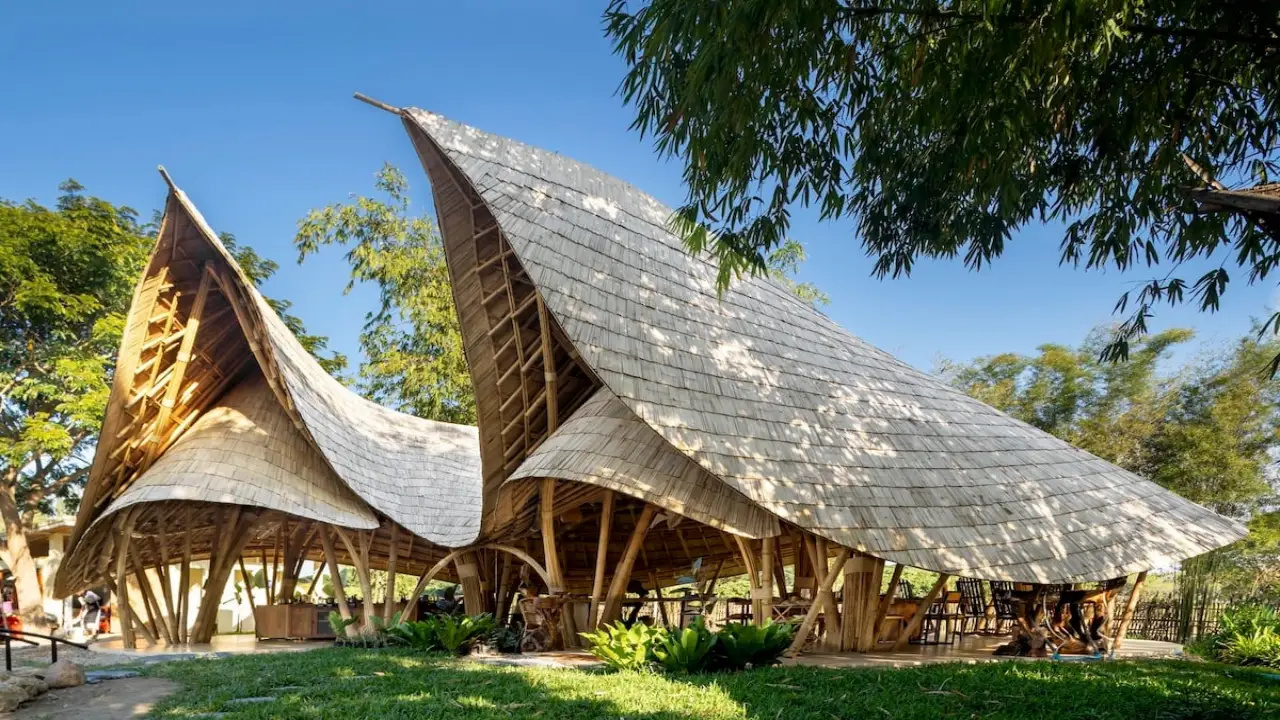

A Bamboo Kitchen That Charms the World! Located 14 km from the historical center of Chiang Mai, this gem combines beauty, functionality, and sustainability
Imagine a place where nature embraces architecture and food comes alive amidst rice fields and lakes. In Thailand, the Zabb and Lee Culinary School, built almost entirely of bamboo, has won the hearts of architects and gourmets by winning the prestigious A+Awards 2025, an award from Architizer celebrating the most incredible spaces on the planet. Located 14 km from the historical center of Chiang Mai, this ecological gem combines beauty, functionality, and sustainability, proving that it is possible to cook in style while caring for the environment.
A Gastronomic Oasis in the Heart of Nature in Thailand
The Zabb and Lee Culinary School, nicknamed The Bull, was born on an organic farm surrounded by breathtaking landscapes in Thailand. Designed by the Chiangmai Life Architects studio, the school reflects a philosophy that combines natural materials, such as earth and bamboo, with modern engineering demands. “Our goal is to create spaces that breathe harmony with the environment, without sacrificing functionality or beauty,” states Markus Rosel, the studio’s founder, in an interview with ArchDaily. The project began with one pavilion, but its success was so great that it quickly grew to two, and later, three distinct spaces.
Design That Surprises and Inspires
What makes The Bull so special? The answer lies in the design. Three main areas: preparation, cooking, and dining, are connected by a long structure, forming a fluid and welcoming layout. Each space is covered by domes made of interwoven bamboo arches, creating a surprisingly spacious feel. “When you walk in, it feels as if the space is much larger than it appears from outside,” says Ploy Thongchua, the chef and owner of the school, in a statement to World Architecture News. At night, the soft lighting accentuates the organic lines of the bamboo, transforming the environment into an invitation to contemplation.
-
Tourist Discovers Forgotten Joaquín Sorolla Painting Worth Up to 60,000 Euros While Strolling in Seville

-
Brazil’s Fernando de Noronha Boasts World’s Most Beautiful Beach, Accessible Only by Descending 208 Cliffside Steps and With No Food Vendors Allowed

-
Wave Rock: Australia’s Giant Granite Wave Stands 15 Meters Tall, Spans 110 Meters, and Showcases 2.7 Billion Years of Erosion in the Australian Desert
-
How to Unclog Showerhead Holes Blocked by Limescale and Hard Water Without Replacing or Hiring a Technician




Bamboo: The Hero of Sustainability and Resilience in Thailand
Bamboo is the star of this construction. Besides being lightweight and strong, it absorbs carbon dioxide as it grows, resulting in virtually zero carbon footprint. Its tensile strength and flexibility make it perfect for Thailand, where earthquakes and strong winds are common. But that’s not all: bamboo requires specific treatments against moisture, fungi, and insects to ensure durability, as explained by Thai engineer Somchai Ratanakorn in an article published in the Journal of Sustainable Architecture. “With the right care, bamboo can last for decades, rivaling traditional materials like concrete,” he says.
An Award That Celebrates Ecology and Sustainable Hospitality
The victory at the A+Awards 2025 in the Sustainable Hospitality Building category was no coincidence. The jury highlighted how The Bull integrates ecology and functionality. “This project is a brilliant example of how architecture can be innovative while respecting the planet,” stated the jury panel in an official statement on the Architizer website. Besides the jury award, the school also won the hearts of the public, appearing among the finalists in the popular vote.
The Bull Is Proof That Architecture Can Be Beautiful, Functional, and Sustainable
The Zabb and Lee School goes beyond being a space to learn culinary arts. It is proof that architecture can be beautiful, functional, and sustainable at the same time. The creative use of bamboo, combined with modern engineering techniques, shows how Thailand is at the forefront of projects that respect nature. “We are proud to show the world that bamboo is not just a material of the past, but of the future,” celebrates Ploy Thongchua.
Want to learn more about this architectural wonder? Leave your comment below or share this story with those who love architecture and sustainability!