






 Portuguese
  Spanish
  3 min of reading
  0 comments


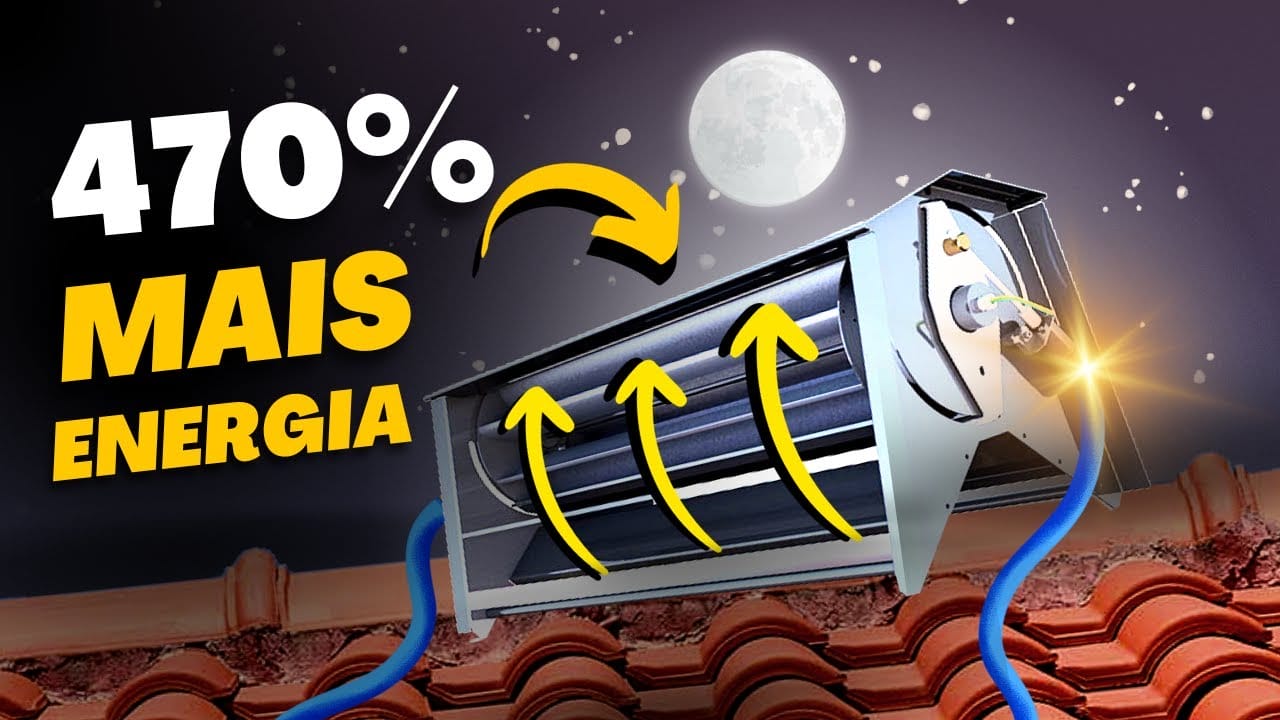
Power Collective develops new wind turbine that can be installed in homes and buildings. The wind turbines of the Canadian company are marketed in three types and can generate up to 470% more energy.
The renewable energy market has been a stage for surprising innovations, not only in the solar energy sector but also in the wind sector. Power Collective, an innovative company from Canada, is making significant advancements with the development of a new high-performance wind turbine. This promising technology aims to transform the rooftops of residences and commercial buildings into strategic points for the efficient conversion of wind power into electricity.
Get to Know the New Wind Turbine Technology from Power Collective
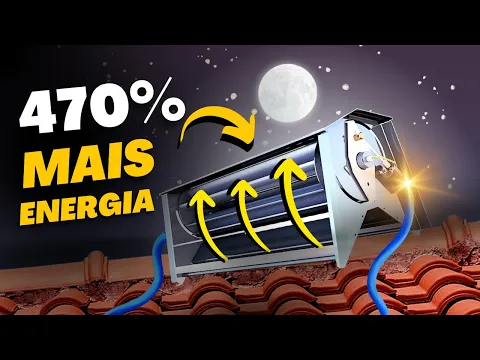

Known as Ridgeblade, the wind turbine is different from any other on the market, capable of generating electricity in a wide range of wind conditions, including low winds, with minimal visual impact.
The model is revolutionary and designed by Power Collective, which won the Green Challenge award in 2019. Its operation utilizes the basic principle of aerodynamics, focusing on wind flow. This phenomenon occurs when air gains speed over a curved surface, commonly seen in airplane wings or even in cars.
-
Brazilian scientists are simultaneously advancing two research projects on clean hydrogen and driving solutions that could transform the energy matrix, enhance industrial competitiveness, and accelerate large-scale emission reduction targets.

-
Advancement in renewable energy: A R$ 150 million project launched by Petrobras and Finep aims to create state-of-the-art electrolyzers for green hydrogen, strengthening national research and preparing Brazil to compete in a billion-dollar energy market.
-
Illiterate or semi-literate grandmothers were trained to repair solar systems, open rural workshops, and light up homes that still depended on kerosene.
-
The world has bet on green hydrogen as the fuel of the future, but now faces the side effect: producing 1 kilogram requires about 9 liters of ultrapure water, and the largest projects on the planet are precisely in the driest regions of the Earth, where water is already scarce for people.





The wind turbine harnesses this effect to concentrate the wind flowing over the roof, converting all that energy into electricity.
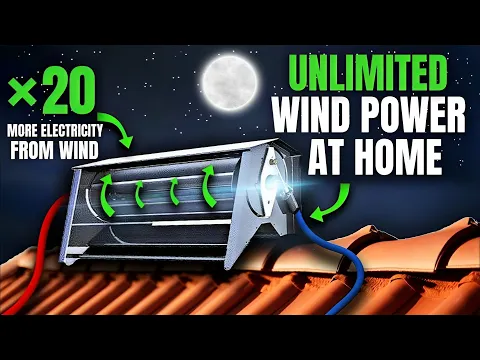
It is a sleek, quiet, and efficient wind turbine that can generate energy in an extensive range of wind conditions, including lower wind speeds. These turbines are composed of modular rotor units, which are mounted on a rail system installed along the roof ridge.
Each rotor unit has about 4 blades that rotate in opposite directions, creating a balanced and stable system. The rotors of the wind turbine are connected to a generator that produces electricity, which can be used directly or stored in batteries.
The New Turbines Are Marketed in Three Types
The model can be connected to the grid, forming a hybrid system with solar panels, capable of generating electricity even when there is no sunlight, on cloudy or rainy days.
The company launched three types of products, called RB1-Residential, which is a more compact, lightweight, and quiet wind turbine, ideal for residential applications. The second is called RB2-Commercial, a larger version with greater power for commercial use, designed to be utilized in a wide variety of building types.
Finally, Power Collective also launched a hybrid unit that combines the wind turbine with solar panels, also integrated with energy storage. These utilize low-profile solar panels that are incorporated into the existing roof structure, making them suitable for most installation sites, including residential and urban areas.
Advantages of the New Wind Turbines from Power Collective
It cannot be denied that this new technology has its advantages over solar panels, which have been widely utilized around the world since the 1970s as a form of clean energy. However, these devices have a certain disadvantage that limits their performance and efficiency, depending on sunlight and solar intensity, which varies with time of day, season, weather, and location.
Thus, in some cases, this technology is the better option depending on certain considerations. The wind generator, such as this new wind power generator from Power Collective, does not require sunlight to generate energy, allowing for power generation even during the night without the need for direct sunlight.
This is where the wind generator stands out compared to solar panels. This type of wind technology is viewed as more attractive and competitive than solar solutions, especially in countries with low sunlight incidence.





Be the first to react!