Portuguese
  Spanish


A recycling campaign by the São Paulo City Hall has already collected 16.1 tons of used cooking oil and turned it into more than 19,000 bars of biodegradable soap, returned to families at 47 points in the city. The exchange prevents water pollution and is a gain for the environment.
That leftover cooking oil in the frying pan usually becomes a problem, but in São Paulo, it is turning into soap. A City Hall campaign collects the used oil throughout the city and returns it to the population in the form of cleaning soap bars, in a cycle that combines recycling and social good. The initiative was announced by the São Paulo City Hall.
The numbers show the size of the impact. Since January 2025, the campaign has already collected 16.1 tons of used cooking oil, material that, if disposed of improperly, would clog the sewage and pollute rivers. Instead, it became more than 19,000 bars of biodegradable soap delivered to the community.
And participating is simple and straightforward. The resident takes a bottle of used oil to one of the 47 collection points spread across São Paulo and receives, on the spot, a bar of soap. It is proof that taking care of the environment can be easy and still yield a useful product for the home.
-
Nepalese Farmers Use Cable-Linked Carts to Transport Tomatoes Across Mountainous Terrain

-
Urban Waterways in Major Brazilian City Recycle Wastewater for Fish Ponds and Agriculture, Supporting Workers and Raising Public Health Concerns
-
At 15, Logan Walter started making TikTok videos at home, discovered he could earn money selling beauty products, dropped out of college at 21, and made his first million through commissions, famous brands, and men’s self-care.

-
Historic 600-Ton Church Relocated 5 km to Avoid Sinking Ground Near Brazilian Mine, Prompting City Reorganization



The campaign that exchanges cooking oil for soap
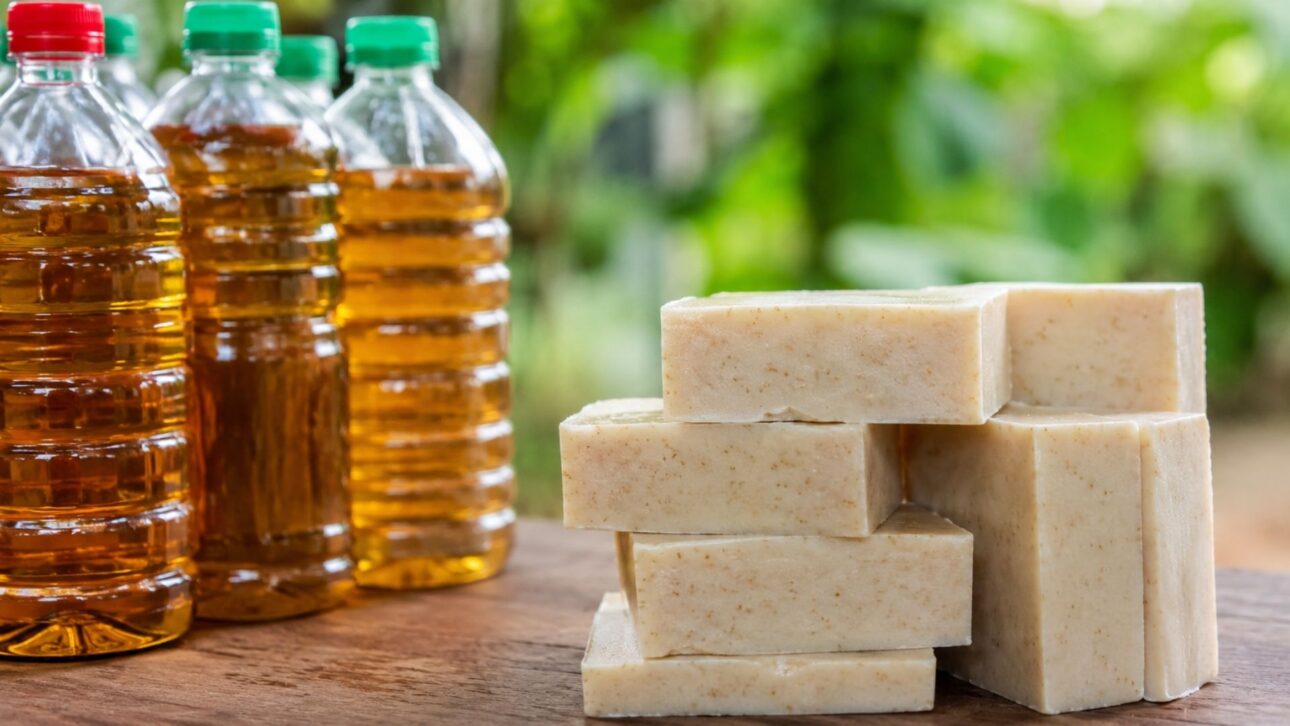
The initiative has a name and surname within the City Hall. The used cooking oil donation campaign is run by the Executive Secretariat for Food and Nutritional Security and Supply, SESANA, in partnership with the VIVATERRA Movement, an organization focused on environmental causes. Together, they set up the collection structure and the transformation of the oil into soap.
The operation follows the logic of the circular economy. Instead of used oil being discarded and becoming pollution, it is collected, processed, and returned to the population as a new and useful product. Nothing is wasted: today’s waste becomes tomorrow’s soap, in a cycle that benefits both the environment and families.
The campaign started in January 2025 and already shows solid results. More than a symbolic gesture, it has become a continuous program, with fixed collection points and clear collection goals. Oil recycling has ceased to be an exception in São Paulo and has become a routine public policy.
The choice of collection points has a social logic. By using food security equipment, such as Solidarity Warehouses and municipal markets, the campaign reaches neighborhoods and families that benefit most from free soap. Thus, the same structure that distributes food at low prices also becomes an entry point for kitchen oil recycling.
16.1 tons of oil become 19 thousand soaps
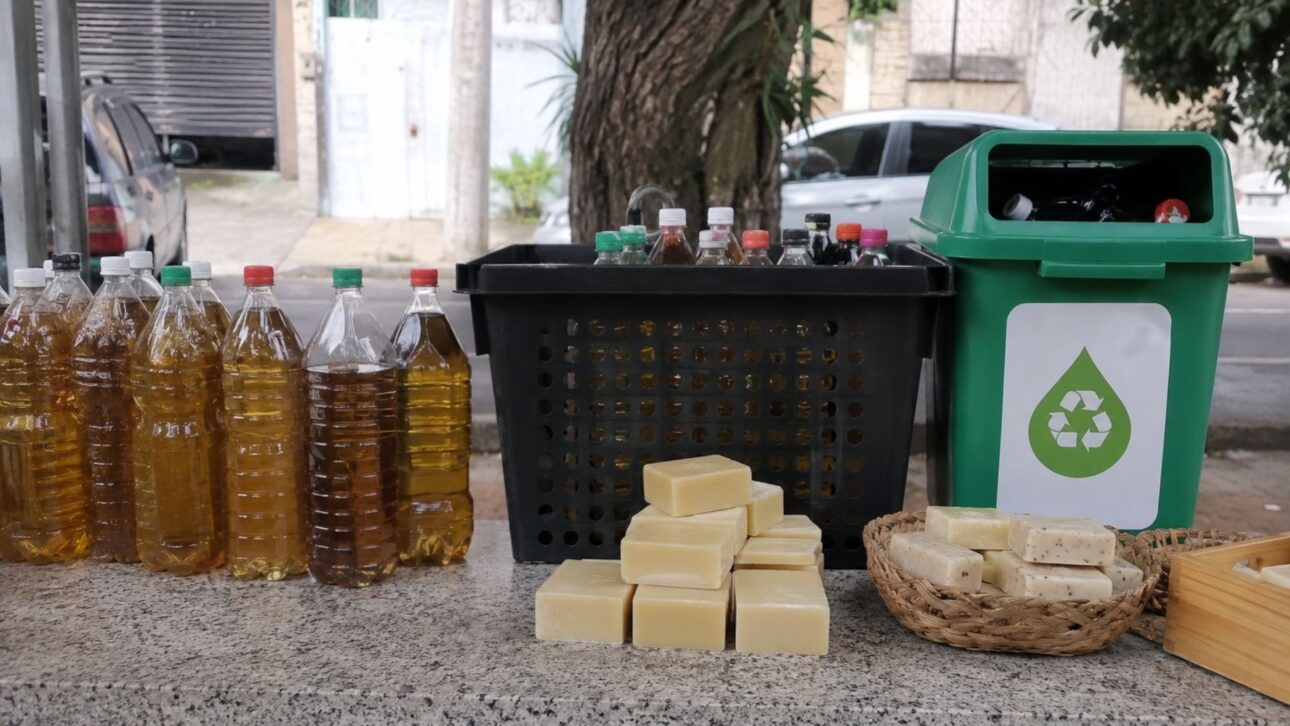
The volume collected is impressive for an exchange campaign. 16.1 tons of used cooking oil were removed from São Paulo kitchens and diverted from irregular disposal. Each liter delivered is one less liter flowing down the drain towards the city’s sewage and rivers.
The destination of this oil is what fascinates. All the material collected was transformed into more than 19 thousand bars of cleaning soap, a biodegradable and hypoallergenic product suitable for dishes, clothes, and general house cleaning. The waste of some became the soap of many, without needing anything imported.
This total utilization is the heart of well-done recycling. Instead of spending resources to discard the oil as waste, the campaign converts it into something of real value for families. It’s the difference between treating oil as a problem and seeing it as raw material.
To understand the scale, a comparison is worthwhile. The 16.1 tons are equivalent to thousands of bottles of oil that did not go down the drain, collected one by one, donation by donation. It is a collectively built volume, showing how small household quantities, when added up, become a mountain of waste diverted from nature.
How it works: bring a bottle, get a soap
The campaign rule is easy to follow. Residents should store used cooking oil in a PET bottle, like those for soda, and take it to one of the City’s collection points. Upon delivery, they immediately receive a bar of soap made from the recycled oil.
The collection points are located in everyday places. There are 47 spaces spread across São Paulo, connected to SESANA, such as the Solidarity Warehouses, the Rede Cozinha Escola units, and the municipal markets and produce stands. The idea is to take advantage of places that residents of São Paulo already frequent, so donating oil doesn’t require extra effort.
This simplicity is intentional and strategic. The easier it is to deliver the cooking oil, the more people participate, and the immediate exchange for soap acts as a concrete incentive. Instead of demanding effort without return, the campaign rewards those who recycle, creating the habit of caring for the environment.
Preparing the oil for donation is simple. Just wait for it to cool after cooking, pour it with a funnel into a clean and dry PET bottle, without mixing it with water, and keep storing it until full. Keeping a bottle under the sink to collect daily oil is the trick that turns proper disposal into a household habit.
Why cooking oil is a water villain
Improper disposal of oil causes invisible damage. When poured down the sink, cooking oil doesn’t disappear: it sticks to pipes, clogs sewage systems, and ends up contaminating rivers and water sources. A single liter of oil can pollute about 25,000 liters of water, according to data cited by the City Hall.
The campaign numbers show the size of the problem avoided. By collecting 16.1 tons, the initiative prevented the contamination of about 404.7 million liters of water, a volume sufficient to fill 162 Olympic swimming pools. It’s clean water preserved simply because the oil didn’t end up down the drain.
In the pipes, the damage is silent and costly. Oil accumulates in the pipes and, along with other waste, forms fat blocks that clog the sewage system and require expensive cleanings. When it reaches treatment plants, it increases the cost of the entire process, and some of it ends up reaching rivers and reservoirs, harming wildlife and the quality of the water that supplies the city.
This is the strongest environmental argument for oil recycling. Treating water after it’s contaminated is expensive and difficult, so preventing pollution at the source is much cheaper for the city and the planet. Each delivered bottle is a small victory for the urban environment.
Less CO₂ in the air: the gain for the climate
The benefit doesn’t stop at water. When cooking oil is improperly disposed of and decomposes, it also releases greenhouse gases, contributing to global warming. Recycling it, therefore, helps not only the rivers but also the climate.
The carbon count is significant. According to the City Hall, the campaign has already prevented the emission of about 48.5 tons of CO₂ into the atmosphere, precisely by giving the collected oil a proper destination. For an initiative based on bottles brought by residents, it’s quite a climatic result.
This gain shows how small actions add up. No single bottle of oil changes the climate, but thousands of them, collected in an organized manner, create a real impact. Oil recycling thus becomes an example of how the environment benefits from simple gestures repeated on a large scale.
The reasoning connects to a larger waste problem. Poorly disposed organic waste, from oil to food scraps, releases gases that warm the planet when they decompose uncontrollably. Properly disposing of each type of waste, as the oil campaign does, is one of the cheapest ways to cut emissions at the source and relieve pressure on the environment within the city itself.
From oil to soap: circular economy in practice
The transformation of oil into soap is pure useful chemistry. Used cooking oil, after being filtered and processed, serves as a base for soap production, in a process known for generations that the campaign modernizes and organizes. The result is a biodegradable soap that decomposes without harming the environment.
Used oil, by the way, has more than one possible destination. Besides soap, this waste is a raw material for biodiesel, a cleaner fuel, showing that discarded cooking oil has energy and economic value when well utilized. Instead of polluting, it can become energy or a cleaning product.
This logic defines the circular economy. In a linear model, the oil would be used and thrown away; in the circular model, it returns to the cycle as an input for something new. The São Paulo campaign materializes this concept in a way that anyone can understand: the bottle of oil from your kitchen becomes the soap for your sink.
This energy utilization is a promising frontier. In Brazil, used cooking oil is already one of the raw materials for biodiesel, a fuel mixed with regular diesel that helps reduce dependence on petroleum. In other words, the same oil that would become pollution can become soap or clean energy, depending on where recycling directs it.
Social good: the soap that returns to families
More than environmental, the campaign has a strong social side. The more than 19,000 bars of soap produced are not sold but returned directly to the families who deliver the oil, many of them served by social facilities such as the Armazéns Solidários. It’s recycling that ends up helping the household budget.
The message from the authorities reinforces the idea of collective responsibility. “It’s hard to notice, but we all have a lot of responsibility in this task,” said Vitor Arruda, the secretary responsible for the department, highlighting the role of each resident in the campaign’s success. The effort, after all, depends on the population’s adherence.
The signs of engagement are encouraging. According to the City Hall, oil donations grew by about 32% when comparing the first months of 2025 and 2026, showing that São Paulo residents are embracing the habit. The more people recycle, the more soap returns to the community, in a virtuous circle.
Oil recycling can also generate work and income. In many places, the collection and transformation of used oil drive cooperatives and small businesses, creating jobs for those in need while solving an environmental problem. Combining income generation, soap for families, and water protection makes the initiative an example of complete social impact.
A model for the entire Brazil
What works in São Paulo can inspire the country. The improper disposal of cooking oil is a problem in all Brazilian cities, which suffer from clogged sewers and rivers polluted by grease poured down the sinks. A simple exchange campaign for soap, like the one in São Paulo, is replicable in any municipality.
The strength of the model lies in the combination of incentives. By combining environmental benefit, immediate reward, and social support, the campaign solves several problems at once and still engages the population. Municipalities in other cities could adapt the idea using their own networks of public facilities as collection points.
The national potential is huge and underexplored. Brazil consumes billions of liters of cooking oil per year but recycles only a small fraction, with the rest going down sinks and into regular trash. Cities, NGOs, and cooperatives that organize collection, as happens in São Paulo, show that it is possible to change this scenario with simple structure and the right incentive.
There is still room to grow within the capital itself. With more collection points, more partnerships, and more publicity, the amount of recycled cooking oil can increase significantly, boosting both soap production and environmental protection. The path opened by the campaign shows that there is plenty of potential to be explored.
And you, do you recycle your kitchen oil?
The São Paulo City Hall campaign proves that it’s possible to turn a kitchen villain into a solution: 16.1 tons of used cooking oil have already been turned into more than 19,000 bars of biodegradable soap, returned to families at 47 points in the city, preventing the contamination of hundreds of millions of liters of water and dozens of tons of CO₂. It’s recycling with social good in the same gesture.
And you, do you usually save used cooking oil for recycling or do you still pour it down the sink? Share in the comments if your city has oil collection points and if you would be willing to exchange your bottle for a bar of soap, as happens in São Paulo.