Portuguese
  Spanish


The Roman ring found by Yair Whiteson on Mount Carmel, in Israel, shows Minerva engraved in bronze and will go to Jerusalem after being handed over to the authorities. The piece was mistaken for a rusty screw during a family hike and became an archaeological find preserved by the authorities of Israel.
A Roman ring found by a 13-year-old boy on Mount Carmel, in Israel, turned an ordinary walk into a rare archaeological discovery. Yair Whiteson was with his father in the Khirbet Shalala area when he saw a small green, corroded object on the ground, which initially seemed to be nothing more than a rusty screw.
The case was reported in July 2024 by Smithsonian Magazine, with information from the Israel Antiquities Authority. At home, the teenager noticed that the object had an engraved image, and the piece was eventually identified as a bronze ring from the Roman era, with the representation of Minerva, a figure associated with wisdom, commerce, arts, and war; the find will be exhibited in Jerusalem.
Small green object caught attention during the hike
The discovery began simply. Yair, who enjoys collecting rocks and fossils, was walking with his father when he noticed a greenish object on the ground. Due to its corroded state, the first impression was that it was something ordinary, perhaps a metal piece without historical value.
-
São Paulo Recycling Campaign Collects 16.1 Tons of Used Cooking Oil, Distributes Over 19,000 Biodegradable Soap Bars to Families

-
Nepalese Farmers Use Cable-Linked Carts to Transport Tomatoes Across Mountainous Terrain

-
Urban Waterways in Major Brazilian City Recycle Wastewater for Fish Ponds and Agriculture, Supporting Workers and Raising Public Health Concerns
-
At 15, Logan Walter started making TikTok videos at home, discovered he could earn money selling beauty products, dropped out of college at 21, and made his first million through commissions, famous brands, and men’s self-care.


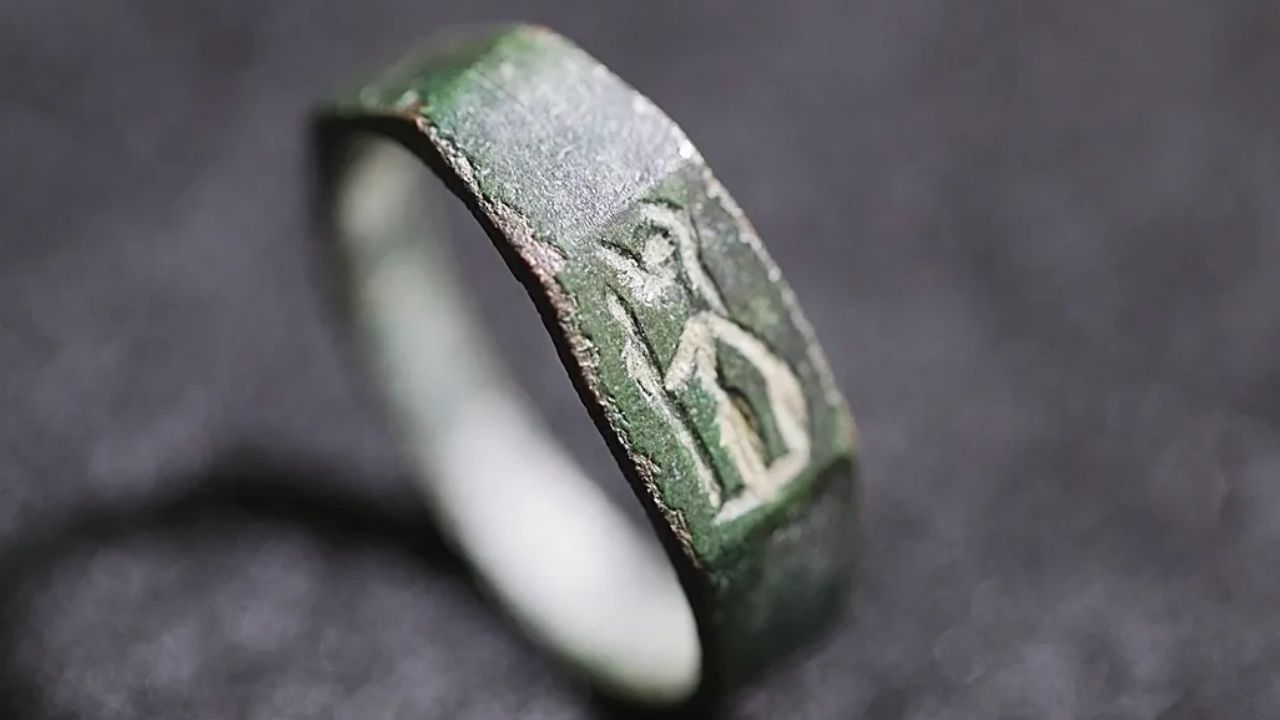
Only later, at home, did the detail change the story. Upon closer inspection, the boy realized there was a figure engraved on the object. What seemed like scrap indicated an ancient find, and the supposed screw took on another dimension when the family understood they might be facing an archaeological artifact.
Roman ring features image of the goddess Minerva
The Roman ring was identified as a bronze piece featuring the figure of Minerva. In Roman tradition, the goddess is linked to wisdom, arts, commerce, and war. In the artifact, she appears with a helmet, shield, and spear, elements that helped specialists recognize the engraved image.
For the person who found the object, the initial interpretation was different. Yair thought the figure might represent a warrior. The confusion is understandable, as Minerva appears with military attributes. The value of the piece was not in its size, but in the tiny scene preserved in metal for centuries.
Authorities received the artifact in Israel
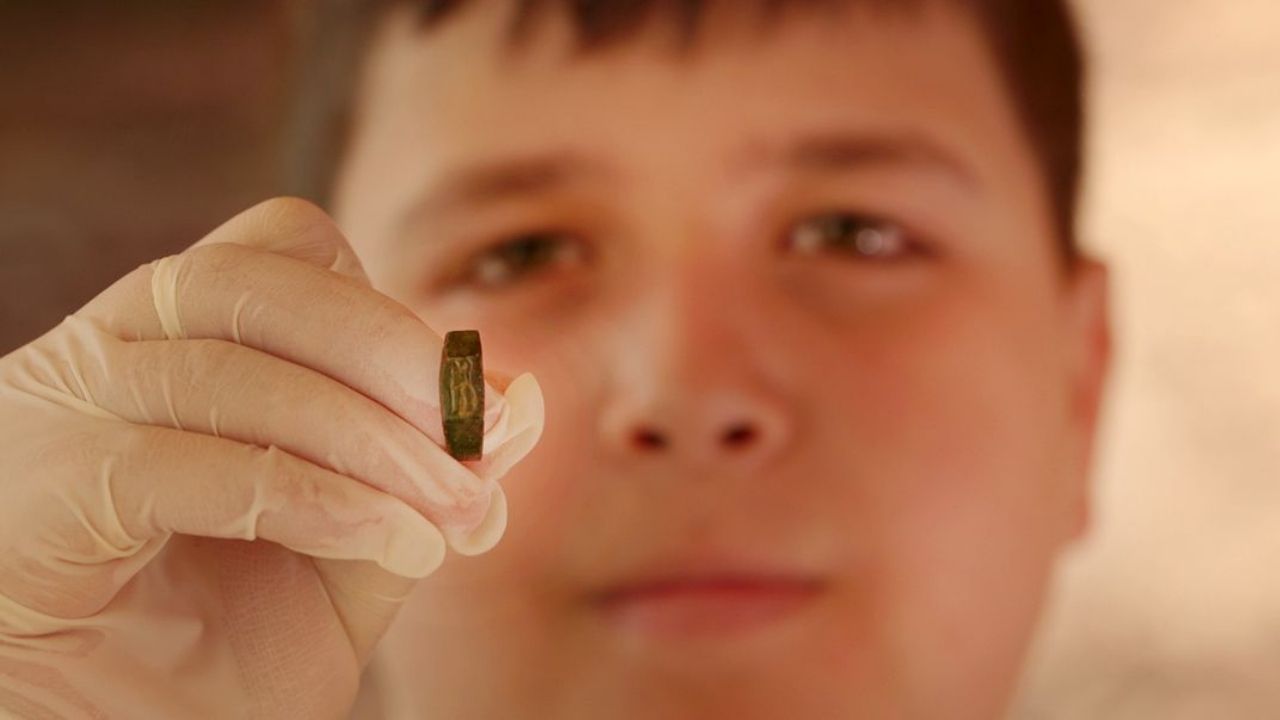
After realizing that the piece could have historical significance, the family contacted the Israel Antiquities Authority. The ring was forwarded to the country’s National Treasures Department, responsible for preserving archaeological objects found in Israeli territory.
The handover was treated as an act of citizenship. In such cases, communication with authorities is crucial for the find to be analyzed, protected, and contextualized by specialists. An ancient artifact out of context can lose part of its history; when properly recorded, it helps researchers better understand the location where it appeared.
Piece may be linked to farm, quarry, or ancient tombs
The discovery site is near Khirbet Shalala, an archaeological area on Mount Carmel. The region is close to an ancient quarry, burial caves, and remains of a Roman-era farm. These elements help explain why a Roman ring might be in that area.
Even so, researchers still do not know who owned the piece. It may have belonged to a woman living on the farm, a worker related to the quarry, or even been left as a funerary offering in one of the nearby tombs. The discovery opens possibilities but does not allow a definitive conclusion about its exact origin.
Experts date it between the 2nd and 3rd centuries
According to authorities, the artifact is from the late Roman period, between the 2nd and 3rd centuries AD. This estimate places the find in a historical interval of great cultural circulation in the region, when personal objects, religious symbols, and everyday items could carry Roman and local influences.
The fact that the ring has survived to this day, even corroded, is remarkable. Small pieces are easily lost, displaced, or damaged over time. When an object like this appears on a trail, it creates an unexpected bridge between a current walk and a life that existed almost two thousand years ago.
Find will be exhibited in Jerusalem
The Roman ring will be exhibited in Jerusalem, at the new Jay and Jeanie Schottenstein National Campus for the Archaeology of Israel. The intention is to present the piece to the public and allow researchers to compare the artifact with previous discoveries made in the region.
This step is important because the value of an archaeological discovery is not just in the isolated object. When the ring is analyzed alongside excavations, records, and other materials, it can help form a broader picture of the site. A small artifact can confirm habits, routes, occupations, and cultural links of an ancient area.
Boy received recognition for the delivery
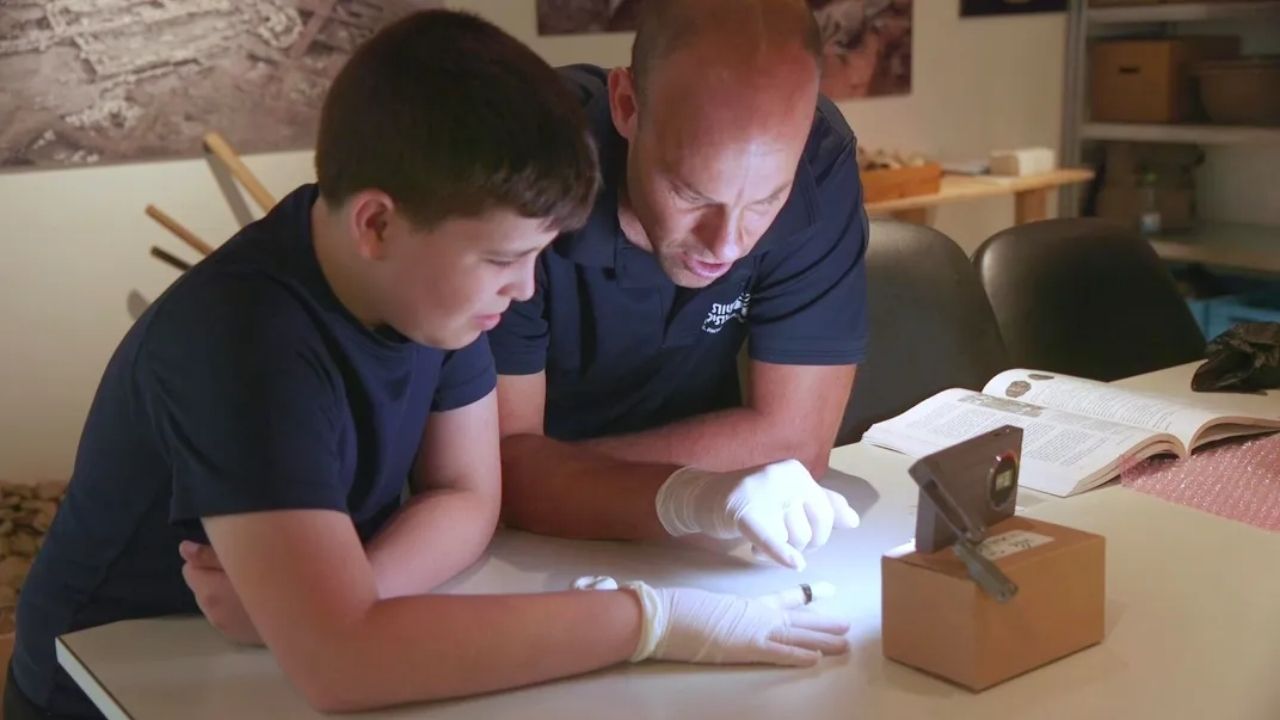
Yair Whiteson received an honorable mention for good citizenship after handing the piece over to the authorities. The family was also invited to visit the facilities in Jerusalem, where the teenager could better follow the fate of the object found during the walk.
The gesture reinforces an important message for those who find ancient pieces by chance. Keeping an artifact without informing specialists may seem harmless, but it prevents the discovery from being properly studied. By handing over the ring, the boy helped preserve not just an object, but part of the history linked to the location.
Discovery sparked interest in archaeology
During the visit to the facilities, Yair reportedly expressed the desire to become an archaeologist in the future. The reaction is not surprising: finding a real artifact, linked to an ancient civilization, can transform how a child or teenager views history, museums, and field research.
The case also shows how archaeology does not always start with large excavations. Sometimes, it arises from a keen eye during a trail, from a strange object on the ground, and from a correct decision after the discovery. The difference between a personal memory and a historical contribution may lie in the care of notifying the authorities.
Minerva makes the find even more symbolic
The presence of Minerva gives the artifact a special layer. The Roman goddess was associated with knowledge and strategy, and she had an equivalent in Greek mythology: Athena. In a small ring, this image could carry personal, cultural, or religious significance for the wearer.
It is not possible to assert with certainty what the exact function of the piece was for its ancient owner. It could have been an adornment, an object of identity, a symbol of protection, or an item with sentimental value. What is known is that the Roman ring preserved a recognizable image, enough to connect the find to a Roman visual tradition.
A small find with historical weight
The case draws attention because it involves a simple scene: a boy, a walk, a green object, and a doubt. But the sequence shows how archaeological discoveries can emerge from common situations, as long as there is curiosity, care, and communication with specialists.
The Roman ring found near Mount Carmel now ceases to be just an object picked up from the ground and becomes part of the collection preserved by the authorities of Israel. The journey of the piece, from a possible rusty screw to an artifact displayed in Jerusalem, shows how seemingly trivial details can reveal ancient stories.
Do you think anyone would be able to recognize an archaeological find on a trail, or would most let the object go unnoticed? Tell us in the comments if you have ever found something curious on the ground and were unsure about its origin.