






 Portuguese
  Spanish



During Exposibram 2025, Government and Experts Highlight How Brazilian Mining Strengthens Energy Transition, Promotes Sustainable Innovation, and Generates Opportunities Across the National Mineral Sector
The Exposibram 2025 is consolidating itself as the main event of brazilian mining by highlighting the country’s role in the global energy transition, according to a report published.
Held in Salvador (BA) on October 29, the fair brought together authorities, companies, and researchers to discuss the future of the mineral industry and its contribution to a low-carbon economy.
The Ministry of Mines and Energy (MME) highlighted the importance of critical minerals such as nickel, graphite, copper, and rare earth elements, which are essential for clean technologies and sustainable development.
-
China Dominates Over 90% of Rare Earth Refining, Prompting Global Concerns: Canada and Japan Launch Billion-Dollar Plan to Reduce Dependency and Safeguard Batteries, Semiconductors, and Defense

-
Ancient Mines in Spain Reveal Tools and Metals That May Explain Bronze Age Trade with Scandinavia
-
XCMG Launches 240-Ton Mining Truck in Brazil, Promising Increased Productivity with Lower Fuel Consumption
-
Canadian Investment Transforms Remote Brazilian Amazon Town into Copper Hub for Global Electric Vehicle and AI Data Center Markets


Brazil emerges as a leading player in this scenario, thanks to institutional stability and the international trust gained over the past decades.
Sustainability and Technological Innovation as Drivers of the Mining of the Future
The national secretary of Geology, Mining, and Mineral Transformation, Ana Paula Bittencourt, emphasized during the Exposibram 2025 that sustainable mining is one of the pillars of the energy transition.
The event, promoted by the Brazilian Institute of Mining (IBRAM), presented solutions that combine environmental efficiency and technological innovation, focusing on reducing impacts and increasing the use of clean energy in operations.
According to the MME, 18 ministries contributed to the construction of the new Brazilian Mineral Policy, which is part of the National Mining Plan and prioritizes governance, productive diversification, and process modernization.
Exposibram 2025: Green Jobs and Diversity Strengthen the Mineral Industry
Another highlight of the Exposibram 2025 was the recognition of initiatives aimed at inclusion and professional development.
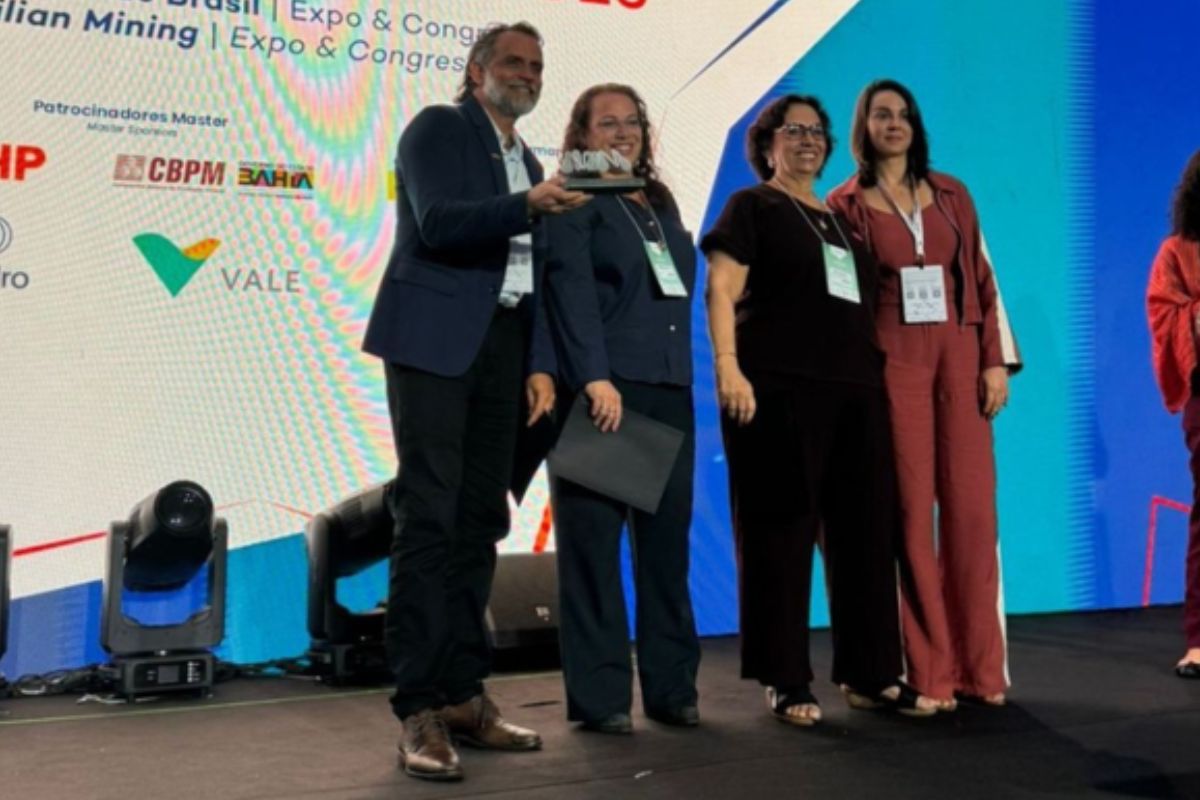
The secretary participated in the awarding of the MINA Prize, organized by Women in Mining (WIM Brazil), which honors women with significant contributions to mining.
The initiative reinforces the sector’s commitment to gender equity and the expansion of green jobs, occupations that reconcile economic development and environmental preservation.
According to the MME, the new mineral policy is also expected to boost income generation and infrastructure, especially in strategic producing regions.
Public Policies and Strategic Minerals at the Center of the Energy Transition
During the Exposibram 2025, the government reinforced that the National Council of Mineral Policy plays an essential role in formulating guidelines that ensure security for production chains and enhance Brazil’s competitiveness in the global market.
National mining positions itself as a driver of technological growth and environmentally responsible, capable of providing essential inputs for batteries, turbines, and solar panels.
With the appreciation of strategic minerals, the country advances in the integration of clean energy, innovation, and sustainability, becoming a world reference in responsible development.
The Exposibram 2025 reaffirms, thus, the strength of Brazilian mining as an essential partner for advancing a greener, safer, and more technological economy.


