Portuguese
  Spanish


Supermarkets in Espírito Santo Face Labor Shortage with 6,000 Job Openings. Understand the Reasons for Scarcity and the Impact on the Sector.
The supermarket sector in Espírito Santo is experiencing a labor shortage that concerns business owners and experts. According to the Capixaba Association of Supermarkets (Acaps), around 6,000 job openings are available in the State, but there are no candidates to fill them.
The warning was issued during the opening of the Acaps Trade Show, the largest event in the sector in the State, held this Tuesday (16).
Despite the good state of the job market in Espírito Santo, the difficulty in hiring limits the growth of supermarket chains and increases the costs for the sector.
-
Payment Infrastructure Expert Highlights Diverse Realities in Latin American E-commerce, with Card Usage Ranging from 89% in Ecuador to 50% in Colombia

-
Brazil’s Central Bank’s Tight Monetary Policy Risks Stifling Both Production and Demand Amid High Inflation and Fiscal Imbalance

-
Over a Century After the Sinking, US Takes Legal Action to Stop Auction of Over 100 Titanic Artifacts

-
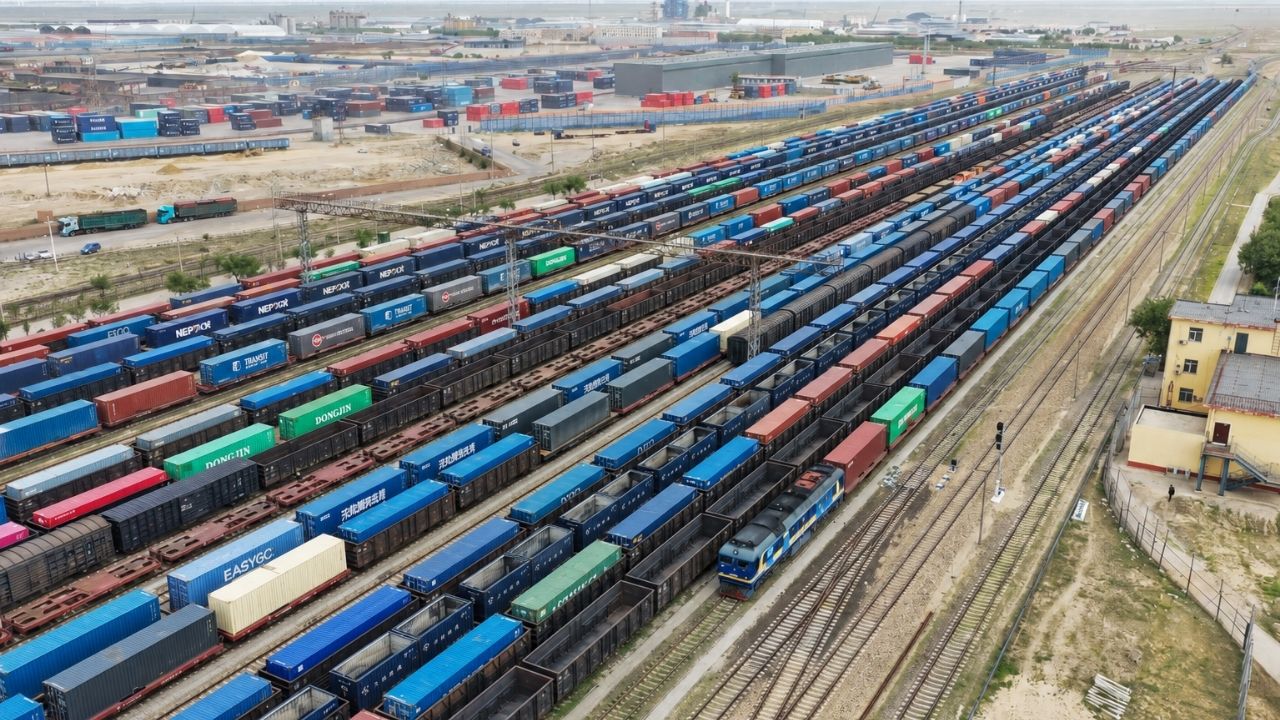
Chinese Rail Port in Inner Mongolia Surpasses 25,000 China-Europe Trains, Connecting 75 Routes Across Over 10 Countries, Showcasing Central Corridor as a Strong Land Alternative to Long Sea Routes


60,000 Direct Jobs and Still No Workers
Currently, supermarkets employ 60,000 people directly and another 120,000 indirectly in Espírito Santo.
Even so, they cannot meet the growing demand for professionals.
To give an idea of the scale of the problem, the number of job openings is almost equivalent to the total number of formal jobs generated by the sector between January and July this year, which was 7,700 positions.
Business Owners Point Out Obstacles
The president of Acaps, João Tarcísio Falqueto, emphasized that the shortage of workers has become one of the main challenges for companies.
“It is a growth limiter and, in certain operations, it also increases costs,” Falqueto stated.
This analysis was supported by representatives from the industry and commerce, who highlighted that the lack of labor also affects other sectors of the economy.
Why Aren’t the Job Openings Filled?
According to experts, many people are outside the formal labor market for various reasons.
Some face low education and lack of qualifications, while others simply cannot enter the market because they are “on the margins of employability.”
The data from PNAD Contínua shows that the unemployment rate in Brazil is at 5.6%. In Espírito Santo, this rate is even lower.
Still, there are not enough candidates to fill available positions, especially for entry-level roles, such as cashiers, stock clerks, and attendants.
Actions to Reduce the Labor Shortage
One of the initiatives underway is the federal program Acredita no Primeiro Passo, created in July.
This program aims to connect companies with people registered in the Cadastro Único (CadÚnico), which includes more than 25 million families across the country.
The proposal is to offer social support in the initial months of employment, encouraging the hiring of workers in vulnerable situations.
Additionally, business owners advocate for investments in professional training and greater integration between public authorities and the private sector to prepare candidates for existing job openings.
Economic and Social Impacts
The lack of workers affects not only businesses but also the entire economy of Espírito Santo.
The difficulty in filling job openings hinders store expansion, reduces competitiveness, and compromises the quality of customer service.
From a social perspective, the labor shortage highlights the challenge of including people who are outside the labor market, often demotivated or without access to training opportunities.
Possible Paths for the Future
Although part of the processes is already being automated, the sector acknowledges that not all functions can be replaced by technology.
Human contact remains essential in various supermarket activities.
Therefore, the solution to the labor shortage depends on a joint strategy. Companies need to invest in retention and training, while the government should strengthen policies for inclusion and social support.
If there is integration between these initiatives, the 6,000 open positions can cease to be an obstacle and transform into growth opportunities for workers and for the economy of Espírito Santo.