Portuguese
  Spanish


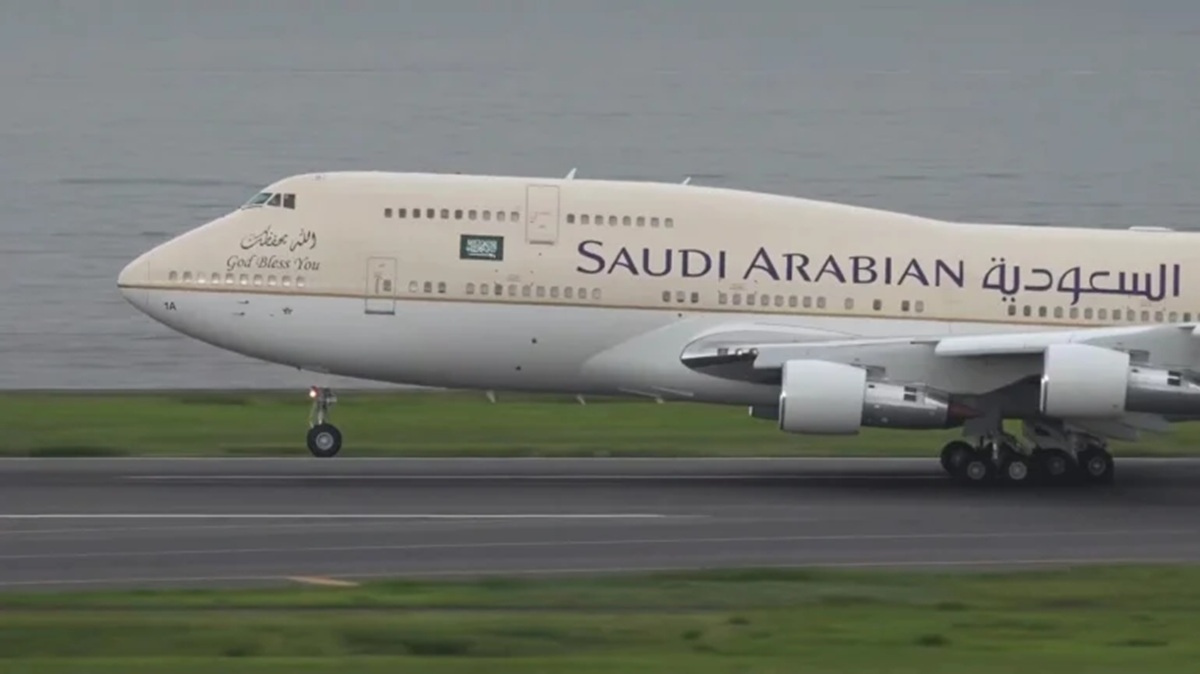

After cataract surgery in Geneva, Saudi King Fahd headed to Marbella on August 14, 2002, surrounded by an air operation that included a private Boeing 747, a Boeing 757 converted into a flying hospital, and up to seven support aircraft
Saudi King Fahd turned a trip between Geneva and southern Spain in August 2002 into a large-scale air operation marked by luxury, logistical apparatus, and continuous medical support. After cataract surgery, the Saudi king boarded towards the Costa del Sol surrounded by a structure that included a private Boeing 747 and a Boeing 757 converted into a flying hospital to monitor his health condition during the journey.
The arrival in Málaga showed that the operation was not limited to the movement of a dignitary in a private jet. The movement involved a broader formation of Saudi aircraft, organized to keep the monarch supported from the departure from Switzerland to his installation in Marbella.
The Boeing 747 was the most visible piece of this crossing, but not the only one. At the forefront of the scheme was the Boeing 757 adapted to operate as a flying hospital, an aircraft specifically designated to support the monarch’s weakened condition during the long-distance air transfer.
-
Son of farmers, he started at the age of 12 working in a pharmacy in the countryside of Paraná, saw his partner declare the company “bankrupt” and leave, and today he runs a supplement brand present in 83,000 pharmacies, investing R$ 67 million towards R$ 500 million.

-
From a motorcycle sold for R$ 146 million: he used to blend açaí in his home kitchen, left informal work, and now runs a network of 140 stores in 12 states.

-
He almost went bankrupt during the pandemic and drove his own delivery truck to keep the ice cream shop open, created the “ice cream wholesale” and now sells 1.3 million popsicles per month starting at R$ 1, with 32 stores and a goal of R$ 100 million.

-
A couple living in Australia missed natural baby food from Brazil, created a brand that dominates 93% of the baby food category, and now launches a cookie and chocolate drink “without being junk” to double in size and earn R$ 360 million.


The combination of the two planes transformed a routine royal trip into a meticulously planned action with medical and operational rigor. The movement brought together, in a single system, the typical structure of a royal court and the necessary resources to maintain the king’s clinical stability throughout the journey.
The Saudi king’s air operation mobilized several aircraft
The movement over Málaga reinforced the scale of the operation mounted for the Saudi king. The media coverage at the time described a sort of air bridge between Geneva, Saudi Arabia, and southern Spain, showing that the arrival of the 747 was just a visible part of a much broader scheme.
Reports published in Spain indicated that up to seven aircraft participated in the operation. Some of them were said to have been used to transport food supplies, luggage, and luxury armored vehicles, expanding the notion that the movement was organized around a complete support mechanism.
In this context, the Boeing 757 converted into a flying hospital played a central role. Its presence at the forefront of the formation placed the health of the monarch at the center of the planning and differentiated the movement from a simple summer trip between high-end residences.
The assembly of the operation also highlighted that the goal was to maintain continuity and control at every stage of the journey. The flight ceased to be merely transportation and began to function as an extension of the protective and assistance structure surrounding the Saudi king on land.
Clinical fragility defined the arrival in Málaga
The physical condition of the monarch after the cataract surgery was treated as a decisive element of the entire logistics. Spanish reports insisted on his fragility, and this was reflected in the way the arrival was organized at the airport, with procedures designed to avoid physical effort and reduce any instability.
An elevator-shaped vehicle was used to take him off the jumbo without the need for stairs. On the tarmac, an armored and specially equipped Mercedes, with a hydraulic seat, was waiting to allow a direct and careful transfer between the aircraft and the ground convoy.
The sequence of the operation on the ground followed the same logic of clinical protection observed in the air. The convoy accompanying the Saudi king included vehicles prepared for intensive medical support or communications, extending the controlled environment of the flight to the land transfer.
Nothing about the arrival suggested improvisation. Each step was designed to reduce risks, maintain comfort, and ensure that the transition between plane, runway, and vehicle occurred smoothly, without disruption of the assistance set up for the monarch.
This apparatus helps explain why the trip was treated as something greater than the use of a private jet by a head of state. The simultaneous presence of medical resources, special vehicles, and multiple aircraft indicated an integrated operation aimed at preserving the Saudi king in a moment of vulnerability.
The Boeing 757 Transformed into a Flying Hospital
The Boeing 757-200 designated for the mission had originally been designed to carry around 300 passengers. In the case of this operation, however, the interior would have been completely reconfigured to prioritize medical capacity, replacing the commercial logic of high occupancy with a structure dedicated to care and monitoring.
The most likely adaptation transformed the aircraft into a long-range critical transport platform. Instead of regular seats, the internal space would have been organized to accommodate beds or stretchers secured for flight, oxygen systems, and reinforced electrical infrastructure to operate sensitive equipment on extended journeys.
The cabin would also have been prepared to store medications and medical supplies. This allowed health teams to work with a level of readiness similar to that of an intensive care unit, keeping resources available for immediate intervention should the patient’s condition require it.
Among the equipment associated with this type of configuration were transport ventilators, cardiac monitors, intravenous pumps, and defibrillators. Airway management tools, suction systems, and emergency medications would complete the necessary base to accompany a high-risk patient in flight.
However, the designation of flying hospital does not necessarily mean that the aircraft had a complete structure for surgery. There is no widely verified evidence that this specific jet housed an operating room or anesthesia area, which keeps the distinction between an airborne surgical environment and an advanced intensive care platform in transit open.
Within aviation, the term flying hospital can refer specifically to this second model. The interpretation most compatible with the available information points to an aircraft prepared for critical support and continuous monitoring, without confirmation of full surgical capability on board.
Marbella welcomed the Saudi king with a base already prepared
When he arrived in Spain on August 14, 2002, the entire operation made it clear that medical necessity and royal protocol acted as parts of the same system. The journey did not end with the landing in Málaga but continued until the installation of the monarch in his summer base on the Costa del Sol.
During his stays in the country, Fahd usually resided in the Mar-Mar palace, within the Nahda complex. The property, built in the 1980s, served as his summer base in Marbella and concentrated the necessary infrastructure to receive him with the same standard of protection and comfort displayed during the air transfer.
The Mar-Mar is described as a luxurious palace and was later abandoned. Still, the structure associated with the location helps to gauge the type of apparatus gathered around the Saudi king, as the complex had a helipad, mosque, and hospital.
The arrival in Málaga, therefore, did not represent just a stage of travel but the extension of a complete system of movement and stay. The Saudi king was transported along with the means necessary to sustain his routine, his security, and his clinical stability across different countries.
The operation demonstrated how far aviation could be adapted to simultaneously meet state demands, personal comfort, and health preservation. In the case of the Saudi king, the Boeing 757 converted into a flying hospital ceased to be a secondary support and became an essential piece of a planned crossing to keep the monarch alive, stable, and assisted from start to finish.