






 Portuguese
  Spanish


Discover How Natural Gas Is A Strategic Bridge To A Sustainable Future By Driving The Energy Transition With Innovation, Inclusion, And International Cooperation.
In recent decades, the world has profoundly transformed the way it produces and consumes energy. For this reason, the urgency to contain the impacts of climate change is growing, while also seeking to ensure reliable, safe, and accessible energy access. Thus, it becomes essential to seek cleaner and more efficient sources.
In this scenario, natural gas stands out as a key element. After all, experts and leaders in the energy sector consider it a strategic bridge to a sustainable future.
This is the view of Huang Yehua, president of the Brazilian branch of the Chinese oil company CNOOC. According to him, natural gas represents more than a temporary solution: it is a transitional fuel that can accelerate the decarbonization of the economy and prepare the ground for a cleaner and more balanced energy system.
-
Oil production grows in Rio, but reserve replacement raises a warning sign

-
Petrobras is expected to complete the drilling of the Morpho well in the Foz do Amazonas in August 2026, the first well in the Equatorial Margin, an oil frontier that the ANP estimates at more than 30 billion barrels and could redraw the map of Brazil.

-
Oil returns to the center of concerns with tension between the US and Iran

-
IEA reduces forecast for global oil demand in 2026 after impacts of the Middle East crisis
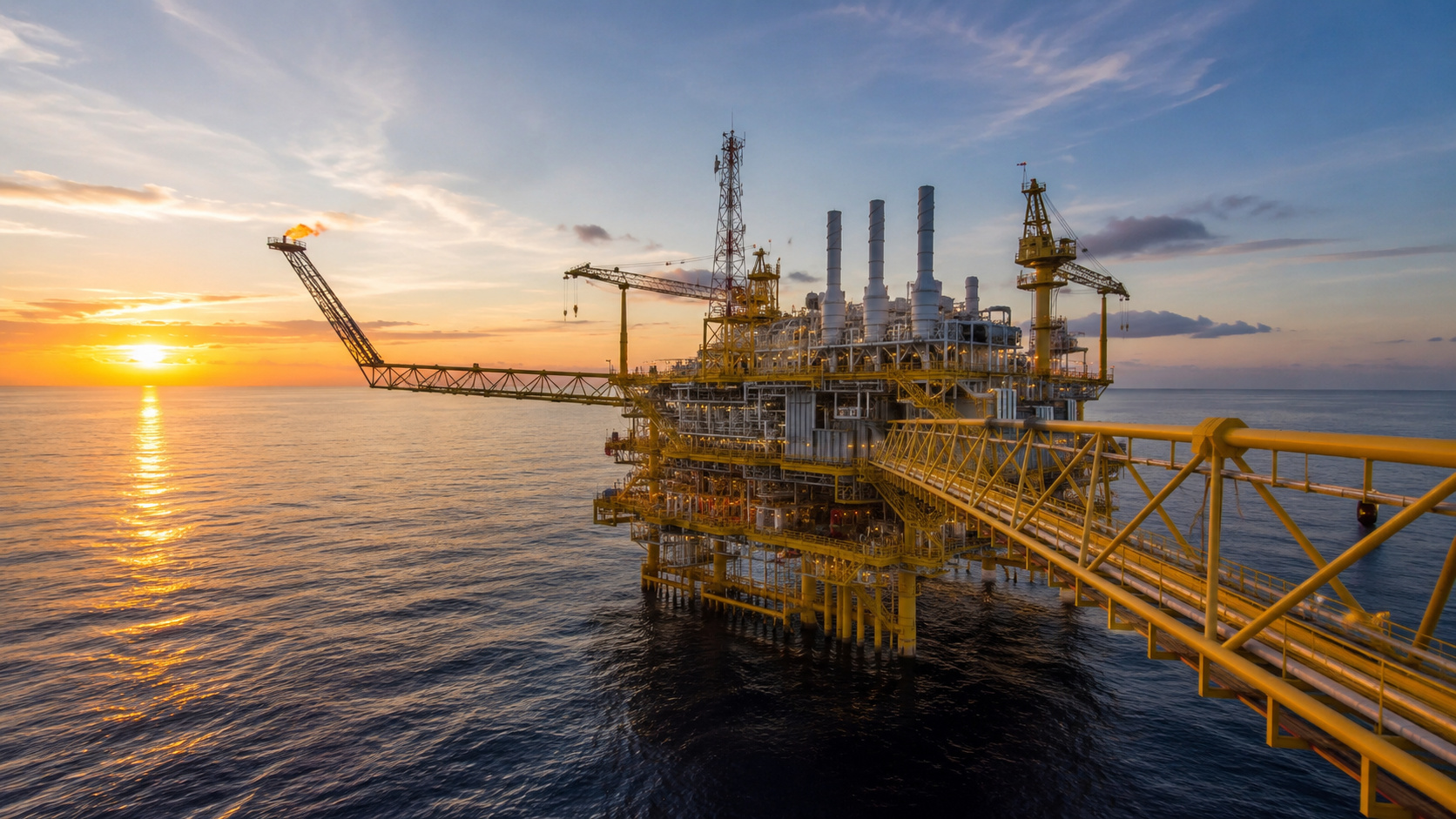


The Historical Role and Consolidation For Natural Gas As A Strategic Bridge To A Sustainable Future
From the second half of the 20th century, the use of natural gas gained strength. At that time, governments and industries were looking for alternatives to oil and coal, motivated by environmental and geopolitical concerns.
Thus, natural gas, due to its lower pollutant emissions, high calorific value, and transportation facilitated by pipelines, gained space in the global energy matrix.
Over time, technological advances allowed this resource to reach diverse sectors such as industry, transportation, and electricity generation.
Today, natural gas serves as a fundamental intermediate resource. While other renewable sources, like solar and wind, mature in economic viability and technical reach, gas ensures energy security.
Furthermore, during drought crises, natural gas prevents blackouts and stabilizes supply. In this way, it acts as a vital support for the electrical matrix, especially in developing countries.
Consequently, its strategic use enhances energy security and helps to balance supply and demand swiftly.
Decarbonization, Education, And Coordinated Public Policies
During an event on sustainability and the energy transition, Huang Yehua presented his proposal focusing on the role of natural gas. According to him, this change must rely on solid pillars to support the construction of a low-carbon economy, with natural gas at the center of this transition.
Yehua argues that decarbonization begins with social awareness. Therefore, governments and institutions need to invest in climate and energy education, especially among young people.
When this happens, people better understand the impacts of their choices and adopt more sustainable consumption habits.
At the same time, coherent public policies play an essential role. To achieve this, governments must update national development indicators, incorporating environmental criteria.
This initiative, besides being modern, conveys confidence to investors and creates solid foundations for the growth of low-carbon infrastructure.
On the other hand, countries that establish clear regulatory frameworks are able to attract more international capital. This stimulates the growth of energy projects and broadens energy access, promoting social inclusion and economic development.
Technological Innovation And The Leading Role Of The Private Sector
The private sector also needs to take responsibility in the energy transition. As Yehua emphasizes, energy companies must lead innovation, seeking solutions that reconcile productivity and sustainability.
Among these solutions, he cites technologies such as blue hydrogen and carbon capture and storage (CCS), regarded as fundamental for the sector’s advancement.
Additionally, companies need to expand distribution networks and democratize access to clean energy. By providing natural gas reliably and affordably, they stimulate demand for low-carbon sources and enhance consumer leadership.
Digitalization can also contribute to this process. With the help of sensors and artificial intelligence, it is possible to monitor energy flow in real time, optimize the use of natural gas, and reduce losses.
As a result, efficiency increases, and the entire energy chain becomes more sustainable.
International Cooperation As A Driver Of The Energy Transition
Simultaneously, international cooperation has proven to be an essential vector of the energy transition. China, through companies like CNOOC, is expanding partnerships with countries in Latin America, including Brazil.
In this sense, this approach allows nations to share technology, experiences, and investments, accelerating the adoption of sustainable solutions.
Yehua believes that the energy transformation is not just a political decision but a social imperative. According to him, the world is crying out for a fairer, cleaner, and more resilient system.
Thus, regional and global alliances can generate lasting positive impacts, especially when they involve knowledge transfer and joint investments.
Ultimately, integration between countries can boost the creation of energy corridors and facilitate international trade in liquefied natural gas (LNG).
This strengthens global energy security and makes supply more flexible.
Natural Gas As A Realistic And Strategic Solution
Although renewable energies are advancing, there are still technical and economic limitations that prevent the complete replacement of fossil fuels.
Due to the intermittency of solar and wind sources, costly and complex storage systems are required. Therefore, natural gas becomes a strategic support alternative.
This resource efficiently fills gaps. In addition to generating constant energy, it reduces emissions compared to coal and serves sectors that are difficult to electrify, such as heavy industry.
For this reason, natural gas is among the main immediate decarbonization tools.
At the same time, by serving as support for the growth of renewable sources, natural gas enables the energy transition without compromising supply.
This prevents interruptions, reduces costs, and accelerates the path toward a truly sustainable system.
Natural Gas Is A Strategic Bridge To A Sustainable Future: A Collective Commitment To A Sustainable Future
Humanity is at a decisive moment. Thus, the choices made now will shape the planet’s energy future.
Although it is still a fossil source, natural gas offers real and immediate benefits that can reduce environmental impacts while the world moves toward carbon neutrality.
Governments, companies, and consumers must work together to transform the global energy system.
This cooperation, when well-structured, requires planning, solid investments, and a long-term vision.
Only then will it be possible to ensure a fair, efficient, and inclusive transition.
Huang Yehua’s message reinforces this urgency. For him, natural gas is the link between the present and the future, a resource capable of balancing current needs with sustainable goals for tomorrow.
Adopting this perspective means choosing the path of responsibility and progress.







Be the first to react!