Portuguese
  Spanish


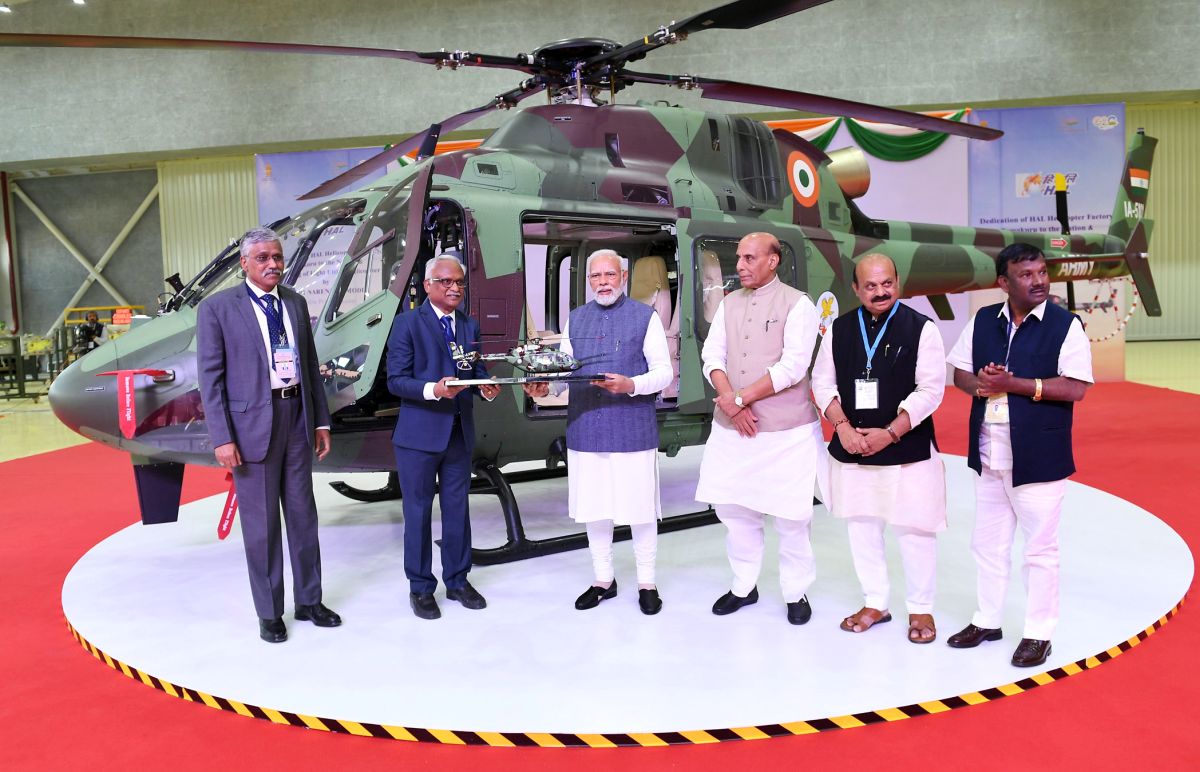

The Goal Of The Indian Government Is To Reduce Dependence On The Import Of Naval Industry Products, Strengthening Its Defense. The New Helicopter Factory In The Country Will Ensure Production Of 1000 Units Per Year.
As one of the biggest bets for the Asian industrial market, India is advancing in the country’s defense sector. The Government has inaugurated the nation’s largest helicopter production factory, thereby ensuring investments in technology in the naval industry. With the new plant, the Asian country will be able to reduce its dependence on imported products from European nations, especially Russia.
Indian Government Reinforces Internal Defense System With New Helicopter Factory, Which Will Ensure Production Of Up To 1000 Units Per Year
Given the expanding strategic interests of the country worldwide, the Indian naval industry has been broadening its strategic reach and operational horizons.
Several recent developments point to the increasing global presence of the Indian naval industry and underline the utility of maritime power in projecting India’s growing geopolitical presence.
-
France Revamps 530 Social Housing Units with Large Balconies and Glass Facades Without Demolishing Existing Buildings

-
10-Year-Old Max Makes History with Paris Fashion Show, Launches Own Brand, Hires Staff, and Sets World Record as Youngest Runway Designer

-
Bolivian Female Construction Workers Form Association to Combat Discrimination and 38% Pay Gap in the Industry
-
Near Amsterdam, residents buy land and discover they must also build streets, manage drainage, handle waste, and grow food on half their plot.




India is known for its large arsenal of weapons, as well as the significant potential for expansion in the naval market.
The growing challenge from China and trade, as well as security interests, are pushing India to strengthen its reach in the South Pacific.
Now, the country is investing in its internal defense system autonomously by announcing the inauguration of its largest helicopter production factory.
According to the Indian Government, the factory has a production capacity of up to 1000 units per year, thereby ensuring greater defense at a time of geopolitical instability in the region.
Additionally, the Asian country can protect itself from a potential threat from China, imminent in today’s world.
The Indian Government’s investments in internal defense do not stop there. Last week, New Delhi also announced an increase in its annual defense budget, aiming to ensure even greater protection against the Chinese nation.
Indian Government Celebrates Inauguration Of New Helicopter Factory, Opening Path For A Future Of Investments In The Naval Industry Market
Prime Minister Narendra Modi celebrated the inauguration of the new helicopter factory in the country and emphasized that the production will provide new perspectives for Indian defense.
Moreover, he reinforced that the factory will fulfill “our government’s promise to gradually reduce India’s dependence on foreign countries for its defense needs.”
“I am pleased that hundreds of different weapons and defense systems — from modern assault rifles to tanks, aircraft carriers, helicopters, and transport aircraft — are now manufactured in India,” the executive concluded.
India is one of the largest importers of weapons in the world, due to its high dependence on products from countries like Russia.
However, the current Government of the country seeks to ensure greater autonomy in the production of new arsenals. With the new helicopter factory, the Prime Minister hopes to minimize dependence on imports from Russia.
Located in the state of Karnataka (south) and presented as the largest helicopter factory in Asia, it will produce light utility helicopters, designed and developed in India.
The inauguration of the new helicopter factory by the Indian Government marks another step taken towards a future of strong investments in internal naval industry production.