






 Portuguese
  Spanish


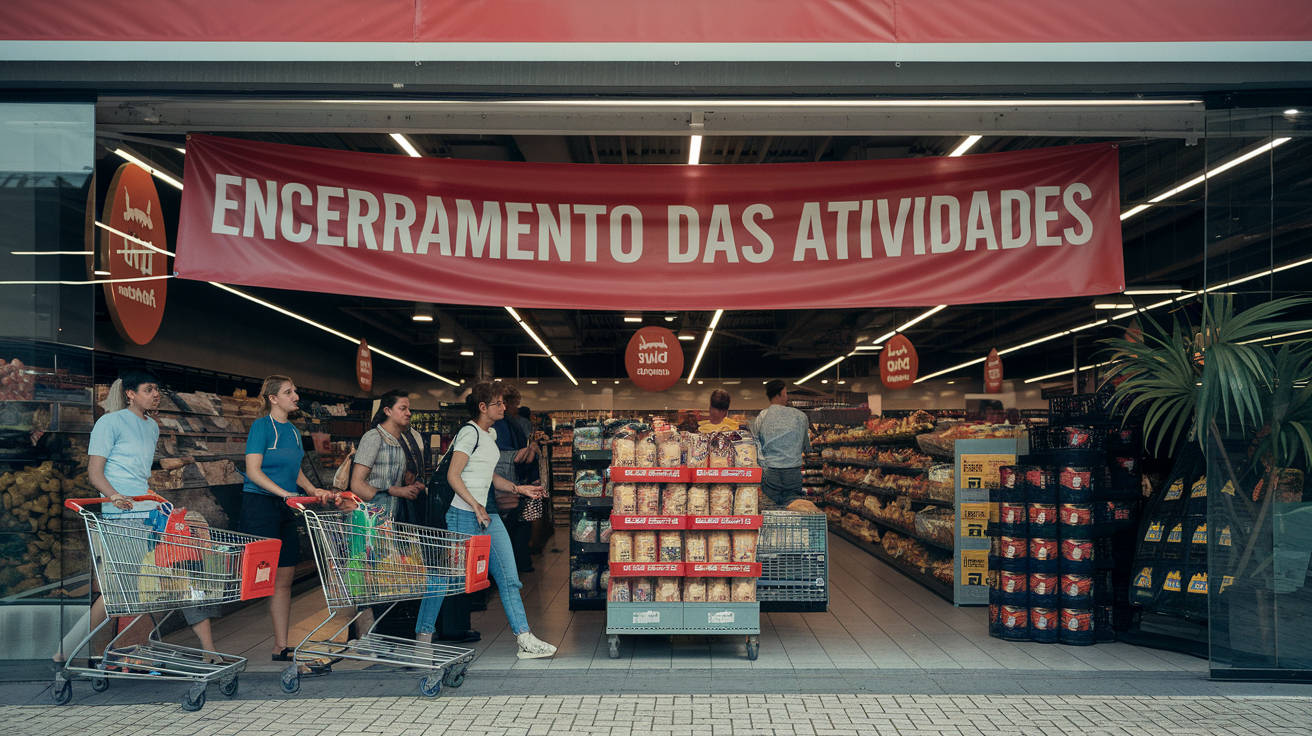


Mexican Online Supermarket Startup Announces Sudden Closure, Leaving Questions About the Reasons That Led to the Decision After Recent Significant Investment.
The digital market has just lost an important name: Justo, a 100% online supermarket chain, announced the closure of its operations in Brazil last Saturday (7). The Mexican startup, which began its journey in the country in 2021, exits the market after three years of operations, without providing many details about the decision. The announcement was surprising, especially since it came just a month after a funding of US$ 70 million (about R$ 420 million).
What Led to the Closure of Justo?
Although Brazil has been a strategic market for Justo’s expansion, the company seems to be redirecting its efforts to Mexico, where it maintains significant partnerships, such as the recent collaboration with Amazon for deliveries.
In Brazil, Justo gained prominence by offering products such as fresh produce, cleaning supplies, and meats with fast delivery, often on the same day. The model attracted attention during the pandemic when online supermarket shopping surged. However, operating a 100% digital supermarket has proven to be a complex challenge.
-
Brazil to Issue “Panda Bonds” in China, Aiming to Raise Up to 5 Billion Yuan at Lower Interest Rates Than Dollar Debt
-
NATO Faces Internal Tensions as U.S. Pushes for Increased Defense Spending, Targeting 5% of GDP by 2035, with Warnings for Countries Near 2% Level

-
Brazil to Introduce B16 Diesel with Increased Soybean Oil Content for Trucks by 2026
-
Brazil’s July Bolsa Família Payments May Include Extra $150 and $50 for Families with Children, Pregnant Women, and Updated CadÚnico Registration


According to consultant Alberto Serrentino, partner at Varese Retail, the Brazilian market is extremely competitive, and online food retail faces specific difficulties. “Operating a pure online food retail business in a tough and competitive market like São Paulo is a very complex undertaking,” he states.
Logistics: The Great Challenge of Digital Supermarket Chains
One of the biggest barriers to the sustainability of 100% digital supermarket chains is logistics. Unlike other retail sectors, the food market requires specific handling, storage, and transportation for different types of products. This makes the process of fast delivery more expensive and complicated.
The logistical infrastructure in Brazil is costly and relies almost exclusively on road transport, which increases costs. Mariana Munis, a management professor at Mackenzie Campinas, points out that Brazil’s tax system is also an obstacle.
“Here we tax by state, by federation, by municipality, which doesn’t happen in other markets. This makes it very complex to achieve scale in a 100% digital market,” she explains.
Growth of Online Shopping and the Market Paradox
Although the closure of a digital supermarket like Justo is an example of the challenges faced by this model, the online food shopping market continues to expand. According to the Webshoppers report from NielsenIQ Ebit, the food sector saw a 26.2% increase in 2023, with 32% of consumers using supermarket delivery apps at least once a month.
This growth contrasts with the difficulty of scaling exclusively digital models, especially in competitive markets like Brazil. The competition with giants such as Carrefour, Pão de Açúcar, iFood, Rappi, and Daki, which already have hybrid operations and a more robust structure, was one of the factors that hindered the consolidation of Justo in Brazil.
The Farewell of Justo and the Future of the Digital Market
Justo, founded in 2019 in Mexico by Ricardo Weder and Brazilian Ricardo Martinez, thanked Brazilian consumers in a post on Instagram. The startup brought innovations and demonstrated that there is demand for online services, but it also revealed the limitations of the pure digital model in a country with many structural challenges.
Now, Justo’s exit opens up space for competitors to absorb its clientele and strengthen their operations. Traditional chains like Carrefour and Pão de Açúcar already have hybrid structures, while platforms like iFood and Rappi continue to expand their services in the supermarket sector.
Reflections on the 100% Digital Model
The closure of Justo’s operations in Brazil raises an important question: Is the 100% digital supermarket model viable in complex markets like Brazil? Experience shows that logistics, taxation, and infrastructure remain significant barriers. Furthermore, competing with established networks that already have physical and digital presence makes the scenario even more challenging.
However, this does not mean that the digital model is doomed to failure. On the contrary, it remains a trend, but it may need to be rethought and adapted to local conditions. Integration with larger platforms and strategic partnerships may be the way to overcome these difficulties.
For consumers, the market remains full of options, with traditional companies and startups competing to offer convenience and efficiency.
For entrepreneurs, the lesson is that innovating is necessary, but understanding the peculiarities of the market is essential for long-term success. The closure of Justo is a reminder that technology is a powerful tool, but the retail market, especially food retail, requires more than just innovation: it demands resilience and adaptation.







