Portuguese
  Spanish




The Operation Placed Almost 400 Logs in 5 Km of Streams, Seeking to Recover Pools, Gravel, and Refuge Areas for Fish
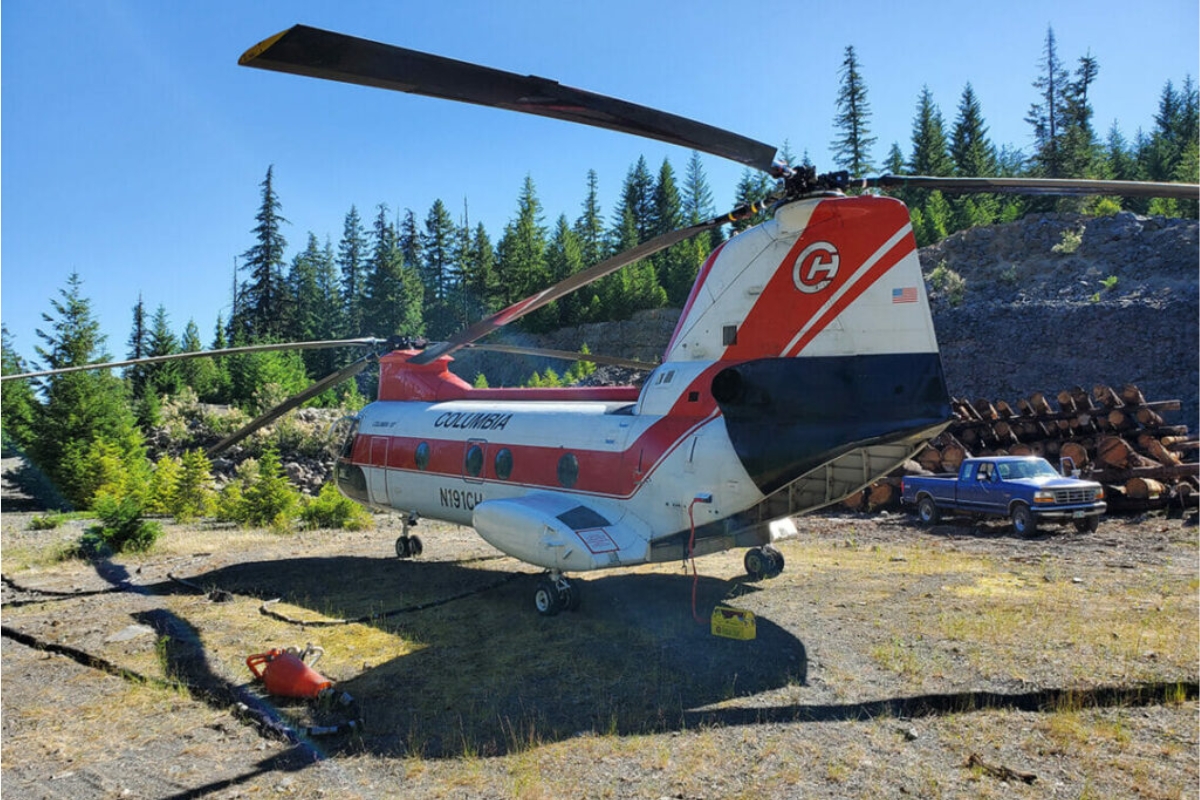
In two days in July, a twin-engine helicopter flew over the forests of Mount Hood carrying giant logs into mountain streams.
The action dropped pieces of Douglas fir up to 12 meters long, secured by a 45-meter cable, at designated points in the Berry and Cub streams, linked to the Clackamas River.
The information was released by Wild Steelheaders United, an organization focused on the conservation of native fish. The movement targets critical spawning areas for winter steelhead, coho and chinook salmon, as well as cutthroat, Pacific lamprey, and bull trout.
-
Canada Makes Historic Decision to Purchase New German Submarines in $70 Billion Defense Program, Replacing Aging Victoria-Class Fleet by 2033

-
4,000-Year-Old Stone Circle Discovered Near Belfast, Unveiling Prehistoric Ritual Complex in Irish Countryside

-
Brazilian Innovator Transforms 1962 Mercury Comet with Nissan Leaf Electric Motor, Achieving 125 km Range for Under $6,000
-
China Tests Giant 582-Ton Magnets to Contain Plasma Hotter Than the Sun’s Core, Aiming to Cut Superconductor Costs and Generate First Electricity from “Artificial Sun” by 2030


How the Helicopter Placed 1 to 3 Logs per Trip in the Berry and Cub Streams
The helicopter repeated the route several times, always with logs suspended from the cable. Each trip concluded with the controlled drop of 1 to 3 logs in specific locations.
The logs were of size and weight sufficient to act as structures within the watercourse. The idea is to create points of turbulence, shade, and natural brakes for the water.
The focus was on the Berry and Cub streams, two tributaries of the Clackamas used as nurseries by different fish species.
Why the Area Suffered from Historical Logging and the 2022 Lionshead Fire

The headwaters of the Clackamas, within the Mount Hood National Forest, bear the scars of decades of logging. This history has simplified the channels and reduced the presence of large wood in the streambed.
In 2022, the Lionshead fire affected large areas of forest and worsened the fragility of the system. The described scenario includes more constricted streams and impoverished habitat.
Before the project, some stretches recorded only 2 to 20 large logs per mile, below the levels observed in comparable rivers considered healthy in the region.
What Changes When Increasing the Density to 150 Pieces per Mile in 5 Kilometers
The intervention placed almost 400 logs along about 5 kilometers of watercourse. As a result, the density of large wood increased to approximately 150 pieces per mile.
This range serves as a reference for similar rivers in the region. The expectation is to bring the stream’s behavior closer to a more complex system, with flow variations and shelter.
Biologists expect an increase in the depth and frequency of pools, as well as better retention of spawning gravels. This also tends to benefit juveniles during high water periods and in warmer summers, allowing access to cooler water.
Who Participated and What Values Appear, 228,000 Dollars and 42,000 Dollars
The initiative arose from a partnership between the Clackamas River chapter of Trout Unlimited, the Oregon Department of Fish and Wildlife, the state agency for wildlife management, and the U.S. Forest Service, the federal agency for forest management.
The operation in 2023 received 228,000 dollars in grants from the Oregon Watershed Enhancement Board. There was also 42,000 dollars from the Drinking Water Providers fund of the Forest Service.
Recovery funds after the fire helped relocate burned logs to loading areas, facilitating the aerial phase.
Who is Terry Turner and Why Logistics Was Decisive
The coordination was led by Terry Turner, a volunteer with Trout Unlimited, with professional experience in industrial logistics and global product launches.
He managed the relationships with the involved agencies and held positions in the local chapter, state council, and national board of the organization. His work also includes participation in initiatives like Salmon SuperHwy and the fish passage advisory group of ODFW.
The role of logistics emerged as a central point for synchronizing teams, loading locations, routes, and the precise positioning of the logs in the streambed.

What Was Coming in 2023, Another 1 Kilometer in Cub Creek and 150 to 200 Logs
The plan would not be limited to Berry and the initial stretch of Cub Creek. For the following summer, there was a forecast to work on another stretch of 1 kilometer in the lower part of Cub Creek.
At this point, old logging practices had left the channel very constricted and disconnected from the floodplain. The proposal included adding 150 to 200 large logs as well.
There were also plans to reconnect an important side channel and use machinery to restore flow to about 15 hectares of floodplain, increasing spawning and rearing areas.
Demolition of a 1950s Dam Could Open 13 Kilometers on Eagle Creek
In parallel, preparations included the removal of a small dam on the north fork of Eagle Creek, a tributary of the lower Clackamas.
The structure was built in the 1950s on private land and blocks access to about 13 kilometers of potential habitat. After removal, teams planned to add large wood and stabilize banks upstream.
Wild Steelheaders United, an organization focused on the conservation of native fish, also describes the Clackamas as a large river near the metropolitan area of Portland, with intense recreational use. Each intervention tends to have a visible impact on the environment and the experience of those who frequent the river.
The movement involving helicopters, large wood, and barrier removal work reinforces a direct objective: to restore complexity to the watercourse and improve conditions for fish at different life stages.