Portuguese
  Spanish


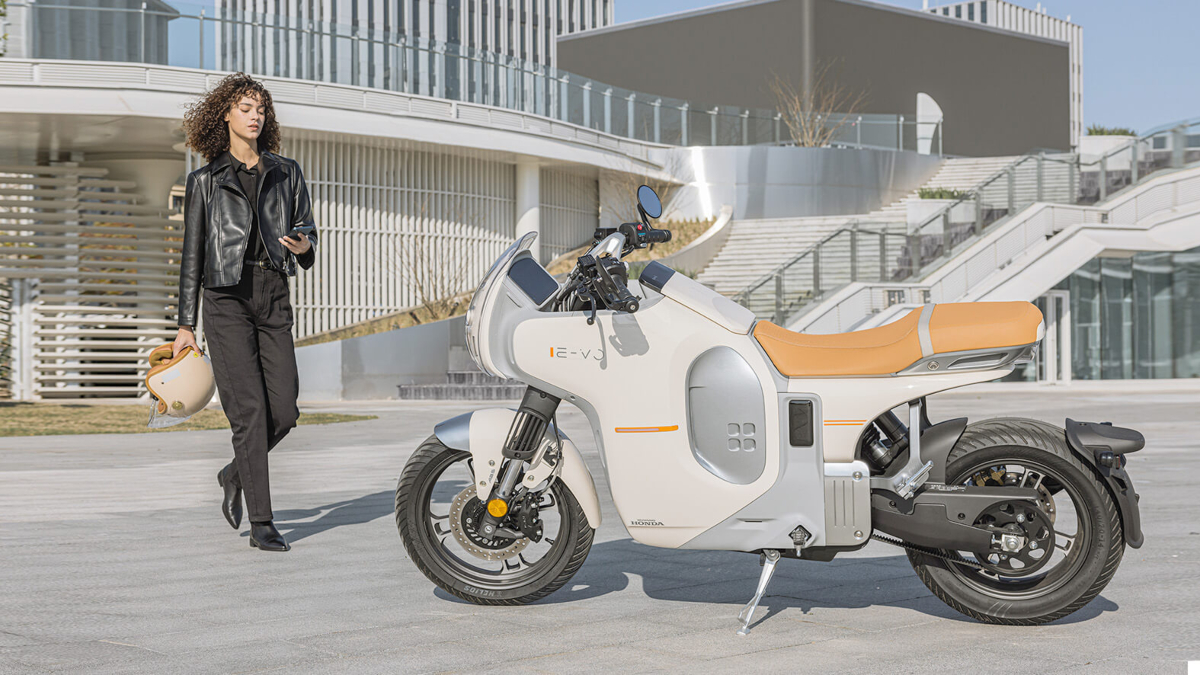


Cutting-Edge Technology, Retro Design, and Up to 170 km of Range: Honda Enters the Electric Motorcycle Market with the E-VO but Decides to Limit the Launch to the Chinese Public. Understand What This Reveals About the Future of the Brand
The Honda E-VO electric motorcycle was officially presented in China in June 2025 by Wuyang Honda, the local joint venture of the Japanese brand. With a 4.1 kWh battery, the motorcycle offers up to 120 km of range, reaching 170 km in the version with a larger battery, in addition to generating 15.5 kW (approximately 21.5 hp) of power. It features a modern retro design, a 7-inch TFT display, integrated cameras, and three riding modes. However, public frustration is significant because the launch is exclusive to the Chinese market—there is no forecast for other countries, including Brazil.
Honda Electric Motorcycle: Key Features and Innovations
The Honda E-VO arrives as the manufacturer’s first fully electric model in the urban motorcycle segment. Its technology package includes advanced features such as front and rear dashcams, keyless ignition, and an ABS system, along with a high-resolution color display.
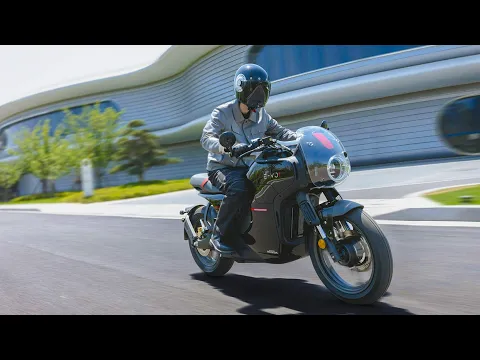

Its battery can be either 4.1 kWh (basic model) or 6.3 kWh (premium version), allowing for a real-world range for daily city use that varies from 120 to 170 km according to the WTMC standard, used internationally for testing electric motorcycles. The charging time ranges from 60 to 90 minutes, depending on the battery and type of charger.
-
Brazilian Factory Restores Truck Engines and Parts, Reducing Raw Material Use by Up to 85% After 80 Years in Business

-
British Marines Set Record by Changing Ford Escort Engine in 42 Seconds, Unbroken for 40 Years

-
BYD Owners in Brazil Raise Concerns Over Warranty After 87,000 km, Two Repairs in Three Days, and Over $500 in Costs

-
Classic Volkswagen Beetles of Brazilian Presidents to Swap Museums in Historic Partnership



Honda E-VO: Design and Performance of the New Honda Motorcycle
With lines reminiscent of the café racer style, the new Honda motorcycle combines classic aesthetics with cutting-edge technology. Weighing between 143 kg (smaller battery) and 156 kg (larger battery), the E-VO features a 15.5 kW electric motor capable of reaching speeds of up to 120 km/h—sufficient speed for most urban use.
The system offers three riding modes: Eco, Normal, and Sport, which adjust performance and energy regeneration during braking, increasing range or providing more power as needed by the rider.

Technological Features of the New Honda Motorcycle
In addition to the motor and battery, Honda equipped the E-VO with a 7-inch color TFT-LCD display, where the rider can view essential information such as battery level, GPS navigation, tire pressure, and energy consumption.
Another highlight is the integrated cameras: a front dashcam comes as standard, while the premium version adds a rear camera for real-time recording, an important innovation for safety and convenience.
The keyless ignition system allows the rider to start the motorcycle without manually inserting the key, facilitating daily use. The two-channel ABS system enhances braking safety.
Market and Exclusivity of the E-VO Launch in China
Although the arrival of Honda’s electric motorcycle is an important step, the exclusivity of the E-VO for the Chinese market is a point of dissatisfaction in other countries. China is currently the world’s largest market for electric vehicles, with growing infrastructure and favorable government policies.
The indicative prices of the Honda E-VO in China are about CNY 30,000 (approximately R$ 21,000) for the basic version, and CNY 37,000 (around R$ 26,000) for the version with the larger battery and more features. There is still no confirmation about exporting to other markets, although the brand is monitoring local receptivity for potential future expansions.
Technical Specifications of the Honda E-VO
| Specification | 4.1 kWh Version | 6.3 kWh Version |
| Motor Type | Electric, 15.5 kW (21.5 hp) | Electric, 15.8 kW |
| Range (WTMC Standard) | Approximately 120 km | Approximately 170 km |
| Battery | 4.1 kWh (single module) | 6.3 kWh (three modules) |
| Charging Time | 90 min (domestic) / 60 min (fast charger) | 150 min (domestic) / 90 min (fast charger) |
| Weight | 143 kg | 156 kg |
| Maximum Speed | 120 km/h | 120 km/h |
| Riding Modes | Eco, Normal, Sport | Eco, Normal, Sport |
| Display | TFT-LCD 7 inches | TFT-LCD 7 inches |
| Integrated Cameras | Front dashcam | Front and rear dashcam |
| Safety System | Two-channel ABS | Two-channel ABS |
| Starting System | Keyless | Keyless |
| Estimated Price (China) | CNY 30,000 (~R$ 21,000) | CNY 37,000 (~R$ 26,000) |
What the Arrival of Honda’s Electric Motorcycle Represents for Brazil
In Brazil, the offering of electric motorcycles is still modest, with few models available and limited infrastructure. The arrival of a Honda model, especially with competitive technology and range, could boost the sector and encourage public policies to facilitate the use of electric vehicles.
The experience gained by Honda with the E-VO in China may underpin future launches in other markets, including Brazil. The company plans to expand its presence in the global electric segment, including the establishment of factories and development centers focused on EVs in other countries.
Prospects for the Future of Honda Motorcycles
The Honda E-VO marks a milestone in the brand’s transition to the realm of electric mobility. Although initially restricted to China, it demonstrates the manufacturer’s commitment to innovation and sustainability.
If launched in other regions, the motorcycle could compete with established brands in the electric segment, such as Zero Motorcycles, Super Soco, and Energica, offering an alternative with distinctive design and embedded technology.
The development of the E-VO could be the starting point for Honda to expand its line of electric motorcycles, bringing more urban and sporty models to a market that is increasingly environmentally conscious.
Honda E-VO and the Electric Motorcycle Market
The launch of the Honda E-VO marks the beginning of a new era for the traditional Japanese manufacturer. With a robust technology package, sufficient range for daily use, and a design that appeals to fans of classic motorcycles, the E-VO has the potential to carve out its niche.
On the other hand, the decision to limit the launch to China leaves many consumers out, especially in emerging countries like Brazil, where the demand for electric mobility solutions is growing rapidly.
As long as Honda does not confirm expansion plans, interested parties will have to keep an eye on the company’s next steps and the latest developments in the global market, which is rapidly advancing toward electrification.