Portuguese
  Spanish


New Smart Mining Vehicle by Huawei, Tested in Extreme Conditions in Tibet, Demonstrates Efficiency, Highlighting Innovation for the Extractive Sector
A new technology for smart mining was introduced at the Mobile World Congress 2025 (MWC), from March 3 to 6. Huawei Cloud revealed the Commercial Vehicle Autonomous Driving Cloud Service (CVADCS), a cloud-based system for the safe and efficient operation of vehicles in extreme environments.
The launch at MWC 2025 marked the CVADCS’s first international appearance. In a statement, the company emphasized that the innovation reinforces its commitment to innovation and market expansion outside of China.
Technology for Extreme Environments
The CVADCS is designed to operate in adverse conditions, such as those found in mining in the Tibetan Plateau.
-
Extreme Heat of 41.3°C Warps Roads in Germany, Causes Autobahn Asphalt to Crack, Injures People, and Forces Snowplows to Cool Down Highways

-
AI Security System in Brazil Aims to Cut False Alarms by Differentiating Pets from Intruders, Enhancing 24/7 Monitoring for Homes and Businesses

-
Archaeologists Discover 1,500-Year-Old Byzantine Mosaic with Greek Biblical Inscription in Israel, Uncover Ruins of 10 Buildings Near Kiryat Gat
-
Ohio Carpenter Finds 308-Gram Meteorite the Size of a Baseball After Dreaming of Its Location





The region has a wealth of minerals, including lithium, copper, and gold, making it a strategic location for resource extraction. However, its high altitude and vulnerable ecosystems pose significant operational challenges.
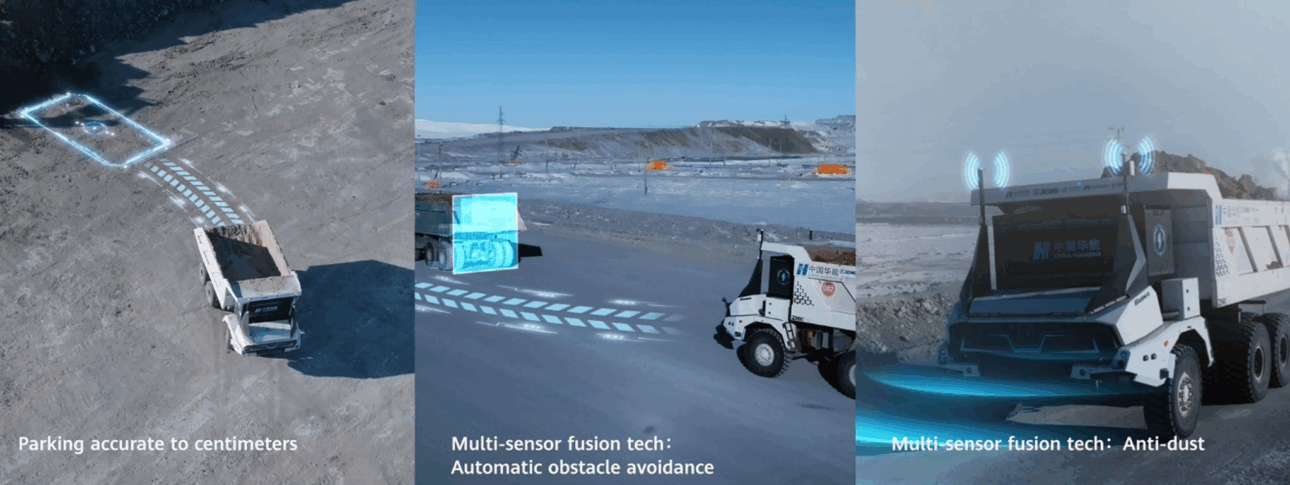
The Huawei Cloud intelligent system has already been deployed at the Yulong Mine in Tibet, where it demonstrated efficiency in mining operations at 5,000 meters above sea level.
The CVADCS stands out for its ability to operate in extreme weather conditions, including strong winds and dust storms that reduce visibility to as low as 40 meters.
Integration of Vehicles and Cloud
Huawei Cloud’s solution enables outdoor mining with enhanced efficiency of up to 135%. Its hallmark is the intelligent integration of vehicles with the cloud, ensuring safer and more precise operations.
The system features advanced sensors and data analysis tools for real-time monitoring.
Key features of the CVADCS include unified fleet management and a flexible scheduling system to optimize the use of multiple vehicles simultaneously.
It allows detailed monitoring through maps that are updated every few minutes. This enables precise positioning of operational points, such as collection, loading, and disposal locations for mining materials.
Efficiency and Operational Forecast
Huawei Cloud’s technology also includes a comprehensive supervision system to ensure software and hardware integrity. It conducts continuous checks, generates alerts, and performs failure analyses, allowing predictive maintenance and rapid responses to issues.
Production data analysis is another strong point of the CVADCS. The platform uses advanced algorithms to forecast trends and automatically adjust operational policies, ensuring greater efficiency and reducing the need for human intervention.
Huawei Cloud emphasizes that the technology aims to redefine standards for the modernization of global mining. Besides mining, the company plans to expand the application of CVADCS to other sectors, such as ports and industrial campuses, broadening the reach of cloud-based automation.
With information from Interesting Engineering.