Portuguese
  Spanish


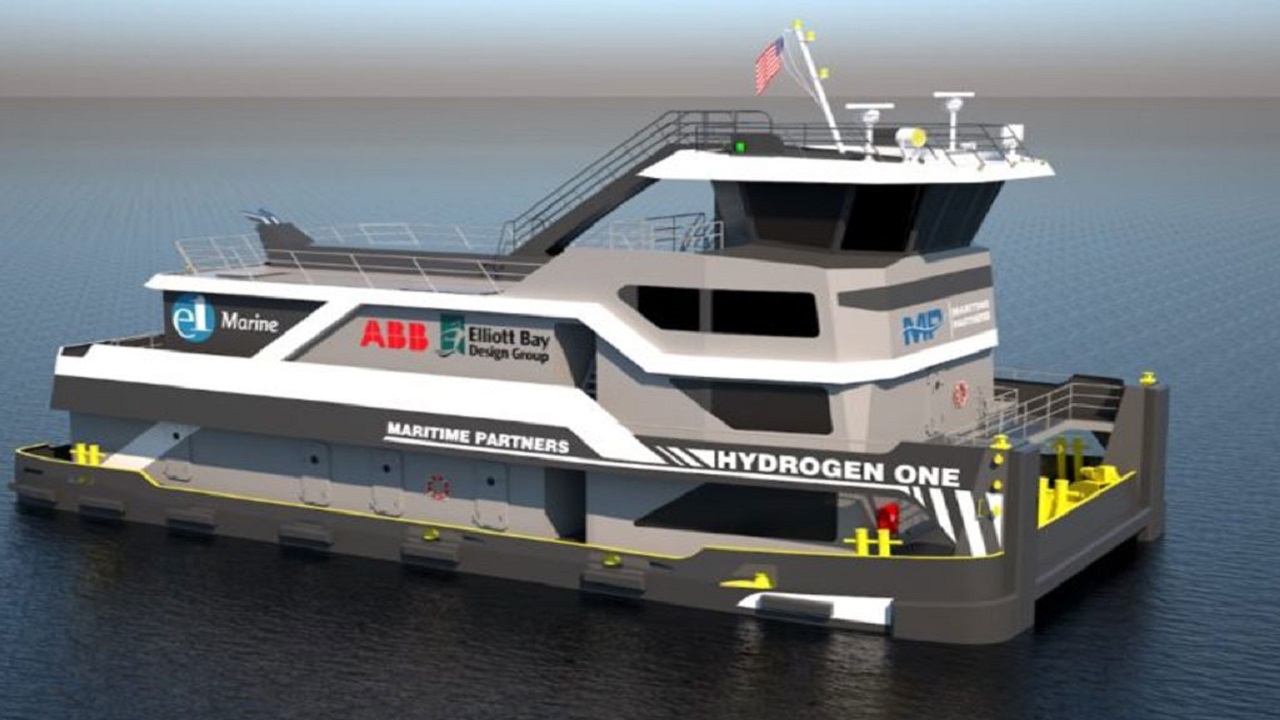

The Sustainability of the Naval Industry Takes Its First Steps and in 2023 Will Welcome the First Methanol-Powered Tugboat from Maritime Partners, Known as Hydrogen One
Maritime Partners, in cooperation with e1 Marine, ABB, and Elliott Bay Design Group, announces that the first methanol-powered tugboat, known as Hydrogen One, will join Maritime’s fleet and will be available in the naval industry for charter in 2023, aiming to meet the demand for cleaner and more sustainable tugboat operations.
Read Other Related News
Sustainability in the Naval Industry Advances with Methanol-Powered Tugboat
The decarbonization of the naval industry in the tugboat sector faces several challenges, primarily due to size, space, and weight limitations of a tugboat. The use of batteries is only viable in fixed route operations, where vessels can be recharged daily. Additionally, the limited storage capacity of a tugboat restricts the use of cryogenically stored and pressurized gases as fuels.
Another impacting factor is the infrastructure, as there are few facilities at docks for refueling these marine fuels, severely restricting the functionality and autonomy of a vessel.
-
The FLIP: A 108-Meter Ocean Laboratory That Stood Vertically for 60 Years, Dismantled in 2023

-
France Revamps 530 Social Housing Units with Large Balconies and Glass Facades Without Demolishing Existing Buildings
-
10-Year-Old Max Makes History with Paris Fashion Show, Launches Own Brand, Hires Staff, and Sets World Record as Youngest Runway Designer

-
Bolivian Female Construction Workers Form Association to Combat Discrimination and 38% Pay Gap in the Industry



The methanol-powered tugboat arriving in 2023 will be compatible with IMO 2030 and will meet all the requirements proposed in Subchapter M of the U.S. Coast Guard.
The methanol tugboat was designed by Elliott Bay Design Group and utilizes efficient and proven technology, from the automation and electrical power distribution offered by ABB to the methanol fuel cell for hydrogen provided by e1 Marine. The model will have capability to operate at standard operational speeds of up to 550 nautical miles before needing to refuel.
Methanol Allows for Safe and Quick Refueling
Methanol is a conventional fuel for tugboats in the naval industry and is available in most of the world’s major ports. This availability enables refueling safely almost anywhere, without requiring any detours.
According to Maritime Partners’ co-founder and Chief Operating Officer, Austin Sperry, shipowners have hesitated to commit to more sustainable fuels until the infrastructure is available to refuel the vessels. The new vessel arriving in the naval industry resolves this issue by using methanol, which is available worldwide and is still safe.
GM Invests in Sustainability in the Naval Industry
General Motors announced this week a partnership with Pure Watercraft for the production of electric boats. This partnership is part of GM’s total investment of US$ 35 billion by 2025 in autonomous and electric vehicle technology, including research to reduce battery costs and improve performance.
The Pure Outboard from the electric boat company features innovative efficiency that provides performance advantages, reducing environmental damage and also lowering operational and maintenance costs.